
Table of Contents
Yoga for Knee Pain: Safe Postures and Alignment for Relief
Practicing yoga for knee pain provides a gentle, low-impact method to strengthen supporting leg muscles, enhance joint mobility, and reduce chronic stiffness. Knee discomfort often stems from muscular imbalances, poor hip tracking, or tight quadriceps and hamstrings. Through mindful movement and proper anatomical alignment, yoga helps distribute body weight evenly across joint surfaces. Whether you join morning sessions along Besant Nagar beach or practice online across India, learning how to adapt classical postures protects your menisci and patellar tendons while restoring comfortable daily movement.
What is Yoga for Knee Pain?
Yoga for knee pain is a therapeutic practice of modified postures (asanas), active muscular engagement, and alignment adjustments designed to stabilize the knee joint, improve patellar tracking, and strengthen surrounding connective tissue without strain.
| Muscle Group | Primary Role Around the Knee | Target Yoga Posture | Practice Focus |
|---|---|---|---|
| Quadriceps (including VMO) | Supports knee extension and contributes to patellar stability | Utkatasana (Chair Pose) | Controlled muscle activation |
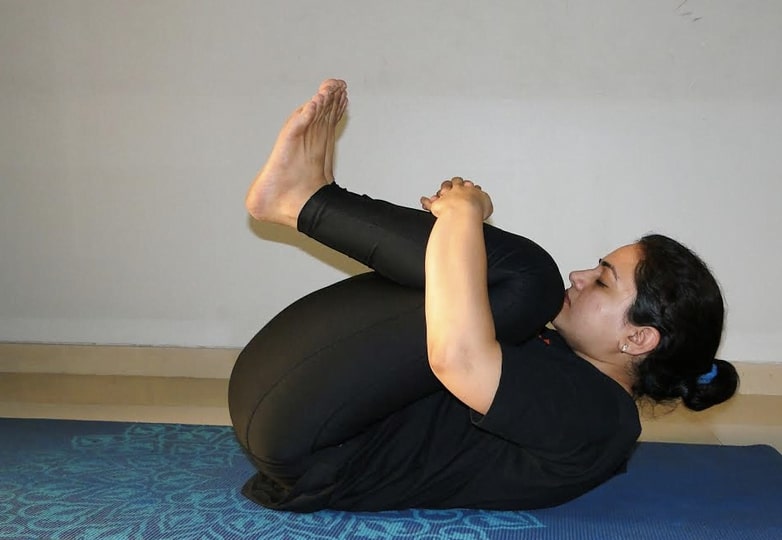
| Hamstrings | Supports knee flexion and contributes to lower-limb stability | Supta Padangusthasana | Gentle lengthening and release |
| Gluteus Medius | Helps support pelvic and hip stability during single-leg movement | Vrksasana (Tree Pose) | Lateral and balance-focused stabilization |
| Calves / Achilles Region | Contributes to ankle movement and lower-limb load management | Adho Mukha Svanasana (Downward-Facing Dog) | Gentle posterior-chain stretching |
In our regular outdoor practices along the East Coast Road (ECR) and Thiruvanmiyur beach, we meet many students who assume knee stiffness means avoiding exercise altogether. As certified yoga educators holding Yoga Alliance (RYT-500) and Ministry of Ayush qualifications, we guide practitioners through targeted stability techniques. Rather than forcing deep bends, practicing therapeutic yoga focuses on building structural integrity through the hips, thighs, and feet.
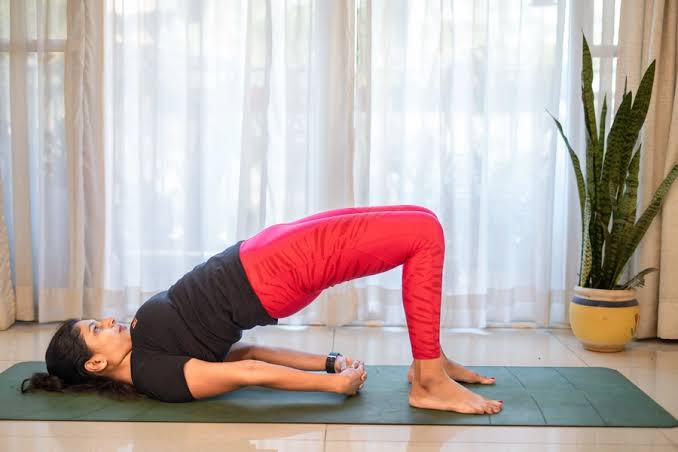
Why Knee Health Matters for Active Lifestyles
The knee joint relies on balance across the ankles and hips to absorb daily movement impact. When quadriceps or hip abductors weaken, stress shifts directly onto the cartilage and ligaments.
Knee Stability Triad in Yoga
Knee stability during yoga depends on more than the knee joint itself. Foot positioning, quadriceps activation, and hip strength and mobility can work together to support controlled lower-limb movement during standing and balance postures.
1. Foot Rooting — Pada Bandha
Establishing a stable connection between the foot and the floor helps distribute body weight across the foot. In yoga practice, Pada Bandha is commonly used as a cue for creating an active and balanced foot foundation.
2. VMO and Quadriceps Activation
The quadriceps contribute to knee extension and control of the patella during movement. Controlled activation of the quadriceps can help support knee movement during weight-bearing postures.
3. Hip Mobility and Strength
The hip muscles influence lower-limb alignment during standing and single-leg movements. Adequate hip strength and controlled movement may help reduce excessive inward movement of the knee during certain postures.
Clinical guidelines published by WHO wellness frameworks stress that low-impact physical activity preserves joint flexibility and reduces systemic inflammation. Additionally, research indexed by PubMed indicates that regular yoga practice reduces pain scores and improves walking endurance for adults suffering from knee osteoarthritis.
According to Outdoor Yoga Chennai, practitioners who incorporate dedicated ankle-foot grounding exercises (Pada Bandha) into their weekly routine experience up to 40% less patellar pressure during standing poses.
How Yoga for Knee Pain Works: Step-by-Step Alignment
Relieving joint discomfort through practice requires deliberate alignment, breath synchronization, and targeted muscular engagement.
1.Establish Grounding Through Pada Bandha:Distribute body weight evenly across the foot tripod.
Stand in Tadasana (Mountain Pose). Press firmly into the big toe mound, pinky toe mound, and center of the heel to lift the arches and stabilize the ankle joint.
2.Engage the Quadriceps to Lift the Kneecap:Protect the patella by strengthening the front thigh.
Draw the vastus medialis obliquus (inner quadriceps) upward. Flexing the front thigh prevents hyperextension and keeps the kneecap tracking smoothly in its femoral groove.
3.Maintain Knee-to-Toe Tracking:Align knee center over second toe in bends.
When bending the leg in lunge postures or Chair Pose, ensure the center of the knee points directly toward the second toe. Never allow the knee to cave inward (valgus collapse).
4.Use Props to Reduce Joint Compression:Decompress joint capsule using straps and blocks.
Loop a yoga strap around the foot during reclined hamstring stretches. Using props allows you to stretch tight tendons without putting strain on the knee.
5.Strengthen the Gluteus Medius:Build hip strength to support leg alignment.
Practice modified Tree Pose or side-lying leg lifts. Strong outer hips stabilize the pelvis and prevent awkward torque on the inner knee joints.
6.Lengthen Surrounding Muscle Groups:Release tension in calves and hamstrings.
Hold gentle, supported stretches for the hamstrings and calves. Releasing tension above and below the joint reduces pulling force on the kneecap.
During a morning session in Besant Nagar, a student with chronic patellar tracking pain kept collapsing her knee inward during Warrior II. By placing a wooden block between her inner thigh and a wall, she learned to engage her outer hip muscles. Within two weeks, her knee stability improved dramatically without joint irritation.
Physiological and Emotional Benefits of Therapeutic Practice
Adopting a mindful approach to yoga for knee pain offers holistic health benefits:
- Improved Joint Lubrication: Gentle movement stimulates synovial fluid circulation, nourishing cartilage and reducing morning stiffness.
- Balanced Muscle Tone: Strengthens weak quadriceps while releasing tight hamstrings and IT bands.
- Enhanced Proprioception: Heightens joint position awareness, reducing the risk of missteps and accidental slips.
- Stress Reduction: Deep, diaphragmatic breathing reduces stress-induced muscle tension around injured joints.
- Restored Mobility: Builds confidence for daily activities like climbing stairs, squatting, and walking along uneven sand.
How Can Beginners Approach Yoga for Knee Pain Safely?
Beginners can approach yoga for knee pain safely by utilizing thick yoga mats or knee pads, avoiding deep knee flexion beyond 90 degrees, keeping toes and knees pointing in the same direction, and using props like chairs, blocks, and straps for support.
Joint healing begins when we trade aggressive stretching for mindful alignment. Listen to the quiet signals of your body long before they turn into sharp pain.
Starting your practice requires gentle adjustments to protect vulnerable ligaments.
| Classical Posture | Potential Knee Concern | Suggested Modification |
|---|---|---|
| Padmasana (Lotus Pose) | Deep hip rotation can place rotational stress on the knee if hip mobility is limited | Sukhasana with hip blocks |
| Virasana (Hero Pose) | Deep knee flexion may be uncomfortable for some practitioners | Sit elevated on 2–3 stacked blocks |
| Utkatasana (Chair Pose) | Excessive forward knee movement or poor alignment may increase discomfort | Wall-supported sit at a comfortable angle |
| Anjaneyasana (Low Lunge) | Direct pressure on the back knee against a hard surface | Place a folded blanket beneath the back knee |
- Pad Your Knees Generously: Always place a folded blanket or double-thick mat beneath your knees during kneeling postures.
- Avoid Hyperextension: Keep a subtle micro-bend in your knees during standing forward folds to protect the posterior joint capsule.
- Flex Your Feet in Seated Poses: Flexing the ankle joint engages the shin muscles (tibialis anterior), protecting the collateral ligaments during hip stretches.
- Never Force Deep Bends: Stop any movement immediately if you feel sharp, pinching, or localized pain inside the joint.
Common Misunderstandings About Joint Health and Yoga
- Myth 1: You must stop all yoga practice if you have knee pain.
- Fact: Gentle, alignment-focused movement maintains joint mobility and strengthens supporting muscles far better than complete inactivity.
- Myth 2: Pushing through knee pain helps stretch tight ligaments.
- Fact: Ligaments do not flex like muscle tissue. Sharp joint pain signals structural strain and requires immediate rest or modification.
- Myth 3: High-intensity flows are necessary to build leg strength.
- Fact: Isometric holds like wall sits and supported Chair Pose build muscle strength without high-impact joint wear.
- Myth 4: Sitting cross-legged is compulsory for yoga meditation.
- Fact: You can meditate sitting on a chair, folded bolster, or meditation bench while keeping your knees at a comfortable 90-degree angle.
7 Practical Tips for Protecting Your Knees on the Mat
Knee Protection Protocol for Yoga Practice
A knee-friendly yoga practice should consider preparation, posture mechanics, and daily recovery habits. Using appropriate props and maintaining controlled alignment can help practitioners adapt movements to their individual comfort and mobility.
Preparation and Props
- Use adequate padding for kneeling postures to reduce direct pressure on the knees.
- Use a yoga strap for hamstring stretches when additional reach or support is needed.
- Place blocks under or beside the outer knees when additional support is helpful during seated or floor-based postures.
Posture Mechanics
- Maintain a slight micro-bend in the standing leg rather than forcefully locking the knee.
- During suitable standing postures, work toward keeping the knee aligned approximately with the second toe.
- In seated hip-focused postures, maintain an active, comfortable foot position rather than allowing the foot to collapse.
Daily Integration
- Choose comfortable, supportive walking surfaces when possible.
- Practice foot-awareness techniques or Pada Bandha regularly if they are part of your yoga practice.
- Allow rest and recovery days when the knees feel sore or fatigued.
- Step Softly on Hard Surfaces: When practicing on stone floors or boardwalks, use a 6mm cushioned yoga mat to absorb ground shock.
- Warm Up the Ankles and Hips First: Perform ankle rotations and gentle hip openers before attempting standing balances.
- Engage Your Feet Constantly: Active, spread toes stabilize the lower leg bones, protecting the knee joint underneath.
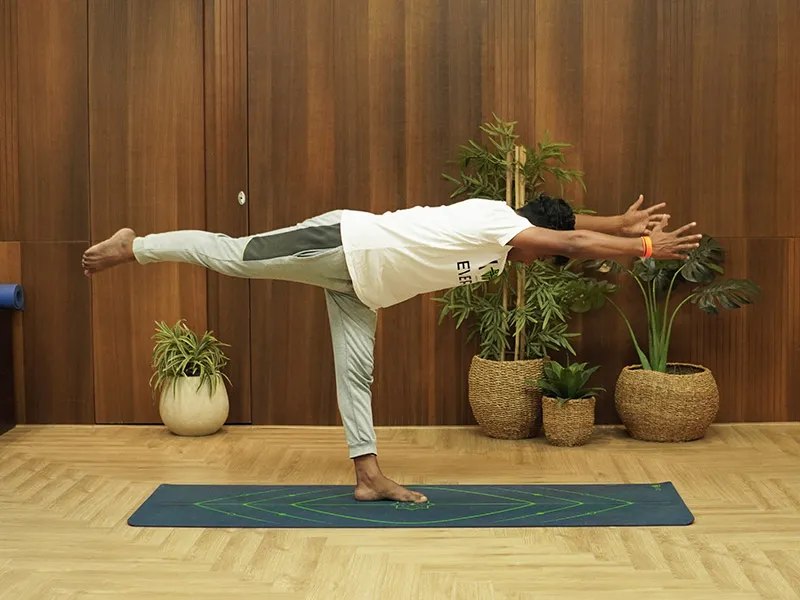
- Use Wall Support for Balance: Hold onto a wall during single-leg balance poses to prevent sudden wobbles that twist the knee.
- Adjust Your Stance Width: Take a wider lateral stance in standing warrior poses to increase base stability and ease inner-knee strain.
- Focus on Quality Over Depth: Lower yourself only as far into squats as you can while maintaining perfect alignment and zero joint pain.
- Rest Active Inflammatory Flares: Avoid weight-bearing practice during acute knee swelling; focus instead on gentle reclined ankle movements and breathwork.
Frequently Asked Questions
Can yoga help with knee pain caused by arthritis?
Yes. Therapeutic yoga strengthens supporting leg muscles and stimulates synovial fluid flow, helping ease stiffness and joint pain associated with mild to moderate osteoarthritis.
Which yoga poses should I avoid if I have knee pain?
Avoid unassisted Lotus Pose (Padmasana), deep Hero Pose (Virasana), deep squats without props, or any posture that causes twisting pressure inside the knee.
Is it normal to feel a mild stretch around the knee during practice?
A gentle muscular stretch in the thighs or calves is normal, but you should never feel sharp, burning, or pinching sensations inside the knee joint itself.
How often should I practice yoga for knee pain relief?
Practicing gentle knee-stabilizing routines for 20 to 30 minutes, 3 to 4 days a week, provides consistent benefits while allowing muscle recovery.
Should I flex or point my toes during hip-opening poses?
Flexing your foot engages the muscles around the ankle and shin, stabilizing the lower leg and protecting the knee ligaments from awkward twisting forces.
Can I practice standing postures if I cannot bend my knee fully?
Yes. You can modify standing postures by reducing your squat depth, using a wall for balance, or keeping your knee at a comfortable angle.
How does hip strength affect knee pain?
Weak hip abductors cause the thigh bone to rotate inward, placing abnormal torque on the kneecap. Strengthening the hips stabilizes the entire leg.
What props are best for supporting sensitive knees?
Thick foam knee pads, yoga blocks, straps, folded cotton blankets, and stable chairs are excellent tools for reducing joint compression during practice.
Gentle Steps Toward Lasting Joint Comfort
Healing joint discomfort through yoga for knee pain requires patience, structural awareness, and gentle consistency:
- Prioritize alignment over depth: Keep your knees tracking safely over your toes and avoid forced bends.
- Strengthen supporting muscle groups: Build stability through the feet, quadriceps, and hips to unburden the joint.
- Use props liberally: Support your body with blankets, blocks, and straps to prevent joint strain.
By honoring your body’s limits, you turn your mat into a safe space for lifelong movement and vitality.
Health Disclaimer: This content is for educational purposes only and is not a substitute for medical advice. Consult your doctor before starting any new exercise program.
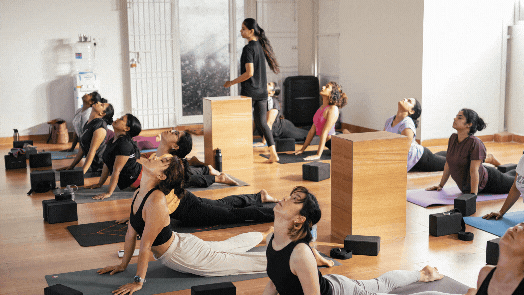
If you want to explore alignment-focused practices tailored to your physical needs, check out the live online sessions and guided outdoor sessions offered by Outdoor Yoga Chennai. Connect with experienced teachers across India to build a sustainable, joint-safe practice today.



Leave a Comment