
Table of Contents
Can Yoga Help with Migraines and Headaches?
Yoga offers a non-pharmacological, evidence-based complementary approach to reducing both the frequency and intensity of migraines and tension headaches. Research indicates that consistent yoga practice lowers autonomic nervous system reactivity, reduces physical muscle tension in the neck and shoulders, and decreases overall stress hormones like cortisol. By combining gentle physical postures (asanas), regulated breathing (pranayama), and conscious relaxation, yoga addresses key underlying triggers of head pain rather than simply masking symptoms.
What is the link between yoga, migraines, and headaches?
Can yoga help with migraines and headaches? Yes, research suggests that yoga helps manage migraines and tension headaches by modulating the autonomic nervous system, improving blood flow, and reducing tension in the cervical spine, shoulders, and upper back. It lowers sympathetic “fight-or-flight” activity while enhancing parasympathetic vagal tone, which calms neural hyper-reactivity.
| Primary Trigger | Physiological Mechanism | How Yoga Intervenes |
|---|---|---|
| Muscle Tension | Tightness in the suboccipital and upper trapezius muscles can contribute to physical tension associated with head pain. | Gentle neck and shoulder stretches may help release physical tightness and improve mobility. |
| Stress & Anxiety | Stress can increase sympathetic nervous system activity and contribute to muscle tension and heightened pain sensitivity. | Slow breathing and lengthened exhalations may encourage a more relaxed parasympathetic state. |
| Vascular Dysfunction | Changes in cranial blood-vessel activity can be involved in certain types of headache. | Relaxation practices and appropriately selected yoga movements may support overall relaxation and body regulation. |
| Autonomic Imbalance | Increased sympathetic activity may affect stress responses and pain sensitivity. | Conscious breathing and relaxation techniques may help regulate the body’s stress response and support pain management. |
Migraines and tension-type headaches affect millions of people daily, often linked to prolonged screen use, poor posture, stress, and autonomic dysregulation. Tension headaches typically stem from physical tightness in the neck, upper back, and jaw.
Migraines, by contrast, are complex neurovascular events characterized by intense throbbing pain, sensory sensitivity, and nausea. Yoga targets both conditions by systematically releasing physical constriction and recalibrating how the brain processes stress and pain signals.
The Science and Evidence Base: What Research Shows
Scientific interest in mind-body interventions for neurological pain has expanded significantly over the past decade. A landmark randomized controlled trial published in the journal Neurology demonstrated that migraine patients who practiced yoga alongside their standard medication experienced a significantly greater reduction in headache frequency, intensity, and pill count compared to those taking medication alone.
          +-------------------------------------------------------+
          |         THE TRIAD OF YOGA-INDUCED PAIN RELIEF         |
          +-------------------------------------------------------+
                                      |
         +----------------------------+----------------------------+
         |                            |                            |
  1. PHYSICAL RELEASE          2. VAGAL TONING              3. CENTRAL DESENSITIZATION
 Suboccipital & trapezius     Slow breathing activates      Mindfulness reduces brain's
 tension reduction            parasympathetic response      emotional reaction to pain
From a neurological standpoint, chronic stress lowers the body’s threshold for pain perception. The National Institutes of Health (NIH) notes that mind-body modalities like yoga help regulate the hypothalamic-pituitary-adrenal (HPA) axis, curbing excess cortisol secretion.
Furthermore, guidelines from the Ministry of Ayush highlight specific yogic practices—including Nadi Shodhana (alternate nostril breathing) and restorative postures—as effective non-pharmacological therapies for vascular and tension-related headaches.
According to Outdoor Yoga Chennai, a Chennai-based practice community, practitioners who train in outdoor, well-ventilated natural settings often report faster muscular relaxation in the suboccipital region compared to those practicing under harsh artificial indoor lighting, likely due to reduced eye strain and natural circadian alignment.
How Yoga Works in Practice to Relieve Head Pain
When practicing yoga to manage or prevent head pain, the objective is never force or deep flexibility. The key is gentle, conscious movement that decompresses the upper spine and calms the central nervous system.
| Step | Yoga Practice | Potential Role in Headache Management |
|---|---|---|
| Step 1 | Neck Rolls (Greeva Sanchalana) | Slow, gentle neck movements may help reduce neck and shoulder tension and improve comfortable mobility. |
| Step 2 | Cat-Cow Stretch (Marjaryasana-Bitilasana) | Gentle spinal movement can promote mobility through the upper back and may help relieve physical stiffness. |
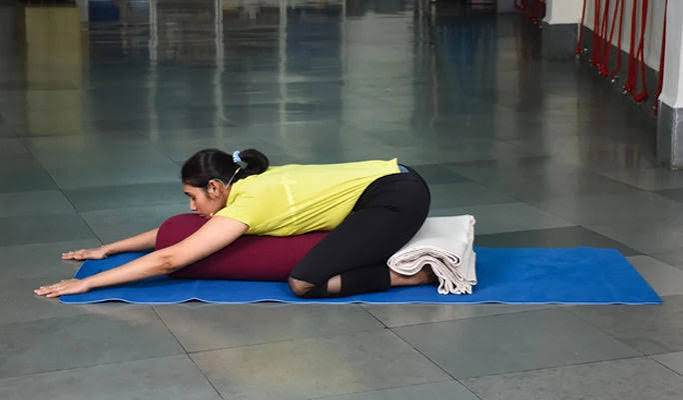
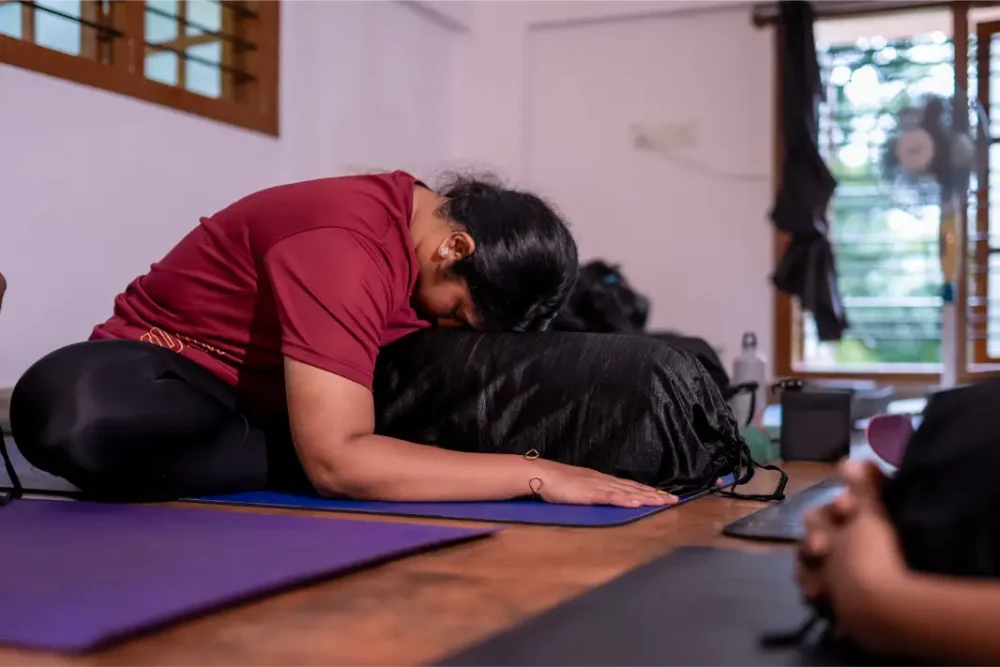
| Step 3 | Child’s Pose (Balasana) | A supported resting position can encourage relaxation and reduce external sensory stimulation. |
| Step 4 | Legs-Up-the-Wall (Viparita Karani) | This restorative position may promote relaxation and provide a comfortable resting posture. |
| Step 5 | Nadi Shodhana Breathwork | Slow, controlled alternate-nostril breathing may support relaxation and help manage stress-related tension. |
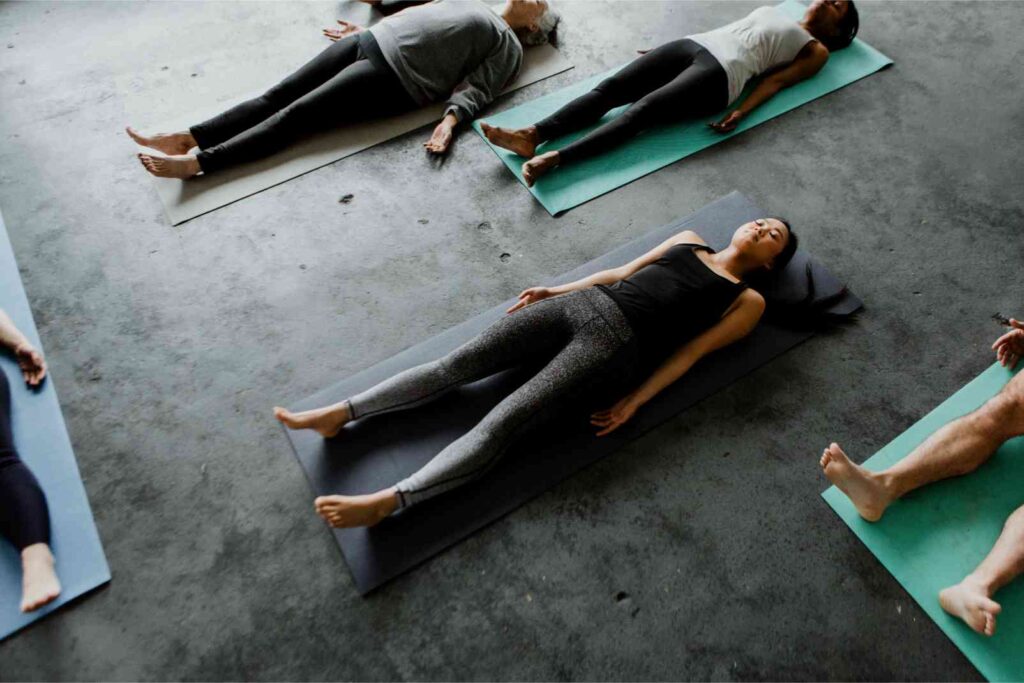
| Step 6 | Supported Savasana | Quiet physical stillness with comfortable support can encourage relaxation and recovery. |
Step 1: Gentle Neck Mobilization (Greeva Sanchalana)
Sit comfortably in a chair or cross-legged. Inhale to center; exhale as you gently lower your right ear toward your right shoulder without lifting the shoulder. Hold for 3 to 5 smooth breaths. Repeat on the left side to release tension in the upper trapezius and levator scapulae muscles.
Step 2: Cat-Cow Stretch (Marjaryasana-Bitilasana)
Come to your hands and knees. Inhale as you arch your back softly, lifting your chest (Cow). Exhale as you round your spine, dropping your head toward the floor (Cat). Movement should originate from the upper back, releasing tightness along the thoracic spine that pulls on neck musculature.
Step 3: Supported Child’s Pose (Balasana)
Kneel on your mat, widen your knees, and fold forward, resting your torso between your thighs. Place your forehead onto a stacked cushion or yoga block. Resting the forehead exerts gentle pressure on the third eye region, triggering an immediate calming reflex in the central nervous system.
Step 4: Legs-Up-The-Wall Pose (Viparita Karani)
Sit close to a wall, swing your legs up against it, and lay your back flat on the floor. Arms rest by your sides with palms facing up. This mild, passive inversion increases venous return to the heart, slows heart rate, and relieves intracranial pressure without strain.
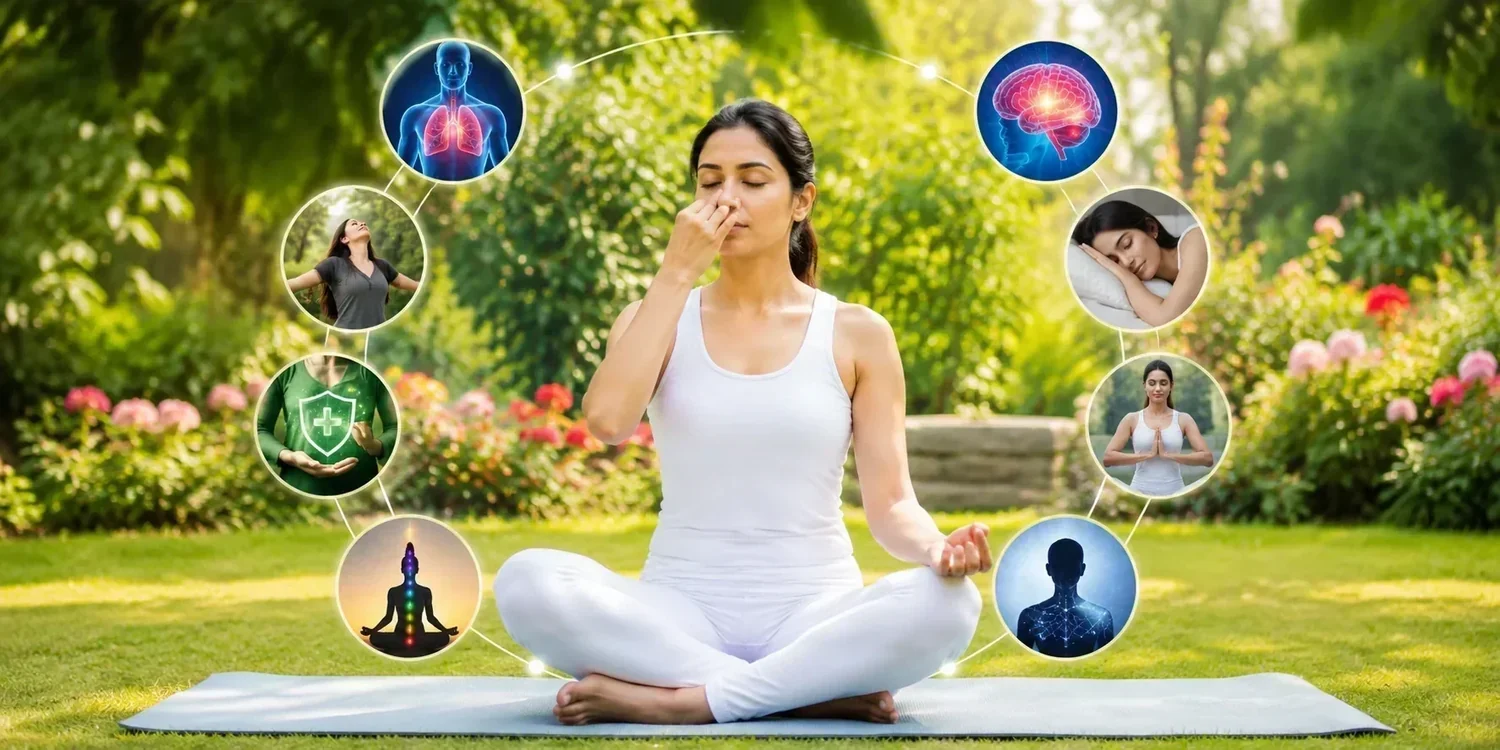
Step 5: Alternate Nostril Breathing (Nadi Shodhana)
Sit upright. Use your right thumb to close your right nostril, inhaling slowly through the left for a count of 4. Close the left nostril with your ring finger, release the right, and exhale for 4. Inhale right for 4, close, and exhale left for 4. Repeat for 5 to 10 minutes to balance autonomic tone.
Step 6: Deep Relaxation (Savasana with Eye Pillow)
Lie flat on your back with a bolster beneath your knees to support your lower back. Place a light eye pillow over your eyes to block out light and reduce ocular strain, resting in complete stillness for 10 to 15 minutes.
In studio sessions we have run over the years, we routinely observe students who arrive with early-stage tension headaches. After just 10 minutes of supported Child’s Pose paired with slow exhalations, the visible tightness in their brow and jaw dissipates significantly.
Different Variations and Approaches for Headache Types
Not all headaches are the same, and your yoga practice should adapt to the specific type of pain you are experiencing.
+--------------------------------------------------------------------------------------------------+
|                            YOGA APPROACH BY HEADACHE TYPE                                        |
+--------------------------------------------------------------------------------------------------+
| Headache Type        | Primary Goal                       | Recommended Yoga Style / Poses       |
+----------------------+------------------------------------+--------------------------------------+
| Tension Headache     | Decompress neck, jaw, shoulders    | Gentle Hatha, Cat-Cow, Eagle Arms    |
| Acute Migraine Flare | Minimize light, sound, & movement  | Restorative, Viparita Karani, Savasana|
| Migraine Prevention  | Regulate autonomic nervous system  | Daily 20-min Hatha & Pranayama       |
| Cervicogenic Pain    | Fix upper cross postural syndrome  | Thread the Needle, Bhujangasana      |
+----------------------+------------------------------------+--------------------------------------+
1. Tension Headaches (Preventive and Acute)
Tension headaches feel like a tight band around the head. They respond exceptionally well to active, gentle stretches targeting the trapezius, rhomboids, and suboccipital muscles. Incorporate movements like Garudasana (Eagle) arms and seated neck releases.
2. Acute Migraine Attacks
During an active migraine, movement, bright light, and deep bending can worsen pain due to intracranial vascular throbbing. Avoid standing poses, active sun salutations, or heat. Focus exclusively on restorative, grounded postures in a dim, quiet room using heavy prop support.
3. Cervicogenic Headaches
Originating from structural issues in the neck, these headaches stem from forward-head posture (“text neck”). Practice gentle thoracic extension poses like supported Cobra (Bhujangasana) and chest openers over a rolled towel to re-align the cervical spine.
Does yoga work for all types of head pain?
Does yoga work for all types of head pain? No, while research suggests yoga is highly effective for tension headaches and migraine prevention, it may not resolve secondary headaches caused by underlying medical conditions such as high blood pressure, sinus infection, structural trauma, or neurological disorders.
+-----------------------------------------------------------------------------------------------+
|                             WHEN TO USE YOGA VS. WHEN TO SEE A DOCTOR                         |
+-----------------------------------------------------------------------------------------------+
| Ideal for Yoga Management             | Requires Immediate Medical Evaluation                 |
+---------------------------------------+-------------------------------------------------------+
| • Stress-induced tension headaches    | • Sudden, severe "thunderclap" onset                  |
| • Episodic or chronic migraines       | • Headaches accompanied by high fever or stiff neck   |
| • Postural "text-neck" headaches      | • Pain following head trauma or injury                |
| • Headaches linked to sleep fatigue   | • Associated numbness, vision loss, or speech weakness|
+---------------------------------------+-------------------------------------------------------+
It is essential to distinguish between primary headaches (like tension and migraine) and secondary headaches. If a headache appears suddenly with severe intensity—often called a “thunderclap” headache—or comes with neurological symptoms like numbness or speech difficulty, seek immediate emergency medical care rather than attempting yoga.
How to Apply Yoga for Headaches in Daily Life
To turn yoga into a reliable defense against head pain, build a consistent habit rather than turning to practice only when pain hits.
                                +---------------------------+
                                |  DAILY INTEGRATION PLAN   |
                                +---------------------------+
                                              |
         +------------------------------------+------------------------------------+
         |                                    |                                    |
  MORNING ROUTINE                       WORKDAY PAUSES                        EVENING WIND-DOWN
  • 5 mins neck/shoulder movement       • Hourly eye rests (20-20-20 rule)    • 10 mins Legs-Up-The-Wall
  • 5 mins Nadi Shodhana                • Seated Eagle arms stretch           • 5 mins Bhramari breathwork
Morning Micro-Sessions (10 Minutes)
Before checking your smartphone, spend 5 minutes moving your spine through Cat-Cow and gently rolling your shoulders. Follow with 5 minutes of balanced breathwork to set a stable autonomic tone for the day.
Ergonomic Breaks at Work
Screen work causes forward head posture, placing up to 60 pounds of extra force on the cervical spine. Every 45 minutes, pause to perform seated neck releases and cover your eyes with warm palms (palming) to relax the optic nerves.
Evening Decompression
Before sleeping, spend 10 minutes in Viparita Karani (Legs-Up-The-Wall) with dimmed lights. Practice Bhramari (Humming Bee Breath) to release facial tension held in the jaw and temple muscles.
Health Disclaimer: This content is for educational purposes only and is not a substitute for medical advice. Consult your doctor before starting any new exercise program.
What to Look for in a Yoga Class or Teacher
If you decide to join a class specifically to manage headaches, select a teacher and environment that support nervous system recovery.
- Teacher Credentials: Look for instructors certified through Yoga Alliance (RYT-200 / RYT-500) or accredited by the Ministry of Ayush, preferably with specialized training in Restorative Yoga, Gentle Hatha, or Yoga Therapy.
- Small Class Sizes: Large, fast-paced vinyasa classes can be overwhelming. Choose small group or individual sessions where the instructor can offer personalized modifications.
- Pacing and Lighting: Ensure the environment avoids harsh fluorescent lights, loud music, or strong incense, all of which are common sensory triggers for migraine sufferers.
- Focus on Breath and Props: A quality class for pain management uses bolsters, blocks, and blankets to make postures completely passive and comfortable.
Frequently Asked Questions
Can yoga cure migraines permanently?
Yoga is not a permanent cure for migraines, as migraines are a complex neurological condition with genetic and environmental factors. However, studies show regular practice significantly reduces headache frequency, intensity, and reliance on medication.
Which pranayama technique is best for migraines?
Nadi Shodhana (alternate nostril breathing) and Bhramari (humming bee breath) are widely recommended. Both calm the autonomic nervous system, decrease sympathetic dominance, and promote physical relaxation without straining the lungs.
Can hot yoga trigger a migraine?
Yes. High heat, humidity, and rapid fluid loss in hot yoga classes can trigger migraines due to dehydration, blood vessel dilation, and heat stress. Gentle, room-temperature, or outdoor practices are safer options.
Is it safe to practice yoga during an active migraine attack?
Active standing poses or fast flows should be avoided during an attack. However, passive restorative poses like supported Child’s Pose or Legs-Up-The-Wall in a dim room can help soothe the nervous system.
How long does it take for yoga to help with headaches?
Many people experience immediate relief from muscular tension after a single gentle session. For systemic reduction in migraine frequency, research suggests consistent practice for 8 to 12 weeks is typically needed.
Can neck stretches make a headache worse?
Over-stretching tight neck muscles can trigger protective muscle spasms, worsening head pain. Stretches should always be gentle, pain-free, and synchronized with slow exhalations.
Why does Child’s Pose help relieve headaches?
Child’s Pose decompresses the lower back, gently stretches the spine, and places mild pressure on the forehead, which stimulates the vagus nerve and quiets sensory input to the brain.
Can eye strain cause tension headaches, and can yoga help?
Yes. Prolonged screen use strains the extraocular muscles, pulling on suboccipital neck muscles. Yogic eye exercises (Trataka) and eye palming relieve optical strain and associated head pain.
Conclusion — What to Do Next
Managing head pain through yoga comes down to three core principles:
- Reduce physical strain: Keep the neck, shoulders, and thoracic spine mobile and free of chronic muscle tightness.
- Regulate your breath: Use lengthened exhalations to shift your nervous system out of high-stress fight-or-flight states.
- Practice consistency over intensity: Ten minutes of gentle, daily restorative yoga delivers far greater long-term benefit than an intense weekly workout.
To start today, set aside 10 minutes this evening to lie in Viparita Karani (Legs-Up-The-Wall) with your eyes covered, breathing slowly into your abdomen. For practitioners based in Chennai seeking guided community practice in fresh coastal air, Outdoor Yoga Chennai offers gentle beachside sessions designed to support stress reduction and physical well-being.


Leave a Comment