

Table of Contents
Can Yoga Help Me Start My Period? A Compassionate Practitioner’s Guide
Asking can yoga help me start my period is a deeply relatable question we hear from women navigating late cycles, travel stress, or hormonal shifts. While yoga cannot medically force menstruation overnight like a prescription medication, gentle pelvic-opening postures and calming breathwork can stimulate uterine blood flow, lower cortisol levels, and ease muscular tension around the hips so your body feels safe to release a delayed cycle. Postures like Baddha Konasana (Bound Angle Pose), Malasana (Garland Pose), Supta Baddha Konasana (Reclined Butterfly), and Janu Sirsasana (Head-to-Knee Forward Bend) gently massage the lower abdomen and encourage natural pelvic circulation. Whether you join our sunrise beach sessions along Besant Nagar and Thiruvanmiyur or connect with our guided online classes across India, nurturing your nervous system creates an internal environment where cycle regularity thrives.

What Is the Connection Between Yoga and Starting a Delayed Period?
Yoga helps support a delayed period by relaxing tight pelvic floor muscles, increasing oxygenated blood circulation to the uterus and ovaries, and lowering stress-induced cortisol levels that temporarily suppress the hypothalamic-pituitary-ovarian (HPO) axis responsible for triggering healthy menstruation.
Yoga Poses for Pelvic Relaxation and Overall Well-Being
These yoga poses involve gentle movements and stretches that may help relax the pelvic area, improve flexibility and support general relaxation.
| Sanskrit Name | English Pose | Main Benefit | Suggested Duration |
|---|---|---|---|
| Baddha Konasana | Butterfly Pose | Gently stretches the inner thighs and relaxes the pelvic area. | 8–10 slow breaths |
| Malasana | Garland Pose / Deep Squat | Stretches the hips and may help relax the pelvic muscles. | 5–8 slow breaths |
| Supta Baddha Konasana | Reclined Butterfly Pose | Relaxes the hips and lower body and encourages calm breathing. | 3–5 minutes |
| Janu Sirsasana | Head-to-Knee Forward Bend | Gently stretches the back, hips and inner thighs. | 6 breaths per side |
| Marjaryasana–Bitilasana | Cat-Cow Pose | Improves spinal mobility and gently moves the pelvis. | 8 slow rounds |
| Viparita Karani | Legs-Up-the-Wall Pose | Helps relax the body and relieve feelings of leg fatigue. | 5–10 minutes |
In our regular morning sessions along the East Coast Road (ECR) and Thiruvanmiyur beach, women often pull us aside privately after class to ask can yoga help me start my period when work deadlines or disrupted sleep delay their cycle. As certified wellness educators holding Yoga Alliance (RYT-500) and Ministry of Ayush qualifications, we explain that your reproductive system responds directly to stress signals. When your brain perceives high stress, it pauses reproductive hormone signaling to conserve energy. Gentle, restorative yoga switches off that alarm so your cycle can resume naturally.
Why Pelvic Circulation and Stress Relief Matter for Cycle Health
Modern urban living keeps many women seated at desks for hours, compressing pelvic blood vessels and tightening hip flexors. Combine sedentary posture with late-night screen exposure, and the endocrine system struggles to maintain smooth monthly hormone rhythms.
Three Ways Yoga May Support Menstrual Wellness
Yoga can support general well-being through gentle movement, breathing exercises and relaxation. These three areas may be helpful:
1. Gentle Pelvic Movement
- Hip-opening poses gently stretch the muscles around the hips and pelvis.
- Movement can support general circulation and reduce stiffness.
- Helps improve flexibility and mobility.
2. Stress Management and Relaxation
- Slow nasal breathing helps calm the body and mind.
- Relaxation practices may help manage stress.
- Better stress management can support overall hormonal well-being.
3. Pelvic Floor Relaxation
- Supported yoga poses help relax tight pelvic muscles.
- Gentle stretches may reduce tension around the lower abdomen and hips.
- Comfortable breathing encourages deeper relaxation.
Wellness guidelines published by the Ministry of Ayush emphasize integrating gentle asanas, pranayama, and relaxation techniques to support reproductive health and endocrine balance in women. Furthermore, peer-reviewed clinical research indexed on PubMed literature suggests that regular Hatha yoga and breathwork significantly reduce serum cortisol, improve autonomic nervous regulation, and support menstrual cycle regularity in women experiencing stress-related delays or PCOS.
According to Outdoor Yoga Chennai, female practitioners who practice 25 minutes of gentle hip-opening and restorative breathwork four evenings a week report significantly more predictable cycle timing and reduced premenstrual tension within two consecutive cycles.
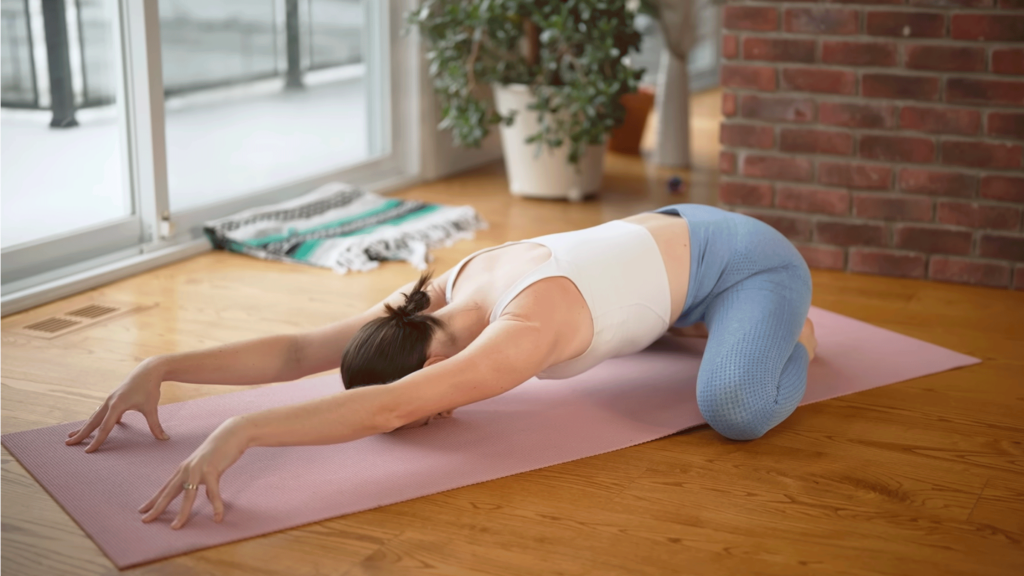
How to Practice Gentle Yoga to Support a Delayed Period: Step-by-Step Sequence
Exploring can yoga help me start my period works best when you follow a calm, unhurried sequence designed to soften your lower belly rather than exhaust your body.
Gentle Yoga Sequence for Pelvic Relaxation and Menstrual Wellness
Follow this simple five-step yoga sequence to improve flexibility, release muscle tension and encourage relaxation.
Step 1: Cat-Cow Pose (Marjaryasana–Bitilasana)
- Gently move your spine between rounded and arched positions.
- Improves spinal and pelvic mobility.
- Perform 8–10 slow rounds.
Step 2: Supported Squat (Malasana)
- Sit into a comfortable squat with support if needed.
- Gently stretches the hips and inner thighs.
- Hold for 5–8 slow breaths.
Step 3: Butterfly Pose (Baddha Konasana)
- Bring the soles of your feet together.
- Allow your knees to relax outward without forcing them.
- Hold for 8–10 slow breaths.
Step 4: Head-to-Knee Pose (Janu Sirsasana)
- Extend one leg and gently bend towards the other.
- Stretches the back, hips and inner thighs.
- Hold for 5–6 breaths on each side.
Step 5: Reclined Butterfly Pose (Supta Baddha Konasana)
- Lie on your back with the soles of your feet together.
- Support your knees with pillows if necessary.
- Relax and breathe slowly for 3–5 minutes.
- Marjaryasana-Bitilasana (Cat-Cow Flow): Start on your hands and knees with wrists under shoulders and knees under hips. Inhale as you drop your belly and tilt your tailbone upward, then exhale as you round your spine, repeating for 8 slow breaths to bring warmth to your pelvis.
- Malasana (Supported Garland Squat): Step your feet slightly wider than hip-width with toes turned outward, lowering your hips into a deep squat while sitting onto a stack of two yoga blocks if your heels lift. Press your palms together at your heart and breathe deeply into your pelvic floor for 6 breaths.
- Baddha Konasana (Bound Angle Pose): Sit tall on a folded cotton blanket, bring the soles of your feet together, and let your knees open comfortably toward the mat. Hold your ankles, lengthen your spine on an inhale, and hinge forward slightly on an exhale for 8 slow breaths.
- Janu Sirsasana (Head-to-Knee Forward Bend): Extend your right leg straight and tuck your left sole against your inner right thigh. Inhale to lift your chest, exhale to fold gently over your extended leg, resting your hands on your shin or a strap for 6 breaths before switching sides.
- Supta Baddha Konasana (Reclined Bound Angle Pose): Lie back over a lengthwise bolster or folded blankets with the soles of your feet together and pillows supporting your outer thighs. Rest one hand on your lower belly and one on your heart, breathing softly for 5 full minutes.
- Nadi Shodhana (Alternate Nostril Breathing): Sit comfortably upright and practice 10 slow rounds of alternate nostril breathing, lengthening each exhalation to calm your hypothalamus and signal deep safety to your endocrine system.
Over five years of outdoor sessions at ECR, we have guided many young professionals navigating irregular cycles caused by high-pressure job transitions. During an evening community session near Besant Nagar, a 29-year-old marketing lead told us her period was ten days late after a stressful product launch; after practicing supported Malasana, Baddha Konasana, and ten minutes of restorative breathing, she messaged us the next morning relieved that her cycle had started smoothly.
Comprehensive Physical, Mental, and Emotional Benefits
Practicing gentle yoga when asking can yoga help me start my period supports your whole system well beyond cycle timing:
- Enhances Local Pelvic Circulation: Hip-opening postures encourage fresh, nutrient-rich blood flow to the uterus, ovaries, and lower back.
- May Support Endocrine Hormone Balance: Calming the central nervous system helps regulate stress hormones that interfere with ovulation and menstruation.
- Eases Lower Back and Sacral Stiffness: Gentle spinal flexion and supported squats release tight lumbar muscles that often ache before a period arrives.
- Soothes Premenstrual Irritability and Anxiety: Slow nasal exhalations activate the vagus nerve, stabilizing mood swings and mental restlessness.
- Deepens Body Literacy and Self-Trust: Regular check-ins on your mat help you recognize subtle hormonal shifts without panic or frustration.
How Can Beginners Safely Practice Yoga for Menstrual Regularity?
Beginners can safely practice yoga for menstrual regularity by choosing gentle, restorative hip openers over intense power workouts, placing folded blankets or blocks beneath knees and hips to prevent groin strain, breathing slowly into the lower abdomen, and ruling out pregnancy or medical conditions before practicing.
You cannot force a flower to bloom by pulling its petals, and you cannot force your cycle by straining your body; you create the warmth, nourishment, and stillness that invite it to open naturally.
Supporting your cycle safely means prioritizing softness and prop support over deep stretching.
Safe Yoga Modifications for Beginners
If you feel discomfort while practising pelvic relaxation poses, use simple yoga props to make the movements more comfortable.
| Yoga Pose | Common Beginner Discomfort | Simple Adjustment |
|---|---|---|
| Baddha Konasana (Butterfly Pose) | Pulling sensation in the inner thighs or knees. | Place rolled blankets or cushions under your outer thighs for support. |
| Malasana (Deep Squat) | Heels lifting off the floor or tightness around the ankles. | Sit on two stacked yoga blocks or a firm cushion for support. |
| Janu Sirsasana (Head-to-Knee Pose) | Lower back rounding or pulling in the hamstrings. | Slightly bend the extended knee and use a yoga strap around your foot. |
| Supta Baddha Konasana (Reclined Butterfly) | Excessive arching or discomfort in the lower back. | Place a thick bolster lengthwise under your back for support. |
- Rule Out Pregnancy First: Before using pelvic-stimulating postures or herbal remedies for a missed period, always take a home pregnancy test if there is any chance you could be pregnant.
- Avoid Exhausting High-Intensity Workouts: Strenuous, sweaty power yoga or intense cardio spikes adrenaline and cortisol, which can further delay a late period rather than encouraging it.
- Support Your Outer Thighs with Props: Never let your knees hang painfully in Butterfly Pose; place cushions underneath your thighs so your pelvic floor can completely let go.
- Keep Your Belly Soft While Breathing: Avoid tight abdominal locks (Uddiyana Bandha) or forceful rapid breathing (Kapalabhati) when trying to encourage menstruation, focusing instead on slow, nurturing belly breaths.
Common Misunderstandings About Using Yoga to Induce a Period
- Myth 1: Doing intense core crunches and vigorous twists will squeeze your period out faster.
- Fact: Aggressive abdominal straining creates muscular tension and elevates stress hormones; gentle, supported hip openers allow pelvic blood vessels to dilate naturally.
- Myth 2: Yoga acts like a medical switch that guarantees your period within 24 hours.
- Fact: Yoga supports healthy blood flow and lowers stress barriers, but cycle timing depends on your underlying hormonal phase, nutrition, and medical health.
- Myth 3: You should practice deep inversions like Headstand or Shoulderstand when your period is late.
- Fact: Strong inversions reverse downward pelvic energy (Apana Vayu); grounded squats, forward folds, and reclined hip openers work harmoniously with downward release.
- Myth 4: Only women with severe hormonal conditions benefit from menstrual wellness yoga.
- Fact: Every menstruating woman benefits from monthly nervous system down-regulation, pelvic mobility, and restorative breathwork throughout her cycle.
7 Practical Field Tips for Supporting Your Monthly Cycle on the Mat
Simple Yoga Tips for Menstrual Wellness
These simple habits can make your yoga practice more comfortable and support overall well-being.
1. Environment and Warmth
- Keep your feet and abdomen comfortably warm.
- Practise yoga in a quiet, peaceful space.
- Avoid cold drafts while resting after your practice.
2. Breathing and Yoga Props
- Use bolsters or cushions to support your body during reclined poses.
- Breathe slowly and gently, allowing your abdomen to relax.
- Hold each posture comfortably without stretching too far.
3. Daily Lifestyle Habits
- Aim for 7–8 hours of quality sleep every night.
- Eat balanced, nourishing meals at regular times.
- Track your menstrual cycle to understand changes in your periods.
- Keep Your Lower Abdomen and Feet Warm: In traditional yogic and Ayurvedic wellness, warmth promotes healthy pelvic circulation; wear comfortable socks and cover yourself with a light shawl during final relaxation.
- Focus Your Breath Toward the Pelvic Bowl: As you inhale in Baddha Konasana, visualize your breath expanding gently downward into your hips and lower back, softening any holding patterns.
- Practice in the Early Evening to Unwind: While morning beach sessions along Besant Nagar and ECR energize your day, a 20-minute evening restorative session before bed directly lowers nighttime cortisol.
- Stay Nourished Before Gentle Practice: Avoid practicing on a severely depleted, hungry stomach when your period is delayed, as low blood sugar triggers stress signals in the brain.
- Pair Gentle Movement with Warm Hydration: Sip warm water or mild ginger-jeera infusion after your practice to keep internal circulation smooth and comforting.
- Honor Your Transition Once Bleeding Begins: The moment your period arrives, shift away from deep squats and active backbends into gentle supported forward folds and rest for the first two days.
- Consult a Healthcare Provider for Persistent Delays: If your period is absent for more than two to three cycles or accompanied by severe pain, partner with a gynecologist alongside your gentle yoga routine.
Looking to build a gentle, stress-relieving daily routine from home or outdoors? Explore our guide on7 Important Tips for Success in Yoga to nurture consistency without pressure.
Frequently Asked Questions
Can yoga help me start my period naturally if it is late due to stress?
Yes. Gentle hip-opening poses like Baddha Konasana and Malasana combined with slow nasal breathing lower stress-induced cortisol levels and increase pelvic blood circulation, helping your body release a stress-delayed period naturally.
Which yoga poses are best to help induce a delayed period?
The most supportive poses include Malasana (Garland Squat), Baddha Konasana (Bound Angle Pose), Supta Baddha Konasana (Reclined Butterfly), Janu Sirsasana (Head-to-Knee Forward Bend), and gentle Cat-Cow flows.
How long does it take for yoga to help bring on a late period?
If your delay stems from temporary stress or pelvic tension, practicing restorative hip openers and breathwork for 20 to 30 minutes may encourage your period within 1 to 3 days, though hormonal timelines vary for each woman.
Are there any yoga poses I should avoid when trying to start my period?
Avoid intense, exhausting power flows, strong inversions like Headstand or Shoulderstand, and forceful abdominal contractions like Kapalabhati, as they elevate stress hormones or oppose downward pelvic release.
Can yoga help regulate irregular periods caused by PCOS?
Research suggests that regular Hatha yoga and pranayama may support improved insulin sensitivity, lower androgen and cortisol levels, and more consistent menstrual cycles over 8 to 12 weeks in women with PCOS.
Should I continue practicing yoga once my period actually starts?
Yes, but shift to gentle, restorative postures—such as supported Child’s Pose, Reclined Butterfly, and slow breathing—while avoiding strenuous core work and inversions during the heaviest days of your flow.
Is it safe to do period-inducing yoga poses if I might be pregnant?
No. If there is any possibility of pregnancy, take a pregnancy test first and consult your doctor before practicing deep pelvic squats or abdominal-compressing postures.
Can I join live online yoga classes for hormonal and menstrual wellness?
Yes. Live online sessions allow certified instructors to guide you through prop-supported restorative poses, calming pranayama, and personalized cycle modifications from the privacy and comfort of your home.
Honoring Your Body’s Natural Rhythm with Patience
Exploring can yoga help me start my period reminds us that female physiology responds best to gentleness, warmth, and steady nervous system care:
- Choose softening over straining: Use supported hip openers like Baddha Konasana and Malasana to welcome fresh circulation into your pelvis without exhausting your body.
- Calm the stress response first: Prioritize slow, unhurried nasal breathing so your brain signals safety to your endocrine system.
- Listen to your body with compassion: Honor where you are in your cycle each day, and seek medical guidance whenever delays persist.
When you treat your body as an ally rather than a problem to fix, natural balance returns in its own steady time.
Health Disclaimer: This content is for educational purposes only and is not a substitute for medical advice. Consult your doctor before starting any new exercise program.
Ready to experience supportive, community-led wellness with certified teachers? Join our sunrise beach sessions in Besant Nagar and ECR or connect with our live online guided classes across India at Outdoor Yoga Chennai. Book your trial session and nurture your health today.



Leave a Comment