
Table of Contents
Is Yoga Good for Office Workers? How Desk Practitioners Can Restore Body and Mind
Is yoga good for office workers? Yes, yoga is exceptionally beneficial for office workers because it directly reverses the physical, mental, and postural strain caused by prolonged sitting. Modern desk setups often force the human body into sustained spinal flexion, rounded shoulders, and shallow breathing. In our sessions, we observe that targeted yoga postures, gentle spinal decompression, and conscious breathwork relieve chronic muscular tightness, improve circulation, enhance focus, and lower stress hormones. Whether practiced in a brief desk break, an online morning class, or an energizing outdoor session, yoga provides a practical, sustainable framework for long-term workplace wellness.
What Is Yoga for Office Workers?
Yoga for office workers is a therapeutic, movement-based practice specifically tailored to counteract the physical strain, repetitive stress, and mental fatigue associated with prolonged computer work and sedentary desk routines. It combines targeted physical postures (asanas), mobility exercises, and breath control (pranayama) to restore natural spinal alignment, open tight chest muscles, and calm an overstimulated nervous system.
+-----------------------------------------------------------------------------+
|                        THE DESK STRAIN REVERSAL CYCLE                       |
|                                                                             |
|  [ Prolonged Sitting ] ---> [ Muscle Tightness ] ---> [ Reduced Blood Flow ]|
|          ^                                                   |              |
|          |                                                   v              |
|  [ Restored Balance ] <--- [ Conscious Breathing ] <--- [ Yoga Postures ]   |
+-----------------------------------------------------------------------------+
When we sit in front of screens for eight to ten hours a day, our hips lock into flexion, our pectoral muscles shorten, and our deep neck flexors weaken. Yoga does not require hours of complex contortions; instead, it uses functional, anatomically sound movements to reawaken dormant muscle groups, flush cellular waste through lymphatic circulation, and re-establish healthy postural habits.
Why Yoga Matters for Office Workers’ Health and Lifestyle
Modern corporate environments present unique biomechanical challenges. Extended sitting—often termed “office syndrome”—exerts up to 40% more pressure on the lumbar spine than standing upright. Over time, this passive posture causes severe postural imbalances, reduced lung capacity, and chronic tension headaches.
+-----------------------------------------------------------------------------+
|                     TRADITIONAL STRETCHING vs. YOGA                         |
|                                                                             |
|  [ General Stretching ] ---> Targets isolated muscles without breath work.  |
|  [ Mindful Yoga ]        ---> Integrates posture, breath, and focus to       |
|                                regulate both nervous and musculoskeletal    |
|                                systems simultaneously.                      |
+-----------------------------------------------------------------------------+
From a physiological standpoint, shallow chest breathing while typing keeps the sympathetic nervous system on high alert, elevating cortisol levels. According to research highlighted by the Ministry of Ayush and international workplace health guidelines, integrating regular yoga breaks into sedentary work schedules significantly improves musculoskeletal comfort, reduces mental fatigue, and boosts overall productivity.
According to Outdoor Yoga Chennai, practicing mindful yoga movement outdoors—especially along coastal spaces like Besant Nagar and ECR—amplifies stress recovery by combining gentle movement with natural ventilation and circadian sensory resetting.
How Yoga Reverses Desk Strain: A Step-by-Step Sequence
To experience how yoga counteracts desk strain, practitioners can integrate this simple, five-step therapeutic movement sequence into their daily routine.
  +------------------------------------------------------------------+
  | STEP 1: Seated Centering & Diaphragmatic Breath                  |
  +------------------------------------------------------------------+
                                   |
                                   v
  +------------------------------------------------------------------+
  | STEP 2: Seated Cat-Cow Spinal Mobilization                       |
  +------------------------------------------------------------------+
                                   |
                                   v
  +------------------------------------------------------------------+
  | STEP 3: Chair Thread-the-Needle Shoulder Expansion               |
  +------------------------------------------------------------------+
                                   |
                                   v
  +------------------------------------------------------------------+
  | STEP 4: Standing Hip Flexor & Pectoral Opener                    |
  +------------------------------------------------------------------+
                                   |
                                   v
  +------------------------------------------------------------------+
  | STEP 5: Conscious Ocular & Cervical Decompression                |
  +------------------------------------------------------------------+
1.Seated Centering & Diaphragmatic Breath:Calming the sympathetic nervous system.
Sit upright at the edge of your chair with feet flat on the floor. Place one hand on your chest and one on your abdomen, inhaling deeply through your nose for a count of four, allowing the belly to expand before exhaling smoothly.
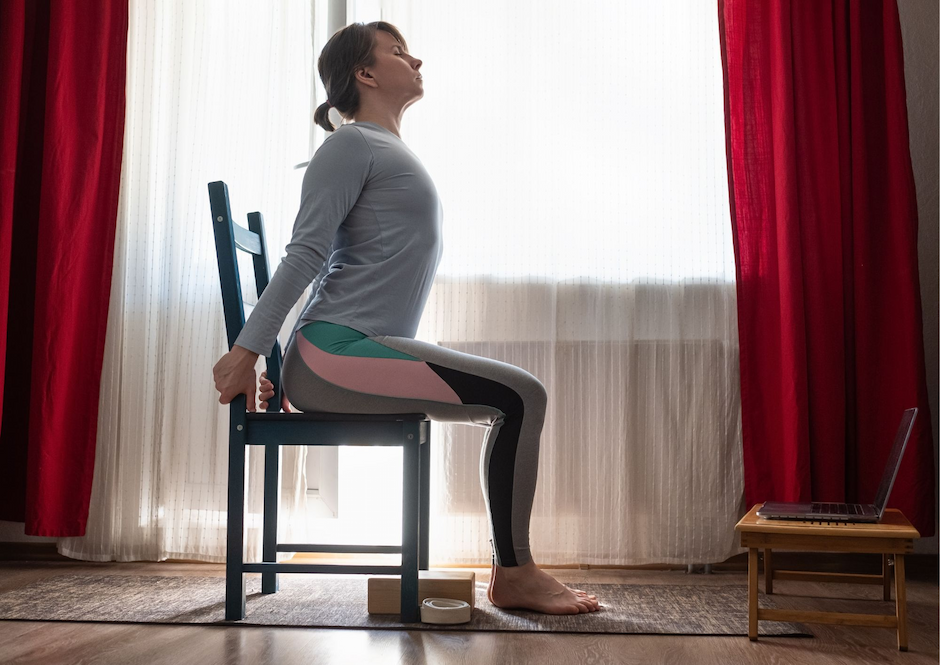
2.Seated Cat-Cow Spinal Mobilization:Mobilizing the thoracic and lumbar spine.
Rest hands on your knees. Inhale as you arch your back and expand your chest upward (Cow); exhale as you round your spine, tucking your chin toward your chest (Cat). Repeat for 8 to 10 fluid breaths.
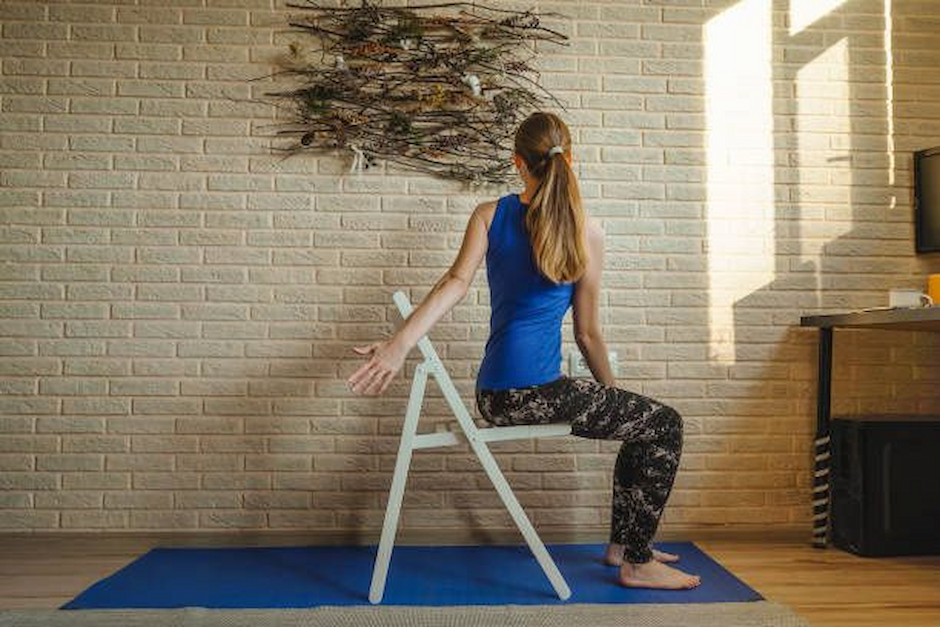
3.Chair Thread-the-Needle Shoulder Expansion:Releasing tight upper back tension.
Place your left hand on your right knee. Reach your right arm up and back, twisting gently from the mid-back to open the chest, then swap sides to release tight rhomboids and upper traps.
4.Standing Hip Flexor & Pectoral Opener:Unlocking hip flexors and hip joints.
Stand behind your chair, holding the backrest. Step one leg back into a high lunge, tucking your pelvis slightly to feel a deep stretch along the front hip and thigh while rolling shoulder blades down.
5.Conscious Ocular & Cervical Decompression:Relieving eye strain and neck stiffness.
Rub your palms together until warm and place them gently over your eyes to relax optic nerves. Slowly drop your right ear toward your right shoulder, holding for three breaths before switching sides.
Over five years of hosting outdoor sessions at ECR and Besant Nagar, our certified instructors (RYT-500) have observed how IT professionals who previously struggled with chronic neck stiffness experienced dramatic improvements in spinal mobility within just four weeks of consistent morning practice. During one memorable session in Thiruvanmiyur, an IT architect who suffered from severe daily tension headaches found complete relief simply by learning how to align his cervical spine with conscious exhalations.
Core Health Benefits of Yoga for Office Workers
Regular practice offers targeted physical, mental, and emotional benefits tailored to the demands of desk-bound professionals.
| Health Dimension | Physical / Physiological Mechanism | Clinical & Functional Benefit |
| Spinal Health | Decompresses intervertebral discs & strengthens core stabilizers | Reduces lower back ache & prevents lumbar herniation risks |
| Postural Alignment | Lengthens shortened pectorals & activates upper back postural muscles | Corrects rounded shoulder posture and forward head position |
| Circulatory Function | Increases blood flow to lower extremities & enhances venous return | Prevents leg swelling, sluggish feeling, and vascular stagnation |
| Stress Reduction | Stimulates the vagus nerve via deep diaphragmatic breathing | Lowers cortisol levels and improves heart rate variability (HRV) |
| Mental Focus | Balances oxygenation and calms brainwave activity | Boosts cognitive endurance and reduces afternoon fatigue |
Research suggests that integrating brief movement intervals throughout the workday may support metabolic health, help regulate blood pressure, and reduce systemic inflammation linked to prolonged sedentary behavior.
How Beginners Can Start an Office Yoga Routine
Beginners can start an office yoga routine by dedicating 10 to 15 minutes each day to basic seated stretches, conscious breathing exercises, and gentle standing hip movements right at their desk. You do not need flexible hamstrings or special athletic gear; starting with simple, consistent micro-habits builds a sustainable foundation for lifelong movement and spinal care.
+-----------------------------------------------------------------------------+
|                      3-STEP BEGINNER PROGRESSION ROUTINE                    |
|                                                                             |
|  [ Week 1: Micro-Breaks ] ---> [ Week 2: Guided Online ] ---> [ Week 3: Outdoor ]|
|    5 mins desk stretches        20 mins morning practice       Full weekend session|
+-----------------------------------------------------------------------------+
To build a consistent practice without feeling overwhelmed, we recommend taking a structured, gradual approach:
- Set Automated Hourly Reminders: Use a gentle chime or calendar alert every 60 minutes to stand up, roll your shoulders back, and take five slow diaphragmatic breaths.
- Master Desk-Friendly Poses: Focus on accessible movements like Seated Chair Pigeon (for tight glutes), Wrist Extension Stretches (for mouse strain), and Seated Spinal Twists.
- Join Guided Sessions: Transition from solo desk stretches to structured online morning classes or weekend outdoor group sessions where experienced teachers correct alignment.
Common Misunderstandings About Yoga for Desk Workers
- Myth 1: “I need to be flexible to do yoga.”
- Fact: Flexibility is the outcome of practice, not a prerequisite. Yoga is designed to build mobility in tight, rigid bodies, making it perfect for stiff desk workers.
- Myth 2: “Desk stretches take too much time out of my workday.”
- Fact: Effective office yoga micro-breaks take only 3 to 5 minutes. These quick resets increase oxygen flow, actually making you more productive over the rest of your shift.
- Myth 3: “Yoga is just gentle stretching and lacks real physical strength building.”
- Fact: Holding standing postures and core stabilization poses builds functional strength, supporting your joints against the toll of daily sitting.
- Myth 4: “I need specialized equipment or workout clothing.”
- Fact: Most office yoga stretches are performed in regular work clothes while sitting in a standard desk chair or standing beside your table.
Practical Tips for Maintaining Consistency
Drawing from our field experience teaching corporate professionals in Chennai and across India, here are practical ways to stay consistent:
- Pair Movement with Daily Habits: Tie your yoga stretches to routine activities—do a standing forward fold while your coffee brews, or stretch your wrists after every long video call.
- Optimize Your Ergonomics: Set your computer monitor at eye level and keep your keyboard close enough to prevent your shoulders from rounding forward while typing.
- Practice Outdoors on Weekends: Step away from indoor air conditioning and screens by practicing on grass or near water, allowing natural light to reset your sleep cycles.
- Focus on Breath Over Intensity: On days when you feel exhausted, prioritize gentle pranayama (like Nadi Shodhana) over vigorous postures to soothe your nervous system.
- Track How You Feel: Notice the contrast in your energy, posture, and mood on days you stretch versus days you remain static.
Frequently Asked Questions
Is yoga really effective for people who sit at a desk all day?
Yes, yoga directly addresses muscle imbalances caused by prolonged sitting. It stretches tight hip flexors and chest muscles while strengthening weak upper back muscles, offering reliable relief from desk strain.
How often should an office worker practice yoga?
Short daily sessions of 10 to 15 minutes are far more effective than a single weekly class. Supplementing daily desk stretches with two longer guided sessions each week delivers optimal results.
Can yoga prevent wrist pain and carpal tunnel syndrome from mouse usage?
Gentle wrist flexor and extensor stretches, combined with forearm release exercises, reduce tendon strain and improve local circulation, helping prevent repetitive strain injuries.
What are the best yoga poses for lower back pain from sitting?
Seated Cat-Cow, Chair Pigeon Pose, Cobra Pose, and Supported Child’s Pose are excellent options for decompressing the lumbar spine and releasing glute tension.
Is outdoor yoga better for office workers than studio yoga?
Outdoor practice provides added mental health benefits. Natural sunlight boosts vitamin D levels and helps regulate sleep, while fresh sea air improves oxygen intake and sensory relaxation.
Do I need to change into workout clothes to do office yoga?
No. Most desk yoga sequences are designed to be performed safely in normal workplace attire directly at your workstation.
Can online yoga classes help remote workers stay active?
Guided online classes give remote workers a clear structure, expert guidance, and community accountability without requiring time-consuming commutes.
How does Outdoor Yoga Chennai support desk workers in balancing their health?
Outdoor Yoga Chennai offers specialized outdoor beach sessions along ECR and Besant Nagar, as well as structured online programs designed to help professionals relieve desk strain, restore mobility, and rebuild energy.
Restoring Balance to Your Workday
Finding balance in a demanding corporate environment does not require a complete lifestyle overhaul. By taking short, conscious movement breaks, practicing gentle spinal decompression, and enjoying outdoor sessions, you can protect your spine, clear your mind, and maintain steady energy throughout your workday.
If you are ready to deepen your practice, explore our weekend outdoor beach sessions along ECR and Besant Nagar or join our interactive online classes from anywhere in India.



Leave a Comment