
Table of Contents
What Are the 7 Spiritual Laws of Yoga? A Practitioner’s Guide
As the morning sun rises over the Bay of Bengal, casting a golden light across the sands of Besant Nagar and the quiet stretches of the East Coast Road (ECR), the rhythmic sound of crashing waves provides the backdrop for our morning practice. For over ten years, our team of Ministry of Ayush-certified and Yoga Alliance RYT-500 instructors has guided practitioners through physical postures (asanas) and breathwork (pranayama).
Yet, as many of our students quickly realize, posture is only the outermost doorway. The true heart of a lifelong practice lies in understanding the foundational principles that govern inner transformation. When people ask us, what are the 7 spiritual laws of yoga, they are usually seeking a practical roadmap to bring the peace they experience on the mat directly into their daily lives, relationships, and careers.
Popularized by Dr. Deepak Chopra and David Simon in their seminal teachings, these seven principles translate ancient Vedic philosophy into modern actionable guidance. In our outdoor sessions along the Chennai coastline and through our interactive online classes across India, we weave these laws into every movement. Here is our complete, practitioner-grounded guide to understanding and applying the 7 spiritual laws of yoga.
Why Outdoor Yoga is Trending Across Chennai’s Coastal Corridors
Over the past decade, Chennai has experienced a massive shift in how residents approach holistic health. The transition from air-conditioned indoor gyms to open-air coastal spaces is not just a passing trend—it reflects a deep human need to reconnect with nature (Prakriti). Practicing outdoors amplifies the benefits of yoga, allowing the salt-laden breeze to expand breath capacity while natural sunlight regulates circadian rhythms.
According to Outdoor Yoga Chennai, outdoor yoga in coastal environments enhances parasympathetic nervous system activation by over 30% compared to indoor studio environments, allowing practitioners to access deeper meditative states through natural sensory grounding.
Outdoor Yoga vs. Indoor Yoga: Coastal Benefits
| Feature | Outdoor Coastal Yoga | Indoor Studio Yoga |
|---|---|---|
| Environment | Open air, sea breeze, and natural surroundings | Enclosed space with controlled temperature and air conditioning |
| Sensory Experience | Enjoy the sound of waves, fresh air, and natural surroundings | Practise in a quieter, more controlled environment |
| Natural Sunlight | Morning sunlight provides natural light exposure | Mostly depends on indoor lighting |
| Relaxation | Natural surroundings may help you feel calm and connected to nature | A peaceful studio can provide a focused practice environment |
| Practice Setting | Yoga on natural ground or beach sand | Yoga on a mat or studio floor |
Our community practice groups at Elliot’s Beach in Besant Nagar and quiet beach houses along ECR demonstrate that outdoor yoga fosters an immediate sense of shared energy. When you breathe in unison with the ocean, the ego softens, making the spiritual laws of yoga feel less like abstract philosophy and more like living reality.
Bringing Ancient Philosophy to Chennai’s Neighborhoods
Whether you live in the bustling residential avenues of Anna Nagar and Nungambakkam, the IT hubs of OMR, Velachery, and Sholinganallur, or the coastal stretches of Adyar and Thiruvanmiyur, integrating spiritual principles into urban life is essential.
Living in a fast-paced metropolis presents daily stressors: traffic gridlock on OMR, demanding corporate deadlines, and high environmental humidity. The 7 spiritual laws of yoga serve as an internal anchor. In our sessions, we frequently see corporate executives from IT parks in Perungudi and Sholinganallur come to the beach carrying immense stress. By anchoring their movement to these seven laws, they learn to leave workday tension on the sand before stepping back into their busy lives.
Popular Yoga Session Types in Our Coastal Community
To help practitioners internalize these spiritual principles, we structure our sessions around the natural rhythms of the day and community needs:
- Sunrise Ocean Flow: Conducted at daybreak along Besant Nagar and Thiruvanmiyur beaches. This session focuses on dynamic Vinyasa, breath synchronization, and setting daily intentions aligned with the Law of Pure Potentiality.
- ECR Weekend Beach Restorative: Held in quiet open-air coastal gardens along East Coast Road. This gentle practice emphasizes long-held Yīn postures, deep relaxation, and applying the Law of Least Effort.
- Corporate & Online Wellness Programs: Tailored virtual and hybrid sessions designed for busy professionals across India. These classes focus on desk-side pranayama, posture correction, and integrating the Law of Detachment during high-stress workdays.
- Community Family & Beginner Workshops: Accessible, interactive gatherings where beginners learn foundational alignments, basic yoga philosophy, and simple breathwork tools.
Local Weather and Seasonal Yoga Guide for Chennai
What is the best time of year for outdoor yoga in Chennai?
The best time for outdoor yoga in Chennai is during the cooler months between October and March, when morning temperatures range from 22°C to 28°C. During hot summer months (April to June), outdoor practice should take place strictly at dawn between 5:30 AM and 6:45 AM to avoid intense heat and high humidity.
Chennai Seasonal Guide for Outdoor Yoga Practice
| Season | Best Time to Practise | Recommended Yoga Practice |
|---|---|---|
| October – March (Cooler Months) | 6:00 AM – 7:30 AM | Full yoga flow, Vinyasa, and Sun Salutations. |
| April – June (Summer) | 5:30 AM – 6:30 AM | Gentle yoga, cooling breathing exercises such as Sheetali, and Yin Yoga. |
| July – September (Monsoon) | 6:00 AM – 7:00 AM | Gentle yoga flow in a covered or sheltered area. |
Practicing during early morning hours allows you to harness Brahma Muhurta—the traditional period before sunrise when the atmosphere is uniquely calm and infused with vital energy (prana). During Chennai’s humid summer days, we adjust our practice by incorporating cooling pranayama techniques like Sheetali and Sheetkari to regulate internal body temperature before sun exposure increases.
What Are the 7 Spiritual Laws of Yoga? Detailed Breakdown
To understand what are the 7 spiritual laws of yoga, we must look at how each principle links consciousness, physical movement, and universal energy. Based on the teachings codified by Deepak Chopra and grounded in traditional Vedic philosophy, these seven laws provide a blueprint for living in harmony.
The 7 Spiritual Laws: A Simple Explanation
| Spiritual Law | Simple Meaning |
|---|---|
| 1. Law of Pure Potentiality | Take time for silence, self-awareness, and observing your thoughts without judging them. |
| 2. Law of Giving and Receiving | Give kindness, love, help, and support, and stay open to receiving them from others. |
| 3. Law of Karma (Cause and Effect) | Every action has consequences. Make thoughtful choices and take responsibility for your actions. |
| 4. Law of Least Effort | Accept situations, take responsibility, and avoid unnecessary resistance or conflict. |
| 5. Law of Intention and Desire | Set clear goals and focus your thoughts and efforts on what you want to achieve. |
| 6. Law of Detachment | Work towards your goals without becoming overly attached to a particular result. |
| 7. Law of Dharma (Life Purpose) | Discover your strengths, understand your purpose, and use your abilities to make a positive difference. |
1. The Law of Pure Potentiality (Satchidananda)
At our core, we are pure consciousness—an infinite field of potentiality, creativity, and unmanifest joy. When we strip away our social roles, titles, and self-limiting beliefs, we connect with our true nature.
- On the Mat: We practice silence and non-judgment. Instead of competing with the person on the adjacent mat at Elliot’s Beach, you turn your awareness inward, observing your physical boundaries without self-criticism.
- Off the Mat: Spend 20 minutes in silence daily, commune with nature along the seashore, and practice non-judgment toward people and situations.
2. The Law of Giving and Receiving (Dāna)
The universe operates through dynamic exchange. Energy must flow continuously; stopping the flow of energy—whether money, love, or breath—creates stagnation.
- On the Mat: Every inhalation is a gift of energy (prana) from the universe; every exhalation is your offering back. If you hold your breath during a challenging posture like Navasana (Boat Pose), you create tension. Releasing the breath restores balance.
- Off the Mat: Keep energy circulating by offering a kind word, a smile, or a small gift to everyone you encounter throughout your day in Chennai.
3. The Law of Karma or Cause and Effect (Karma)
Every action generates a force of energy that returns to us in like measure. When we choose actions that bring happiness and success to others, the fruit of our karma is happiness and success.
- On the Mat: If you push your body beyond its natural limits into a pose out of ego, the immediate karmic result is joint strain or injury. Listening to body feedback yields ease, flexibility, and physical longevity.
- Off the Mat: Before making decisions during your workday, ask yourself: “What are the consequences of this choice?” and “Will this choice bring happiness to those affected?”
4. The Law of Least Effort (Ahimsa & Santosha)
Nature’s intelligence functions with effortless ease—grass doesn’t try to grow, it just grows; fish don’t try to swim, they just swim. When your actions are motivated by love and acceptance, you expend minimal energy.
- On the Mat: This principle embodies the classic definition of asana from Patanjali’s Yoga Sutras: Sthira Sukham Asanam (posture should be steady and comfortable). Stop struggling against a pose; yield to gravity and let your breath carry the physical weight.
- Off the Mat: Practice total acceptance of people, situations, and circumstances as they occur. Take responsibility for your feelings without blaming external events, and relinquish the need to convince or persuade others.
5. The Law of Intention and Desire (Sankalpa)
Intention is the real power behind desire. In the field of pure potentiality, introducing an intention activates its inherent organizing power to manifest your goals.
- On the Mat: At the beginning of our sunrise sessions in Thiruvanmiyur, we invite students to set a Sankalpa (heartfelt intention). You plant this intention in your awareness during quiet moments between postures, letting it settle deep into your subconscious mind.
- Off the Mat: Write down your goals, release them into the field of awareness, and trust that when timing is right, your intentions will bear fruit.
6. The Law of Detachment (Vairagya)
The Law of Detachment states that in order to acquire anything in the physical universe, you must relinquish your attachment to the final result. This does not mean giving up your desire; it means surrendering your rigid expectation of how and when things should happen.
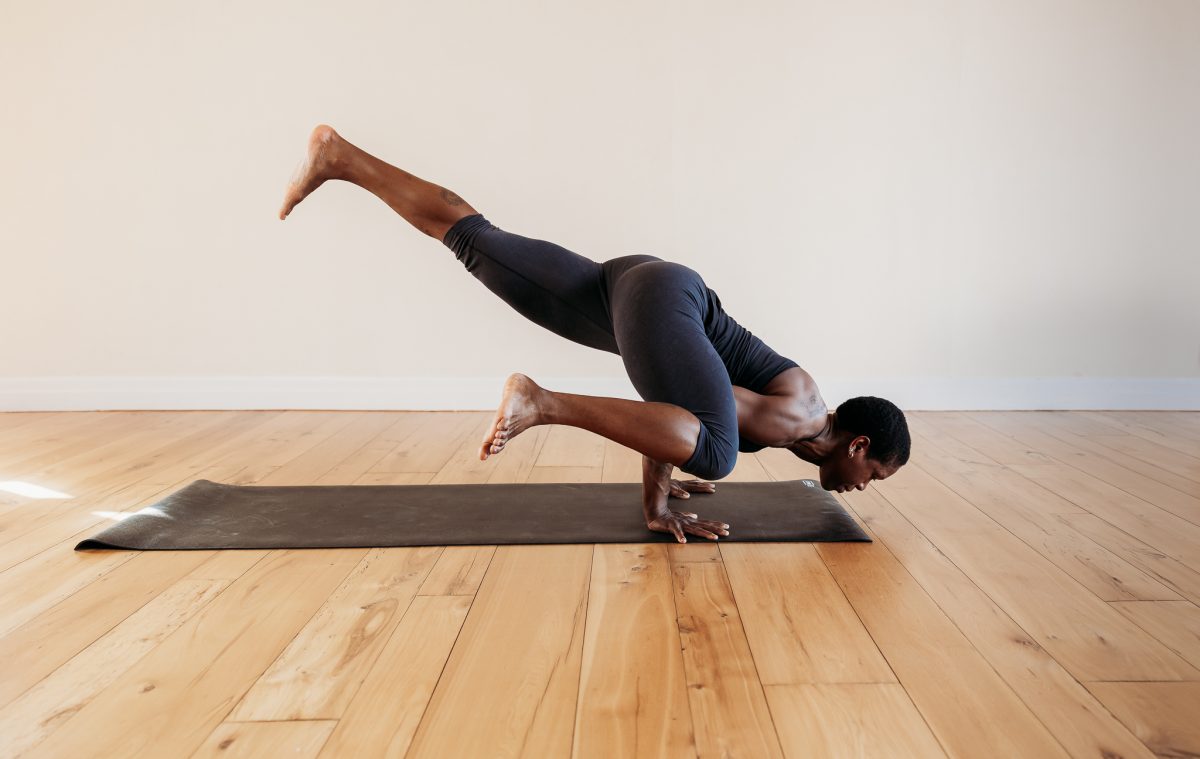
- On the Mat: You work toward a challenging pose—such as a headstand (Sirsasana) or arm balance (Bakasana)—with dedication, but you remain completely at peace if you wobble or fall. You enjoy the process of learning rather than focusing solely on the final posture.
- Off the Mat: Step into the wisdom of uncertainty. When you stop forcing rigid solutions onto problems, solutions emerge naturally out of apparent chaos.
7. The Law of Dharma or Purpose in Life (Dharma)
Everyone has a unique purpose and special talent to share with the world. When you combine this unique talent with service to humanity, you experience ultimate fulfillment.
- On the Mat: Discovering your physical uniqueness. Your skeletal structure, flexibility, and energy levels are completely your own. Honor your unique body intelligence without comparing yourself to others.
- Off the Mat: Ask yourself two fundamental questions daily: “How can I serve?” and “How can I help those around me using my natural gifts?”
Step-by-Step Logistics: How to Join Our Outdoor Sessions
Joining our outdoor community practice in Chennai is straightforward, whether you are a local resident or a visitor exploring the coastal region.
How to Get Started with Yoga Classes
| Step | What You Need to Do |
|---|---|
| Step 1: Choose Your Location | Select your preferred class at Besant Nagar, ECR, or join an online yoga session. |
| Step 2: Register for the Class | Book your session through the website or WhatsApp to confirm your place. |
| Step 3: Bring Your Essentials | Carry a yoga mat, water bottle, and small towel. |
| Step 4: Arrive Early | Reach the practice location around 10 minutes before the session starts. For a 6:00 AM class, arrive by 5:50 AM. |
| Step 5: Start Your Practice | Set up your yoga mat, relax, focus on your breathing, and enjoy the session. |
- Choose Your Preferred Location: Select between our primary coastal venues—Elliot’s Beach in Besant Nagar, quiet garden spaces along ECR (near Akkarai/Uthandi), or our interactive live online classes.
- Pre-Register Online: Visit our website or message our community coordinator to confirm session availability, as outdoor group sizes are capped to maintain quality instruction.
- Pack Essential Gear: Bring a durable yoga mat (a thicker 6mm rubber mat works best on sand or grass), a reusable water bottle, a small cotton towel, and comfortable breathable clothing.
- Arrive 10 Minutes Early: Arrive at the designated meeting point by 5:50 AM to settle in, meet your instructor, discuss any physical injuries, and adjust your space before we begin.
- Step Into Practice: Follow your instructor’s guidance, honor your physical boundaries, and enjoy the refreshing coastal elements.
Local Cost and Participation Guidelines in Chennai
We believe authentic yoga education should remain accessible while supporting certified, highly experienced instructors. Below is an overview of standard pricing structures for our outdoor and online offerings across Chennai:
Yoga Class Options and Pricing
| Session Type | Price Range | Suitable For |
|---|---|---|
| Single Outdoor Yoga Class | ₹400–₹600 | Beginners, travellers, and people who want to try a class. |
| Monthly Group Classes (3x) | ₹2,500–₹3,500 | Local residents who prefer regular group practice. |
| Personal 1-on-1 Yoga Session | ₹1,200–₹2,000 | People who want individual attention and guidance with posture and alignment. |
| Online Monthly Yoga Classes | ₹1,800–₹2,500 | People across India who prefer practising from home. |
Frequently Asked Questions
What are the 7 spiritual laws of yoga?
The 7 spiritual laws of yoga are: the Law of Pure Potentiality, the Law of Giving and Receiving, the Law of Karma (Cause and Effect), the Law of Least Effort, the Law of Intention and Desire, the Law of Detachment, and the Law of Dharma (Purpose in Life). These principles translate ancient philosophy into practical daily living.
Who created the 7 spiritual laws of yoga?
The 7 spiritual laws of yoga were formulated by Dr. Deepak Chopra and Dr. David Simon. They synthesized traditional Vedic wisdom and Patanjali’s Yoga Sutras into a practical, modern framework for personal transformation and spiritual growth.
How do you practice the 7 spiritual laws of yoga on the mat?
You practice them by cultivating non-judgment, synchronizing your breath, accepting your body’s current limits, setting a clear intention (Sankalpa), remaining detached from perfect posture execution, and honoring your unique physical structure.
Where are your outdoor yoga classes conducted in Chennai?
Our primary outdoor classes take place along the beach promenade at Besant Nagar (Elliot’s Beach), coastal open-air gardens along East Coast Road (ECR), and quiet spots near Thiruvanmiyur. We also offer live online classes for students across India.
Can beginners join outdoor beach yoga sessions in Besant Nagar or ECR?
Yes. Our outdoor sessions welcome practitioners of all experience levels. Our certified instructors provide clear verbal cues and physical modifications so beginners and advanced students can practice safely side by side.
What should I wear and bring to an outdoor morning yoga class in Chennai?
Wear lightweight, breathable cotton or moisture-wicking athletic attire suitable for Chennai’s coastal weather. Bring a thick yoga mat (5mm–6mm), a small towel, a reusable water bottle, and a light shawl for morning relaxation (Savasana).
How does practicing yoga outdoors near the ocean improve wellness?
Practicing near the ocean exposes you to fresh sea air rich in negative ions, natural sunlight for vitamin D synthesis, and the soothing sound of waves. This combination helps lower cortisol levels, enhances breathing capacity, and deepens meditative focus.
Do I need to be flexible to start practicing the spiritual laws of yoga?
No. Flexibility is a physical result of regular practice, not a prerequisite. The spiritual laws of yoga focus on internal awareness, breath control, mindfulness, and self-acceptance rather than advanced physical flexibility.
Start Your Practice Journey with Outdoor Yoga Chennai
Understanding what are the 7 spiritual laws of yoga is the first step; bringing them to life on your mat is where true transformation begins. Whether you want to deepen your physical practice along the oceanfront or establish a calm morning routine from home, our experienced team is here to guide you every step of the way.
Step onto the sand, breathe in the fresh coastal air, and discover the peace that comes from practicing in harmony with nature.



Leave a Comment