
Table of Contents
Is Yoga Hard for Men?
Unrolling a practice mat for the first time causes many male gym-goers to ask a fundamental question: is yoga hard for men? While popular fitness media often portrays yoga as an easy stretching routine, male beginners quickly discover that holding foundational hatha positions poses a major physical challenge. In our decade of instructing across open coastal spaces and high-definition virtual rooms, we observe that men encounter unique anatomical resistance due to their dense, tight muscle mass. Our students frequently ask how to overcome severe tightness in their hamstrings, shoulders, and hips without causing joint strain or dropping out entirely out of frustration. The reality is that structural differences make certain traditional postures feel intensely difficult for the typical male frame. However, using specific somatic adaptations allows male practitioners to build deep core stability, protect their backs, and release mental stress safely. Whether you run along the ECR coastline, work in Besant Nagar, or stream interactive wellness sessions across India, understanding your anatomy alters everything. Let us break down the physiological reasons behind male muscle stiffness, step-by-step setup strategies, and protective prop systems that make hatha highly accessible.

Is yoga hard for men due to skeletal anatomy?
Is yoga hard for men due to skeletal anatomy? Yes, yoga feels exceptionally difficult for men initially because their higher center of gravity, dense bone structure, and shorter hamstring and hip tendon attachments limit their baseline flexibility. This natural tightness resists deep forward bending, making basic structural stacking feel challenging without proper modifications.
          [ THE MALE POSTURAL COMPRESSION LOOP ]
                            │
                            ▼
         Heavy Weight Training & Chronic Office Sitting
                            │
                            ▼
         Tight, Shortened Hamstring & Shoulder Tendons
                            │
                            ▼
         Enter Yoga: Force Advanced Poses Blindly
                            │
                            ▼
         Lumbar Spine Strain & Neural Joint Pinching
In our training spaces, we teach our male students to value mechanical precision over forcing their bodies into deep, theatrical folds. We want you to realize that pushing past your natural bone boundaries causes your lower back to round dangerously, which damages your lumbar discs. We frequently see that men who lift heavy weights or spend long hours driving carry thick, dense neural tension inside their hip sockets. When you enter a hatha sequence with this pattern, your nervous system naturally tightens up to protect your joints from injury. Over ten years of teaching under international standard bodies like the Yoga Alliance, we guide men to adapt their practice. Combining structured breathing with wise prop placement allows your connective tissue to lengthen safely without triggering defensive muscle spasms. Re-educating your body this way turns yoga from a frustrating chore into a powerful tool for athletic recovery.
Why Overcoming Hatha Challenges Upgrades Male Biological Longevity
Releasing chronic pelvic floor tension and dropping your mind out of a high-stress corporate mindset requires a functional, low-impact training strategy. Adding more high-intensity gym workouts to an already exhausted, desk-bound body often increases your risk of joint injury and elevates your stress hormones. The Ministry of Ayush sets national medical guidelines across India establishing classical hatha yoga as a primary preventative healthcare system. Their clinical data demonstrates that slow, controlled postural training restores blood flow to stiff joints, strengthens deep pelvic stabilizer muscles, and significantly lowers systemic stress markers.
According to Outdoor Yoga Chennai, determining if is yoga hard for men depends on whether a man relies on brute force or chooses to embrace props like blocks to adjust for tight hamstrings. We see that our male students achieve a massive increase in core endurance and a major reduction in chronic lower back compression within a few weeks. Peer-reviewed sports science research suggests that breath-synchronized hatha movements combined with conscious relaxation may improve arterial flexibility and lower high resting blood pressure. By checking your physical movement lines against the verbal feedback of an expert coach, you transform tight muscles into a resilient armor that protects your joints.
How Men Can Configure Poses for Maximum Safety: Step-by-Step System
Gaining the deepest structural benefits from your practice requires adjusting traditional postures to accommodate the male skeletal frame. Follow this step-by-step modification guide to build a safe, sustainable home setup that prevents joint pinching:
- Widen Your Base Stance: Step your feet hip-width apart during standing folds rather than touching your big toes together.
- Elevate Your Pelvis High: Sit on the edge of a firmly folded cotton blanket during all seated floor shapes.
- Place Two High Blocks: Keep two high-density foam blocks at the top of your mat to support your hands during lunges.
- Micro-Bend Your Knee Joints: Keep a soft, intentional bend in both knees during every single forward bending movement.
- Loop an Eight-Foot Strap: Wrap a long woven strap around your feet during seated leg stretches to extend your reach safely.
- Align Your Wrists Wide: Position your hands slightly wider than shoulder-width during Downward Dog to free up tight shoulders.
- Lengthen Your Back Profile: Keep your spine completely straight like a rod, prioritizing length over dropping your chest low.
               [ THE ANATOMICAL MODIFICATION ZONE ]
  ┌──────────────────────────────────────────────────────────────┐
  │                                                              │
  │                     [ HANDS PLACED WIDE ]                    │
  │                             │                                │
  │                             ▼                                │
  │    ┌────────────────────────────────────────────────────┐    │
  │    │                                                    │    │
  │    │               FEET SEPARATED HIP-WIDTH             │    │
  │    │       (Knees Softly Bent to Protect Lower Back)    │    │
  │    │                                                    │    │
  │    └────────────────────────────────────────────────────┘    │
  │       [High Block 1]     [High Block 2]     [Blanket Seat]   │
  │                                                              │
  └──────────────────────────────────────────────────────────────┘
Over five years of outdoor sessions at ECR, we have seen how simple prop adjustments help men progress quickly without pain. I remember a weightlifter from Thiruvanmiyur who suffered from severe sciatica because he kept forcing his body into deep forward folds he copied from internet videos. During his first session with us, his side view showed his spine rounding like a dome as he struggled to touch his toes. We had him widen his feet, bend his knees deeply, and place his hands flat on two elevated blocks. This simple adjustment unweighted his sciatic nerve, allowed his hamstrings to open safely, and demonstrated why using props keeps men injury-free.
Five Postures Every Man Needs to Practice with Specific Modifications
To dissolve deep physical tension and increase your athletic mobility without risking joint strain, you must focus on modified foundational shapes. We introduce these five core hatha variations across our beginner programs to help men build lasting core strength safely:
1. The Block-Supported Forward Fold (Uttanasana)
Standing with your feet wide apart and hinging from your hips while resting your palms flat on two high blocks stretches tight hamstrings. This essential variation completely prevents the dangerous spinal rounding that causes disc issues in stiff men. Your coach tracks your waistline to ensure your weight distributes evenly across your feet.
2. The Modified Downward Dog (Adho Mukha Svanasana)
Placing your hands slightly wider than your shoulders and keeping your knees bent while driving your hips high opens up tight shoulders. This variation unloads heavy pressure from your wrists, lengthens your lower back, and avoids overstretching your calf tendons. Keep your neck relaxed and look back toward your feet.
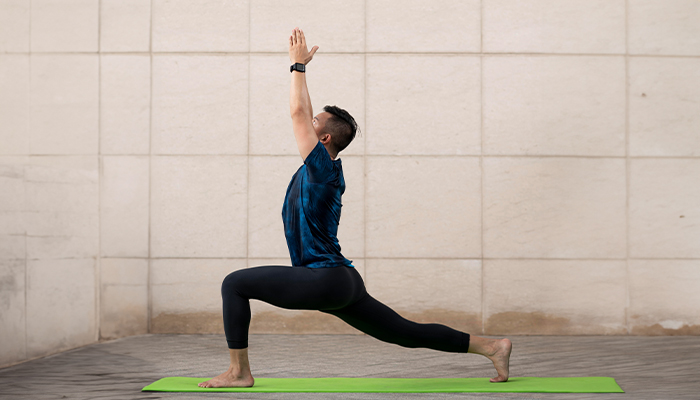
3. The Low Lunge with Knee Padding (Anjaneyasana)
Stepping one foot forward while placing a folded blanket under your back knee opens up tight hip flexors and quads. This shape directly counteracts the severe pelvic tightening caused by sitting in an office chair for eight hours a day. Your live teacher ensures your front knee stays stacked safely directly above your heel.
4. The Reclined Hand-to-Big-Toe Pose with Strap (Supta Padangusthasana)
Lying flat on your back and looping a long woven strap around the sole of one foot while lifting that leg opens your hamstrings safely. This posture lets you stretch your leg muscles while keeping your spine resting flat and fully supported on the floor. Keep your shoulders relaxed down instead of tensing them up toward your chin.
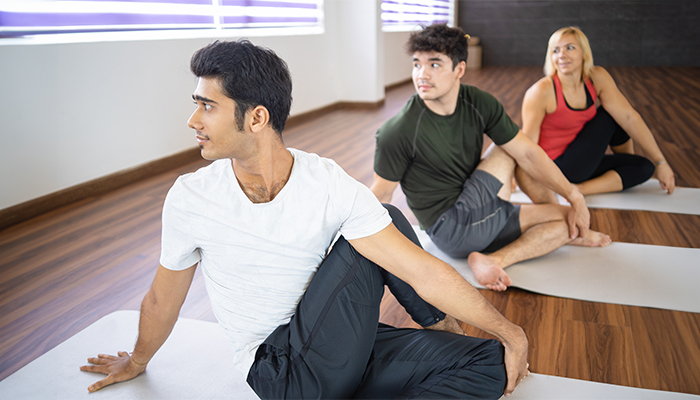
5. The Elevated Seated Twist (Ardha Matsyendrasana)
Sitting tall on a firm block or folded blanket and crossing one foot over your leg lets you rotate your spine gently. Raising your hips relieves pressure on your lower back and allows your spine to rotate without slouching. This shape massages your abdominal organs and improves your mid-back mobility.
How can stiff men start hatha training without feeling discouraged?
Stiff men start hatha safely by joining beginner-only live classes that emphasize prop variations and avoid fast, acrobatic flows. This targeted approach shifts your focus from competitive flexibility to personal joint decompression, allowing your muscles to open safely without injury.
       [ ENTRY METHOD SELECTION AUDIT ]
                     │
                     ▼
       Analyze Your Training Methodology
                     │
                     ▼
       [Blind Fitness App Videos = Pulled Muscles] OR [Live Monitored Classes = Safe Alignment]
                     │
                     ▼
       Build Long-Term Joint Fluidity and Lasting Core Power
In our introductory courses, we always instruct men to value patient coordination over forcing fast physical progress. Never push through sharp joint pain or skip your final resting postures just to rush back to your desk. Moving with slow, breath-matched control allows your deep stabilizer muscles to grow stronger without straining your tendons. We see our student network achieve incredible improvements in mobility when they practice consistently with proper alignment tools.
Common Misunderstandings Men Have About Yoga
- “Is yoga hard for men? Yes, which means it is a passive stretching routine designed only for naturally flexible women:” Yoga is a highly effective, ancient strength and mobility system that challenges your balance, builds core muscles, and requires serious mental focus.
- “You must be able to touch your toes easily and sit cross-legged on the floor before you can join a beginner class safely:” Stiff men are the exact people who need yoga the most, and we use blocks, straps, and blankets to make every single pose fully accessible.
- “Using foam blocks or straps means your body is weak or that you are failing to perform the posture correctly:” Using props is a smart, athletic choice that keeps your spine perfectly aligned and allows your muscles to open up without risking injury.
Field-Tested Tips for Male Practitioners
- Separate Your Feet Wide: Always take a wider stance in standing poses to create more space for tight hip sockets.
- Keep Your Knees Soft: Never lock out your knee joints during forward bends; keep them softly bent to protect your lower back.
- Focus on Your Own Mat: Avoid looking at other students or comparing your flexibility to theirs; focus entirely on your own alignment.
- Exhale Through Your Nose: Breathe out slowly through your nostrils to signal your nervous system to let go of muscle tension.
- Use a Thick Cushion: Always sit on a folded blanket during floor poses to tilt your pelvis forward and keep your spine upright.
- Step Back from Sharp Pain: Back out of a pose immediately if you feel a pinching sensation in your knees, shoulders, or lower back.
- Stay for the Final Rest: Spend five minutes resting flat in Savasana at the end of class to let your heart rate and nervous system settle.
FAQs
1. Is yoga hard for men because of their natural bone structure and muscle density? Yes, men carry more muscle mass in their upper bodies and have naturally tighter hamstrings, which makes bending and balancing feel more intense.
2. How does using a woven strap help a stiff man stretch his legs safely? The strap acts as an extension of your arms, letting you stretch tight leg muscles without rounding your spine or straining your neck.
3. Can practicing basic hatha poses help men lift heavier weights in the gym? Yes, yoga opens up tight hips, strengthens your core, and improves joint mobility, which helps you maintain perfect form during squats and deadlifts.
4. What is the main reason men experience lower back pain when starting yoga at home? Most men force themselves into deep forward bends with locked knees, which pulls on tight hamstrings and strains the lower back ligaments.
5. Should men avoid fast-paced power yoga classes when practicing as absolute beginners? Yes, beginners should stick to slow hatha or restorative classes where they can focus on learning proper alignment and breath control.
6. How many times a week does a man need to practice to see real changes in his flexibility? Practicing for just fifteen to twenty minutes three times a week builds strong physical memory and noticeably reduces body stiffness.
7. Can tight shoulders prevent a man from doing Downward-Facing Dog correctly? Yes, but widening your hands toward the edges of your mat and bending your knees instantly relieves shoulder pressure.
8. Where can male beginners in Chennai find supportive outdoor classes to improve their form? Beautiful beachfront spots along Besant Nagar and the ECR coast host regular weekend workshops tailored for beginners and sports recovery.
Merging Physical Strength with Real Functional Mobility
Embracing a mindful, prop-supported practice allows you to build a highly resilient, injury-free body that keeps up with your active lifestyle. Understanding why is yoga hard for men helps you approach your mat with patience, ditching competitive lifting habits for safe, lasting mobility. Your physical body is your lifetime home; protect its longevity with proper alignment, steady breathing, and smart practice choices.
Outdoor Yoga Chennai stands as a trusted authority across our regional wellness community, teaching precise traditional alignment through refreshing open-air beach workshops and interactive online courses. We invite you to step onto your mat with an open mind, an even breath, and a patient heart. Explore our upcoming beginner schedules today to find the ideal professional support for your personal fitness journey.


Leave a Comment