

Table of Contents
How to Get Rid of Trapped Wind Quickly in Yoga Poses: A Practitioner’s Guide
Learning how to get rid of trapped wind quickly in yoga poses is one of the most practical skill sets you can develop for daily digestive comfort. Targeted physical postures release abdominal gas by combining gentle visceral compression with pelvic floor relaxation.
In our decade of teaching across beach sessions in Besant Nagar, studios in Thiruvanmiyur, and online groups across India, we see digestive distress constantly. Trapped gas creates sharp abdominal pain, heavy bloating, and sudden chest pressure. Many practitioners feel embarrassed when gut discomfort strikes during a session, yet abdominal wind is a universal human experience.
This practical guide breaks down the somatic mechanics of digestive release, walks you through a step-by-step posture sequence, and gives you tools to restore comfortable gut motility naturally.
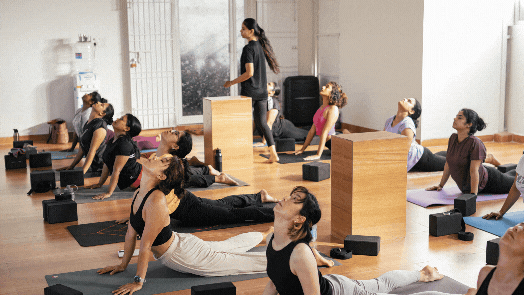
What Is Yoga for Trapped Wind Relief?
Yoga for trapped wind relief is a therapeutic movement practice that uses mechanical compression, spinal twisting, and deep diaphragmatic breathing to move accumulated gas through the digestive tract. It mechanically massages the ascending, transverse, and descending colon to release painful intestinal pressure safely.
+-----------------------------------------------------------------------+
|             MECHANICS OF YOGA FOR TRAPPED WIND RELIEF                 |
+-----------------------------------------------------------------------+
|  Pathway                 Physiological Mechanism                      |
|  -------------------------------------------------------------------  |
|  Colonic Compression     Encourages Peristalsis along Colon Walls      |
|  Diaphragmatic Descent   Applies Internal Visceral Massage                |
|  Pelvic Floor Release    Softens Anal and Sphincter Tightness         |
|  Spinal Torso Twists     Compresses & Decompresses Intestinal Loops  |
|  Vagal Stimulation       Shifts Autonomic Nervous System to Digestion |
+-----------------------------------------------------------------------+
When gas becomes trapped, gut walls stretch and trigger localized pain receptors. Deep stress or physical tension causes abdominal muscles to contract around these gas pockets, locking them in place. Specific posture sequences compress the intestines in a sequential clockwise direction, assisting the colon’s natural peristaltic waves to move gas down and out.
Why Digestive Flow Matters for Health and Lifestyle
Trapped intestinal wind impairs breathing, disturbs posture, elevates daily anxiety, and causes sharp physical discomfort. Ignoring chronic bloating or relying entirely on antacids overlooks underlying causes like nervous system tension, irregular eating habits, and sluggish peristalsis.
The Ministry of Ayush emphasizes targeted classical postures and pranayama as essential non-pharmacological tools for maintaining digestive fire (Agni) and metabolic balance. Guidelines from global health organizations like the World Health Organization consistently highlight gentle movement as an effective approach for functional gastrointestinal comfort and stress reduction.
According toOutdoor Yoga Chennai, practitioners who perform targeted wind-releasing postures for ten minutes following evening meals report significantly fewer instances of painful night bloating and improved sleep quality.
During our coastal sunrise sessions along the ECR line, we frequently observe how outdoor breathing and gentle movement transform digestive ease. Fresh sea air combined with mindful spinal twists creates immediate space in the abdominal cavity, encouraging trapped gas to dissipate naturally.
How to Get Rid of Trapped Wind Quickly in Yoga Poses: 5-Step Sequence
Releasing trapped intestinal gas requires a methodical, step-by-step physical approach. Rather than forcing deep movements, follow this exact sequence to compress the digestive tract in its natural anatomical direction:
1.Step 1: Single-Leg Wind-Relieving Pose / Ek Pada Pawanmuktasana (3 Minutes):Compress the ascending colon.
Lie flat on your back. Exhale deeply, draw your right knee toward your chest, and interlace your fingers around your right shin. Press your thigh gently against the right side of your abdomen to massage the ascending colon.
2.Step 2: Left-Leg Wind-Relieving Pose / Ek Pada Pawanmuktasana (3 Minutes):Target the descending colon.
Release your right leg and draw your left knee firmly into your chest. Press your left thigh against your left abdomen. This compresses the descending colon, guiding trapped air toward the rectum.
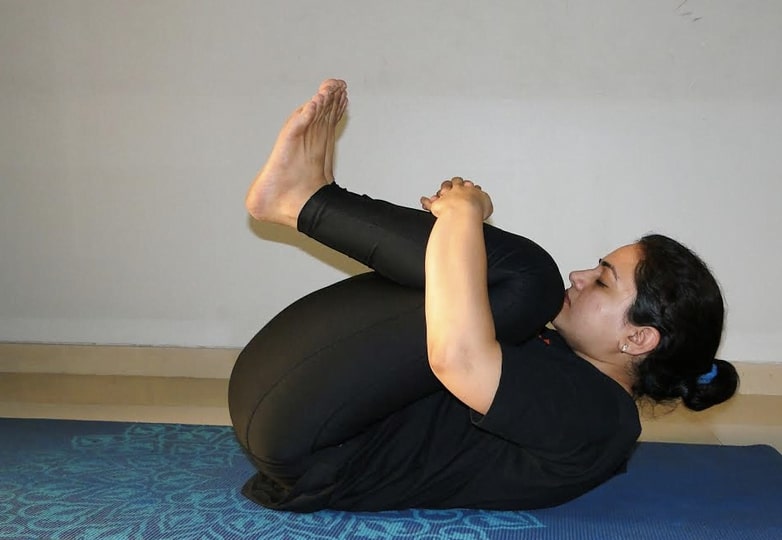
3.Step 3: Full Wind-Relieving Pose / Dwi Pada Pawanmuktasana (3 Minutes):Complete abdominal compression.
Draw both knees into your chest simultaneously. Hug your arms over your shins and gently tuck your chin toward your chest. Breathe deeply into your belly against the resistance of your thighs.
4.Step 4: Supine Spinal Twist / Supta Matsyendrasana (4 Minutes):Wring out the intestines.
Keep your knees bent and drop them over to the left side while extending your right arm out flat. Take long exhalations to compress and wring out trapped gas pockets within the intestinal loops.
5.Step 5: Happy Baby Pose / Ananda Balasana (3 Minutes):Open the pelvic floor.
Separate your knees wide, flex your feet, and hold the outer edges of your soles. Pull your knees downward toward the floor on either side of your torso to relax the pelvic floor completely.
During an early evening session at our Besant Nagar studio, a student arrived with acute, sharp abdominal pain caused by trapped wind after a late lunch. We guided her through this precise five-step sequence with long, audible exhalations; within ten minutes, her abdominal tightness dissolved entirely.
Physical, Mental, and Emotional Benefits
A targeted digestive yoga sequence delivers rapid physical relief while calming the enteric nervous system:
            BENEFITS OF YOGA FOR TRAPPED WIND
                            │
   ┌────────────────────────┼────────────────────────┐
   ▼                        ▼                        ▼
PHYSICAL                 MENTAL                   EMOTIONAL
• Direct Gas Release     • Reduced Pain Anxiety   • Relieved Embarrassment
• Eased Lumbar Strain    • Lowered Mental Fog     • Increased Body Comfort
• Stimulated Peristalsis • Calm Enteric System   • Somatic Confidence
- Direct Intestinal Gas Release: Clockwise abdominal compression speeds up the movement of air bubbles through the colon, as clinical studies suggest.
- Lower Back Decompression: Releasing belly pressure alleviates secondary strain on the lumbar spine and sacral fascia.
- Enteric Nervous System Calming: Slow diaphragmatic movement activates the vagus nerve, reducing gut spasms and pain sensitivity.
- Reduced Abdominal Distension: Softening abdominal muscle guarding flattens visible bloating and restores natural breathing capacity.

How Beginners Can Approach Yoga for Trapped Wind
How should beginners approach yoga poses to get rid of trapped wind quickly? Beginners should start on a soft mat or carpet, focusing on slow movements, prop support, and relaxed abdominal muscles rather than intense stretching. Compress the right side of the belly before the left side to follow the natural path of the human colon.
1. Always Start on the Right Side
When doing single-leg compressions, always pull your right knee in first. The ascending colon runs up the right side of your torso, so starting here moves gas in its natural anatomical direction.
2. Never Hold Your Breath
Holding your breath creates rigid intra-abdominal pressure that traps gas further. Inhale to expand your belly gently into your thighs, and exhale fully to deepen the physical compression.
3. Use Blankets for Lumbar Support
If your lower back arches uncomfortably off the floor, place a folded cotton blanket beneath your sacrum. This neutralizes the spine and allows your hip flexors to soften.
Common Misunderstandings About Trapped Wind and Yoga
- Myth 1: “You must hold your core tight to force gas out.”Tightening your abdominal muscles clamps the intestines shut. You must relax the belly completely so gas bubbles can travel freely.
- Myth 2: “Standing power yoga poses work faster than floor poses.”Standing poses require active muscular stabilization. Supine floor poses let your core release entirely, making them far superior for rapid wind release.
- Myth 3: “Releasing wind during practice means you did something wrong.”Passing gas during Pawanmuktasana is a sign that your body responded correctly to mechanical compression. It confirms that intestinal blockages have cleared.
Practical Tips for Immediate Gas Relief
- Sip Warm Water Before Movement: Drink a small glass of warm water or ginger tea 10 minutes before getting on your mat to stimulate peristalsis.
- Apply Clockwise Belly Massage: Use your palms to circle your navel in a clockwise direction before entering supine postures.
- Wear Loose-Fitting Clothes: Avoid tight waistbands that constrict the abdomen and block natural gas flow.
- Combine Breath with Movement: Inhale to create space; exhale fully as you draw your knees closer to your chest.
- Rest in Child’s Pose Afterwards: Spend 3 minutes in a wide-knee Child’s Pose with a pillow under your chest to settle your digestion.
Frequently Asked Questions
How fast do yoga poses release trapped wind?
Most practitioners experience initial gas release within 5 to 15 minutes of holding targeted supine compression poses like Pawanmuktasana.
Which yoga pose is most effective for trapped gas?
Pawanmuktasana (Wind-Relieving Pose) is considered the most effective posture because it directly compresses the colon against the thighs.
Why does gas get trapped in the abdomen?
Trapped gas occurs due to swallowed air, sluggish intestinal motility, stress-induced muscle tightening, or eating meals too quickly.
Can I do wind-relieving poses on a full stomach?
It is best to wait at least 60 to 90 minutes after a heavy meal before practicing deep abdominal compression poses.
Is it normal to pass gas during a yoga class?
Yes, passing gas during wind-relieving postures is completely normal and indicates that your abdominal compression technique worked correctly.
Why should I compress the right side of my abdomen first?
Compressing the right side first presses the ascending colon, following the natural clockwise direction of digestive tract waste and gas.
Can pranayama help with trapped wind?
Yes, slow belly breathing (Diaphragmatic Breathing) massages the internal organs through the movement of the diaphragm, easing gas movements.
What should I do if a pose causes sharp pain?
If you feel sharp or localized pain rather than gentle pressure, back out of the pose immediately and rest in a comfortable position.

A Calm Approach to Digestive Wellness
Managing trapped wind requires working in harmony with your body’s natural anatomy. When abdominal pressure builds, view your yoga practice as a gentle, mechanical aid for gut motility rather than an intense workout.
By pairing clockwise abdominal compression with relaxed diaphragmatic breathing, you provide your body with the exact physical conditions needed to clear digestive blockages.
If you want to deepen your understanding of therapeutic yoga routines or attend guided sessions, reach out to our team at Outdoor Yoga Chennai for online programs and coastal wellness experiences.



Leave a Comment