
Table of Contents
How to Build a Daily Yoga Habit at Home
Building a daily yoga habit at home is often viewed as a mountain to climb, but in reality, it is more like planting a garden. Many residents in bustling hubs like Chennai start with grand ambitions—buying the most expensive mat or committing to ninety minutes a day—only to find their motivation wilting by the second week. The secret to a lasting practice isn’t intensity; it is the quiet, stubborn power of consistency.
In a city where the hum of traffic and the pace of the IT corridor can leave you drained, your home mat becomes a sanctuary. To truly understand how to build a daily yoga habit at home, you must shift your perspective from “working out” to “showing up.” Whether you have ten minutes or an hour, the act of unrolling your mat creates a psychological bridge to a calmer version of yourself. This guide is designed to help you navigate the common pitfalls of home practice and integrate the ancient wisdom of yoga into the rhythm of your modern Indian life.
What is a Daily Yoga Habit?
A daily yoga habit is the consistent, intentional integration of physical postures (asanas), breathwork (pranayama), and mindfulness into your everyday routine. It focuses on small, sustainable actions performed at home to create long-term physiological and psychological harmony, regardless of session length or complexity.
Why it Matters: The Anchor in the Storm
We live in a world of “decision fatigue.” From the moment we wake up in Chennai to the time we finish our last Zoom call, our brains are bombarded with choices. A daily yoga habit matters because it removes one of those choices. When yoga becomes a non-negotiable part of your morning or evening, it acts as a neurological anchor.
Beyond the mental relief, a daily practice is the only way to combat the cumulative effects of a sedentary lifestyle. A one-off class at a studio might make you feel good for an afternoon, but a daily home habit is what actually reshapes your fascia, improves your bone density, and regulates your cortisol levels. It transforms yoga from an “activity” into a “lens” through which you experience your life.
How it Works: The Architecture of Consistency
Building a habit requires more than willpower; it requires design. Here is the step-by-step psychological framework to make your practice stick:
- Identity the Trigger: Link your yoga to an existing habit. For example, “After I brush my teeth, I will unroll my mat.”
- Reduce Friction: Set your space up the night before. If your mat is already unrolled in a quiet corner of your living room, you are 50% more likely to use it.
- The Two-Minute Rule: On days when you are exhausted, commit to just two minutes. Usually, once you start, you’ll continue. If not, you still kept the habit alive.
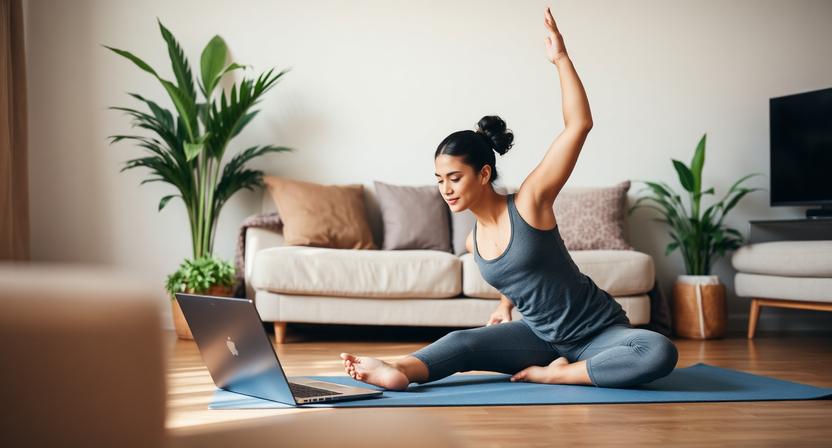
- Leverage Virtual Support: Joining live online yoga classes in India provides the accountability of a teacher and a community, even when practicing from your bedroom.
- Track the Streak: Use a simple calendar or app to mark your progress. The visual satisfaction of a “streak” is a powerful motivator for the brain.
The Holistic Benefits of Daily Practice
Physical: Structural Resilience
Daily movement ensures your joints remain lubricated. In the humid Chennai climate, regular stretching prevents the “stiffness” that sets in from air-conditioned office environments. You’ll notice a gradual disappearance of chronic back and neck pain.
Mental: Cognitive Focus
Yoga is a moving meditation. By focusing on your breath every single day, you train your brain to stay present. This leads to better productivity at work and a significant reduction in the “brain fog” that plagues many urban professionals.
Emotional: Nervous System Regulation
A daily habit teaches your body how to switch from the sympathetic nervous system (fight or flight) to the parasympathetic nervous system (rest and digest). You’ll find yourself less reactive to traffic on Mount Road or high-pressure deadlines.
How Beginners Can Approach the Habit
If you are new to the mat, the “at-home” environment can feel a bit lonely or confusing. Here is a beginner-friendly roadmap:
- Start with Guided Content: Don’t try to “guess” your routine. Use a reputable online platform or join online yoga classes in Chennai where a teacher can guide your alignment virtually.
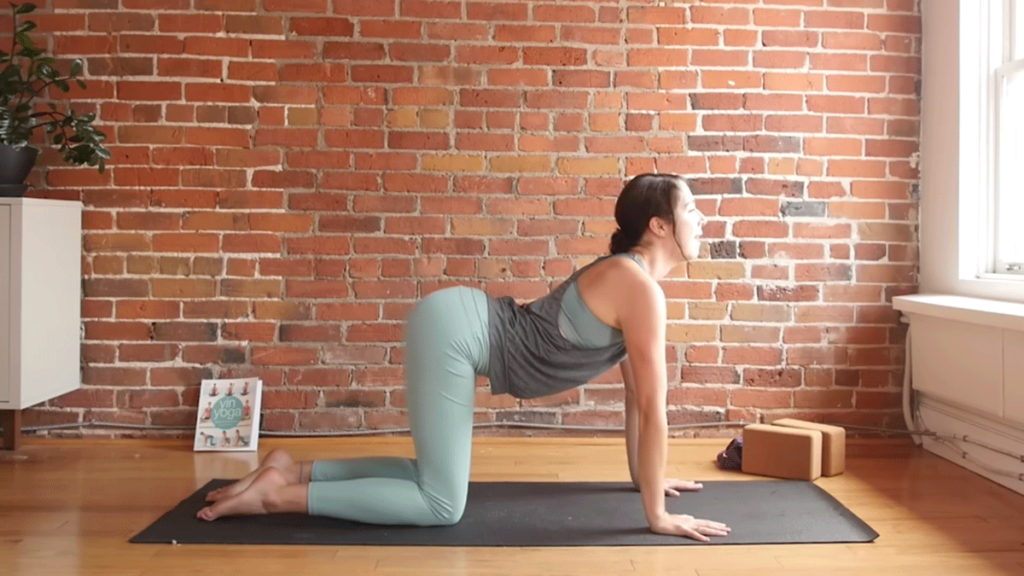
- Keep it Simple: Focus on foundational poses like Tadasana (Mountain Pose), Adho Mukha Svanasana (Downward Dog), and Cat-Cow. Complexity is the enemy of consistency.
- Listen to Your Body: At home, there is no one to compete with. If a pose feels sharp or painful, back off. The goal is longevity, not a perfect “Instagram” shape.
- Set a Realistic Time: Five minutes of focused breath and movement every day is infinitely better than a one-hour session once a week.

Common Misunderstandings
“I don’t have enough space.” You only need the length of your mat. Many successful yogis practice in the narrow gap between their bed and the wall. It’s about the inner space you create.
“I’m not flexible enough.” Flexibility is the result of yoga, not the prerequisite. Practicing daily at home allows you to explore your range of motion without the self-consciousness of a crowded studio.
“It’s only yoga if it’s an hour long.” Traditional texts emphasize the quality of presence. Ten minutes of sincere practice is “real” yoga.
Real-World Scenarios
Scenario 1: The OMR Tech Professional
Arjun, a software lead in Chennai, struggled with high stress and back pain. He decided to build a habit by joining a 15-minute live virtual session every morning at 7:00 AM. Because the class was “live,” he felt an obligation to show up. Within three months, his back pain vanished, and he credited his morning “mat time” for his ability to handle team conflicts with a calm mind.
Scenario 2: The Busy Parent in Anna Nagar
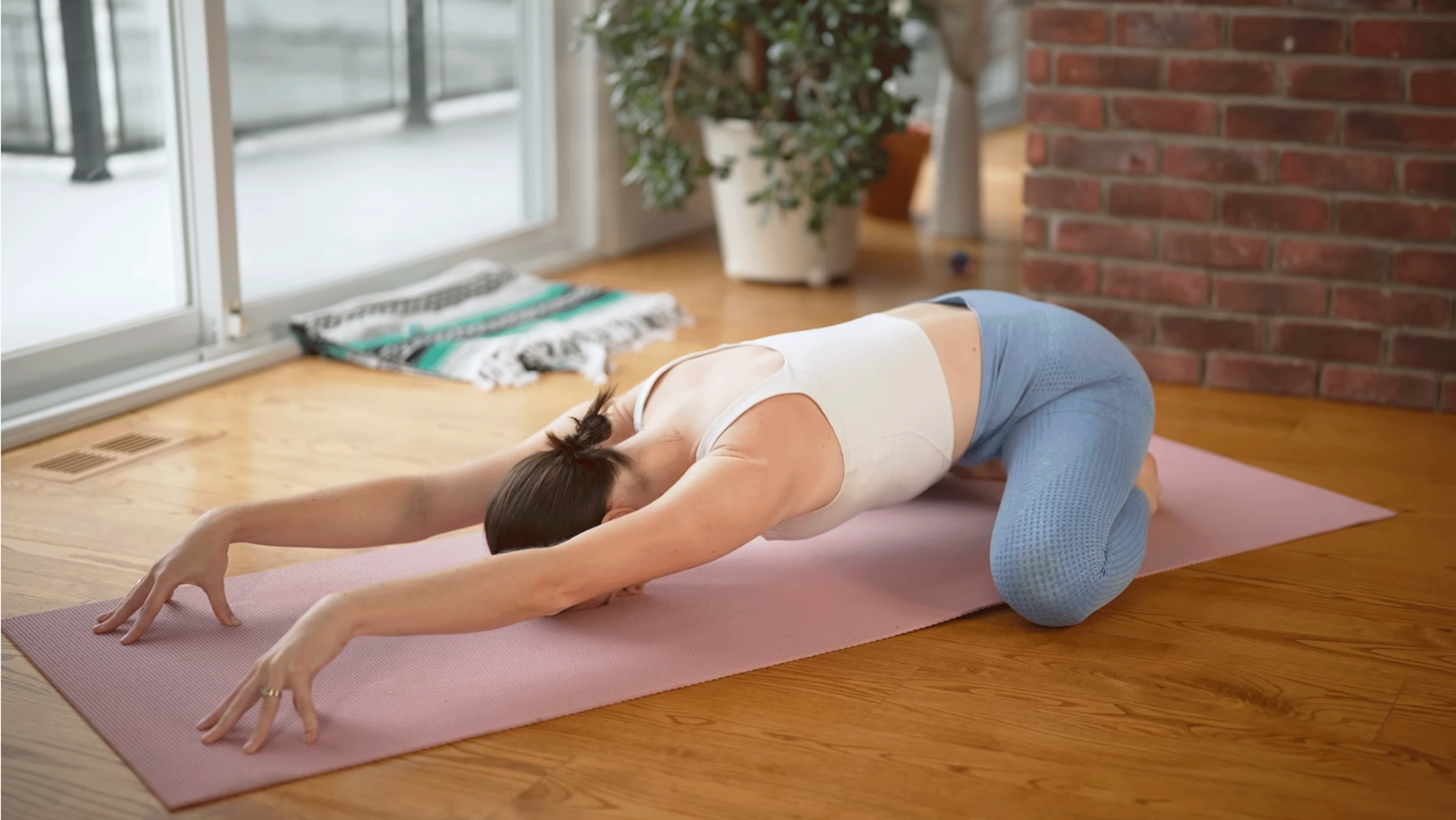
Priya found it impossible to visit a studio. She committed to “The Two-Minute Rule” every evening after her children went to bed. Some nights it was just two minutes of deep breathing in Child’s Pose; other nights it turned into thirty minutes of flow. By removing the pressure of “perfection,” she has maintained her habit for over a year.
Practical Tips for Your Home Practice
- Invest in a Good Mat: A non-slip mat is essential for safety, especially in India’s warmer months.
- Use Natural Light: If possible, practice near a window. The morning sun helps regulate your circadian rhythm.
- Limit Distractions: Put your phone on “Do Not Disturb” or leave it in another room unless you are using it for a guided class.
- End with Stillness: Never skip Savasana (Corpse Pose). Even two minutes of lying still allows your nervous system to absorb the benefits of the movement.
FAQs
1. What is the best time to practice yoga at home? Early morning (Brahma Muhurta) is traditional and usually quietest, but the “best” time is the one you can commit to consistently every day.
2. Do I need props like blocks and straps? They aren’t mandatory, but they help significantly. You can substitute household items: use a thick book for a block or a belt for a yoga strap.
3. Is it safe to learn yoga at home without a teacher? For beginners, it is highly recommended to join live online yoga classes. This ensures an expert can see your camera feed and provide verbal corrections to prevent injury.
4. How long does it take for yoga to become a habit? While the “21-day” myth is popular, research suggests it takes an average of 66 days for a new behavior to become automatic. Stay patient.
5. Can I do yoga at home if I have an injury? Yes, but you must choose therapeutic styles. Always consult your doctor first and inform your online instructor about your condition.
6. What should I wear for home yoga? Comfortable, breathable cotton or athletic wear. The beauty of home practice is that you don’t need to worry about “trends”—functionality is key.
7. Should I eat before my home practice? It is best to practice on an empty stomach. Wait at least 2–3 hours after a heavy meal or 1 hour after a light snack.
8. What if I miss a day? Don’t beat yourself up. The “Never Miss Twice” rule is helpful. If you miss Monday, make Tuesday a non-negotiable priority.

Conclusion: The Journey Home
Building a daily yoga habit at home is a profound act of self-care. It is a commitment that says your well-being is worth at least a few minutes of your day. In the heart of Chennai, amidst the heat and the hustle, your mat remains a cool, still island.
Don’t wait for the “perfect” time or the “perfect” level of flexibility. Start today, right where you are. Unroll your mat, take one deep breath, and begin the most important journey of your life—the journey back to yourself.

Leave a Comment