
Table of Contents
Finding Your Digital Shala: The Best Online Yoga Classes India 2026
In 2026, the intersection of ancient wisdom and modern technology has never been more vibrant. For those of us living in India’s bustling hubs—like the busy streets of Chennai or the tech-filled lanes of Bengaluru—the “Best Online Yoga Classes” aren’t necessarily the ones with the flashiest apps. They are the ones that provide authentic, safe, and life-enhancing guidance.
Choosing a virtual yoga path can be daunting. You aren’t just selecting a workout; you are inviting a teacher into your personal space. Whether you are seeking a rigorous Ashtanga flow to build strength or a restorative Yin practice to combat burnout, the right online choice is the one that respects your body’s unique rhythm.
This guide is built to help you look past the marketing noise and identify the platforms, teachers, and styles that truly serve your wellness goals. Let’s dive into what makes an online yoga experience not just good, but transformative.
Comparison of Top Online Yoga Formats
| Format | Best For | Interaction Level | Key Benefit |
| Live Interactive | Beginners & Rehab | High | Real-time safety cues |
| On-Demand Apps | Flexibility & Budget | None | Practice anytime |
| Private 1-on-1 | Deep Therapy | Total | Custom sequences |
| Hybrid Studios | Community Seekers | Moderate | Mix of online/offline |
How to Choose the Right Online Yoga Experience
When vetting a platform, don’t just look at the subscription price. Focus on the pedagogical foundation. Here is a snippet-ready checklist for your evaluation:
- Lineage Check: Does the lead teacher have a verifiable certification from a reputable body like the Quality Council of India (QCI)?
- Visual Alignment: Does the platform allow for two-way video during live classes? This is non-negotiable for beginners.
- Progression Modeling: Does the class structure allow for you to evolve from “Foundations” to “Intermediate”? Avoid platforms that throw everyone into the same chaotic flow.
- Community Integration: Are there ways to ask questions? A good teacher stays back for 5 minutes after class to address individual concerns.
Detailed Breakdown: The Landscape of Indian Online Yoga
1. Live Interactive Platforms (The Virtual Shala)
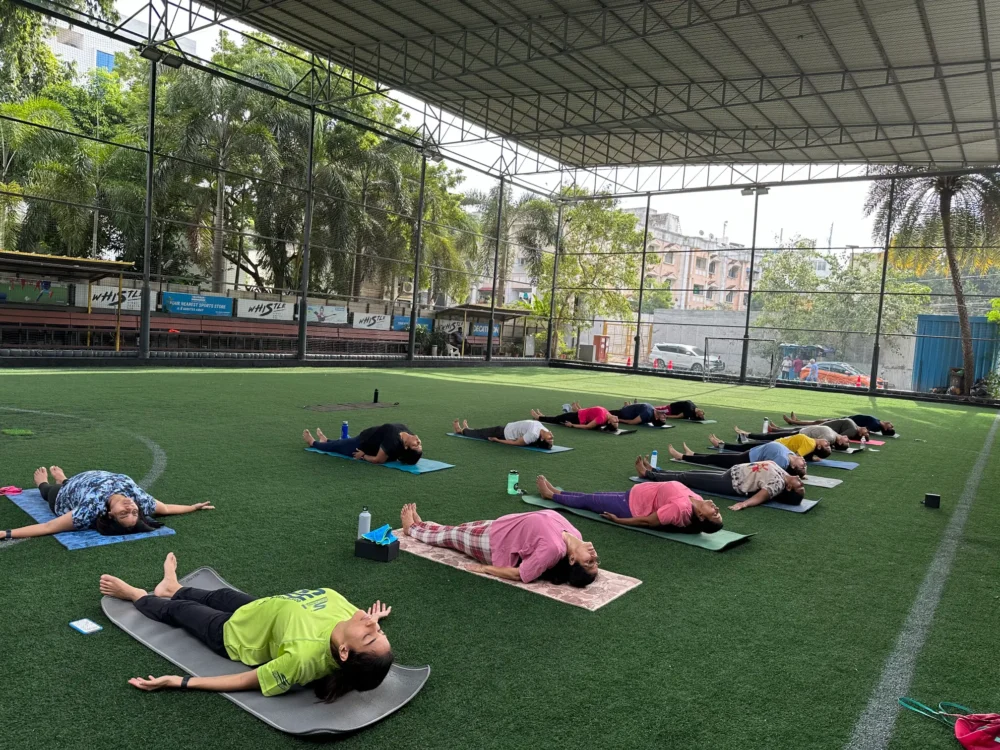
These platforms mimic the feel of an in-person studio. You join a Zoom or dedicated app room, and the instructor can see you on their monitor.
- Pros: The teacher can spot if your spine is rounded or your knee is collapsing. It builds accountability.
- Cons: You are bound by the class schedule.
- Best For: Beginners who need form corrections to prevent injury.
2. On-Demand App Libraries
Apps like Sarva, Cult.fit, or global giants provide high-production-value libraries.
- Pros: You can practice at 4:00 AM or 11:00 PM. It fits into the most erratic Chennai work schedules.
- Cons: You may develop bad habits because no one is there to check your alignment.
- Best For: Intermediate practitioners who already have a strong foundation.
3. Private 1-on-1 Coaching
This is the premium tier. A trainer designs a sequence for your specific health markers—like managing BP, PCOD, or chronic back pain.
- Pros: Completely customized. It is effectively “Yoga Therapy.”
- Cons: Higher financial investment.
- Best For: Individuals with specific health conditions or those looking for accelerated progress.
Audience Segments: Finding Your Fit
For the Absolute Beginner
Your priority is safety. Choose a live interactive class that emphasizes Hatha Yoga. Avoid “Power” or “Flow” classes in the first month; you need time to build strength in your stabilizer muscles first.
For the Stressed Corporate Professional
If you are working in an IT corridor, look for classes labeled “Restorative” or “Yoga Nidra.” These classes focus on deep parasympathetic activation (calming the nervous system) rather than intense calorie burning.
For the Advanced Practitioner
If you have been practicing for years, look for platforms that offer masterclasses in Iyengar or Ashtanga traditions. These require precision, not just sweat.
Cost vs. Value: A Practical Perspective
In India, we often equate “free” with “good.” While there is excellent free yoga on YouTube, be mindful of the trade-off.
- The Hidden Cost: A free, incorrectly performed posture over six months can lead to a long-term joint injury that costs far more in physical therapy than a monthly subscription.
- The Investment: Paying for a high-quality live class (roughly ₹2,000–₹4,500/month) is an insurance policy for your mobility and mental health.
Common Mistakes in Evaluation
- Ignoring the Breath: A class that only focuses on how you look in a pose is a workout, not yoga. Ensure the Pranayama (breath control) is taught alongside the Asana.
- Overestimating Flexibility: Don’t join an “Advanced” class because you see the teacher doing a split. Choose classes based on structural integrity, not aesthetic poses.
- Lack of Trial: Most legitimate platforms in India offer a trial week. If they don’t, be skeptical.
Real-World Scenarios
Scenario 1: The OMR Developer
Karthik, 29, was suffering from severe lower back pain. He tried generic gym apps but felt worse. He switched to a “One-on-One Yoga Therapy” online session. His trainer noticed his pelvic tilt via video and adjusted his Tadasana to be more pelvic-neutral. Within three weeks, his pain levels dropped significantly.
Scenario 2: The Busy Home-Manager
Meera, 45, wanted to improve her energy levels but couldn’t leave home. She joined a “Morning Live Batch” at 6:30 AM. The consistency of the live group pushed her to be on the mat every single morning, turning her home balcony into a dedicated sanctuary.
Frequently Asked Questions (FAQs)
1. How do I know if the online teacher is truly qualified?
Look for their “About” section. They should mention their training lineage (e.g., Sivananda, Iyengar, or Yoga Alliance RYT). If they don’t share their training, consider it a red flag.
2. Can online yoga help with chronic back pain?
Yes, but only if you seek “Yoga Therapy” or “Restorative Yoga.” Avoid high-intensity flows until your back health is stable.
3. Is live interactive better than pre-recorded?
For beginners, absolutely. Pre-recorded videos are great for maintenance, but live interactive classes ensure you aren’t building “misalignment habits.”
4. How much should I realistically budget per month?
For high-quality live interactive classes, expect to budget between ₹2,000 and ₹5,000. For private 1-on-1 coaching, expect ₹8,000–₹15,000+.
5. What if I can’t attend a class live?
Look for platforms that provide “Class Recordings” for those who miss a live session.
6. Do I need expensive yoga gear?
No. A high-grip mat is the only essential. Many Indian teachers are excellent at showing you how to use household items like a belt or a firm pillow as a substitute for props.
Summary and Next Steps
The journey to the best yoga experience in India is personal. It’s not about finding the “top” app in the store, but the one that makes your body feel respected and your mind feel quiet.
Your Next Steps:
- Take a Trial: Sign up for a trial class on two different platforms this week.
- Check the Vibe: Notice if you feel empowered or pushed after the class.
- Commit for 21 Days: The physical benefits are often subtle at first; the mental shifts happen with daily repetition.



Leave a Comment