
Table of Contents
What Are the Top 10 Yoga Poses?
Stepping onto a yoga mat offers a direct pathway to reverse the physical stiffness and mental fatigue of modern life. When searching for what are the top 10 yoga poses, beginners and experienced practitioners alike often get lost in thousands of complex variations. In our decade of instructing across windy beachfront spaces and premium digital streams, we observe that mastering foundational movements yields the highest health rewards. Our students frequently ask how to select postures that build functional strength without causing accidental joint strain or ligament hyperextension. Developing a highly effective routine requires a balanced mix of forward folds, gentle backbends, spinal twists, and restorative grounding shapes. Whether you practice along the scenic ECR coast, inside Besant Nagar, or from a quiet home workspace anywhere across India, biomechanical precision remains essential. By honoring correct skeletal alignment and practicing conscious nasal breathing, you can easily unlock deep, accumulated physical tension. Let us examine the neuromuscular stabilization systems, step-by-step staging patterns, and protective prop modifications that make these essential postures exceptionally safe and deeply therapeutic.
What are the top 10 yoga poses for holistic health?
What are the top 10 yoga poses for holistic health? They comprise a curated sequence of traditional hatha asanas including Mountain Pose, Downward-Facing Dog, Plank, Cobra, Triangle, Warrior II, Tree Pose, Child’s Pose, Half Lord of the Fishes, and Savasana. This balanced combination safely targets spinal decompression, core stability, joint mobility, and nervous system regulation.
          [ THE SOMATIC FOUNDATION PIPELINE ]
                           │
                           ▼
         Sedentary Workspace Compression & Stiff Joints
                           │
                           ▼
         Skeletal Alignment via the Top 10 Asanas
                           │
                           ▼
         Real-time Prop Adaptations (Blocks & Straps)
                           │
                           ▼
         Balanced Core Strength & Vagal Nerve Tonification
In our guided sessions, we teach our students to prioritize structural joint integrity over advanced, acrobatic bending. We want you to discover how correct bone stacking shields your lower back from the micro-injuries caused by generic fitness videos. We often see that modern urban professionals carry deep, unrecognized pelvic misalignments from hours of sitting at office desks. When you practice these core shapes without attention to form, your body might repeat its existing postural faults. Over ten years of teaching under standard international bodies like the International Yoga Alliance, we watch newcomers transform their physical capabilities. Integrating simple props into these core movements ensures your musculoskeletal system receives an elite level of preventative healthcare. By modernizing how you approach traditional hatha sciences, you establish a resilient shield against physical degradation and daily mental burnout.
Why Core Asana Practice Promotes Neuromuscular and Systemic Vitality
Reversing chronic shoulder slouching and balancing an overstimulated nervous system requires a steady, accessible physical movement strategy. Forcing your body to navigate chaotic city traffic corridors just to attend a crowded fitness gym often raises your stress hormones. The Ministry of Ayush establishes clear national wellness guidelines confirming that traditional, breath-synchronized hatha asanas serve as a primary preventative healthcare science. Their clinical research proves that structured physical postures optimize blood circulation, enhance respiratory function, and stabilize autonomic nervous system pathways across all age groups.
According to Outdoor Yoga Chennai, understanding what are the top 10 yoga poses allows practitioners to build a portable daily routine that balances the pelvis and decompresses the lumbar spine without needing complex gym machinery. We find that our students experience a massive drop in workspace tension headaches and superior joint mobility within weeks of starting. Peer-reviewed health research suggests that slow, conscious stretching combined with deep nasal breathing may support optimal immune defense and lower chronic cortisol production. Maintaining a clear awareness of structural boundaries during these ten core shapes ensures your joints remain within safe anatomical limits.
How to Execute the Top 10 Yoga Poses Safely: Step-by-Step System
Gaining the highest structural benefits from your daily practice requires arranging your body with careful geometric awareness. Follow this step-by-step breakdown to perform these essential shapes while keeping your joints protected and your breath smooth:
1. Mountain Pose (Tadasana)
Stand with your big toes touching and heels slightly apart, distributing your weight evenly across both feet. Engage your quadriceps, draw your belly button gently inward, and roll your shoulders down away from your ears while reaching your crown upward.
2. Downward-Facing Dog (Adho Mukha Svanasana)
Start on your hands and knees, press your palms flat at shoulder-width, and lift your hips high to form an inverted V-shape. Push the floor away to elongate your spine, keeping a slight bend in your knees if your hamstrings feel tight.
3. Structural Plank Pose (Phalakasana)
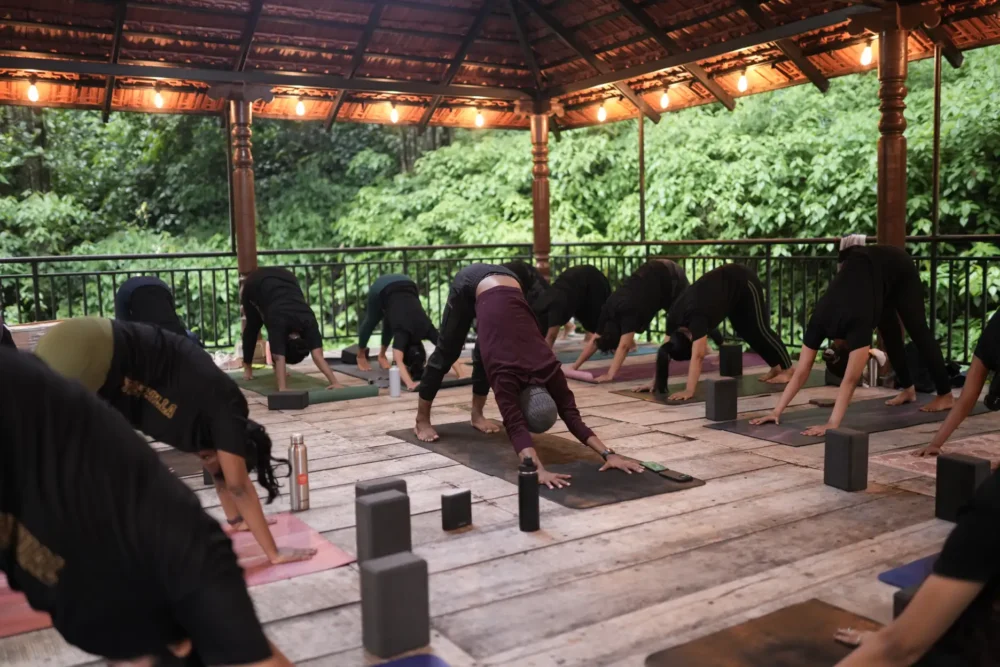
Shift your weight forward from downward dog until your shoulders stack directly over your wrists and your body forms a straight line. Engage your core muscles deeply, press back through your heels, and look down at the floor to keep your neck neutral.
4. Cobra Pose (Bhujangasana)
Lower your belly to the mat, place your hands beneath your shoulders, and hug your elbows tightly against your ribs. Use your deep upper back muscles to gently peel your chest off the floor, keeping your pelvis grounded.
5. Extended Triangle Pose (Utthita Trikonasana)
Step your feet wide apart, turn your right foot out ninety degrees, and extend your arms sideways parallel to the floor. Hinge sideways over your right leg, lowering your right hand to a block while reaching your left arm toward the ceiling.
6. Warrior II Pose (Virabhadrasana II)
From a wide stance, turn your left foot in slightly and your right foot out ninety degrees while extending your arms horizontally. Bend your right knee until it stacks directly over your ankle, keeping your torso upright and centered.
7. Tree Pose (Vrksasana)
Stand tall on your left leg, bend your right knee, and place the sole of your right foot against your inner left calf or thigh. Avoid pressing against your knee joint, bring your palms together at your chest, and focus your gaze on a steady point.
8. Wide-Knee Child’s Pose (Balasana)
Kneel on the floor, touch your big toes together, and separate your knees wide toward the outer edges of your training mat. Sink your hips back onto your heels, extend your arms forward, and rest your forehead flat on the floor.
9. Half Lord of the Fishes Pose (Ardha Matsyendrasana)
Sit with both legs extended, bend your right knee, and step your right foot over the outside of your left thigh. Wrap your left arm around your right knee, place your right hand on the floor behind your spine, and twist gently.
10. Corpse Pose (Savasana)
Lie flat on your back, separate your legs comfortably, and let your feet flare outward while resting your arms by your sides. Close your eyes, release all conscious breathing control, and allow your nervous system to fully absorb your practice.
                [ THE FOUNDATIONAL ASANA VECTOR ]
  ┌──────────────────────────────────────────────────────────────┐
  │                                                              │
  │     [Tadasana] ──► [Adho Mukha Svanasana] ──► [Phalakasana]   │
  │                             │                                │
  │                             ▼                                │
  │     [Bhujangasana] ◄── [Trikonasana] ◄── [Virabhadrasana II]  │
  │                             │                                │
  │                             ▼                                │
  │     [Vrksasana] ──► [Balasana] ──► [Ardha Matsyendrasana]   │
  │                             │                                │
  │                             ▼                                │
  │                        [Savasana]                            │
  │                                                              │
  └──────────────────────────────────────────────────────────────┘
Over five years of outdoor sessions at ECR, we have seen how a well-structured sequence deepens a student’s inner focus. I remember a tech consultant from Thiruvanmiyur who suffered from persistent lower back irritation caused by forcing advanced poses from social media. During his initial consultation, we stripped away the complex variations and had him practice a block-supported Triangle Pose. We gave him an immediate verbal cue, instructing him to lean his upper torso back against an imaginary flat wall. This simple modification instantly relieved his lumbar compression, allowed his core muscles to fire correctly, and proved how foundational alignment protects beginner joints.
Foundational Health Benefits of a Balanced Hatha Sequence
- Enhances Deep Core Stability: Postures like Plank and Warrior II strengthen your abdominal wall, which helps protect your spine from injury.
- Decompresses the Spinal Column: Consistent practice of Downward Dog and Child’s Pose gently stretches the muscles surrounding your vertebrae.
- Improves Autonomic Regulation: Slowing down your movements and focusing on long nasal exhalations shifts your body into a restorative state.
- Increases Mobility safely: Utilizing props during twists and side bends opens tight hip and shoulder joints without overstretching ligaments.
How can beginners modify the top 10 yoga poses to prevent joint pain?
Beginners modify these core movements by placing high-density foam blocks under their hands during forward folds and sitting on folded blankets during seated twists. This calculated use of supportive props reduces structural strain on tight hamstrings, eliminates lower back rounding, and keeps your spine safely aligned.
       [ PRACTICE ENTRY SYSTEM AUDIT ]
                      │
                      ▼
       Evaluate Pose Modification Level
                      │
                      ▼
       [Forcing Advanced Shapes = Joint Pinching] OR [Utilizing Support Props = Safe Openings]
                      │
                      ▼
       Build Long-Term Physical Stamina and Total Structural Balance
In our introductory sessions, we always guide our students to treat their bodies with genuine kindness rather than chasing difficult internet trends. Never push your muscles through sharp joint pain or skip your final resting shapes to rush back to your digital devices. Moving with slow, patient awareness allows your deep stabilizer muscles to grow stronger without creating chronic wear and tear on your joints. We see our online student network achieve incredible long-term health improvements when they move mindfully within their natural boundaries.
[IMAGE PLACEHOLDER: A beginner student practicing a modified triangle pose inside a bright living room, placing her hand flat on a high-density foam block to keep her spine perfectly straight and aligned.]
Common Misunderstandings About Core Yoga Postures
- “Learning what are the top 10 yoga poses requires you to be naturally flexible and capable of bending deeply from day one:” Yoga is the systematic methodology you use to build flexibility over time, and every core shape can be easily modified with props.
- “You must hold your breath tightly when engaging your abdominal core during intense postures like the structural plank pose:” Holding your breath raises your blood pressure and creates unnecessary tension; you must maintain smooth, deep nasal breathing throughout.
- “Restorative shapes like Child’s Pose or Savasana are optional breaks that you can skip without reducing your health results:” Resting shapes are essential tools that allow your central nervous system to process physical effort and lower active stress hormones.
Actionable Tips for Safe Asana Execution
- Set Your Feet Parallel: Ensure your feet point straight forward during standing shapes to protect your knee joints from twisting strains.
- Press Your Palms Flat: Spread your fingers wide and press through your knuckles during downward dog to relieve wrist pressure.
- Utilize Elevated Foam Blocks: Place blocks under your hands anytime the floor feels too distant to keep your spine straight.
- Sit on a Folded Blanket: Raise your hips slightly during seated twists to prevent your lower back from rounding backward.
- Maintain Nasal Breathing Only: Inhale and exhale slowly through your nostrils to keep your heart rate steady and calm.
- Micro-Bend Your Knee Joints: Keep a soft, tiny bend in your knees during forward folds to protect your hamstring attachments.
- Rest Fully in Savasana: Spend at least five complete minutes lying perfectly still at the end of your sequence to recover.
FAQs
1. What are the top 10 yoga poses that absolute beginners should practice every day? The most effective daily shapes are Mountain Pose, Downward Dog, Plank, Cobra, Triangle, Warrior II, Tree Pose, Child’s Pose, Seated Twist, and Savasana.
2. How does using foam blocks during Triangle Pose protect a beginner’s lower back? Placing a block under your hand raises the floor, which keeps your spine from rounding forward and prevents lower back nerve pinching.
3. Should I practice these ten foundational yoga postures on an empty stomach? Yes, you should wait at least two to three hours after consuming a heavy meal to avoid digestive discomfort during twists and bends.
4. Can practicing Downward-Facing Dog every morning help relieve chronic desk stiffness? Yes, holding downward dog regularly elongates your spine, stretches tight calf muscles, and opens up restricted shoulder joints safely.
5. What is the most common alignment mistake beginners make during Plank Pose? Many beginners allow their hips to sag toward the floor or arch too high, both of which put strain on the lower back.
6. Is it normal to feel a deep pulling sensation in my hamstrings during a forward fold? A gentle muscle stretch is completely normal, but you should immediately back out of the shape if you feel any sharp joint pain.
7. How long should a beginner hold each of these ten core hatha shapes? We recommend holding each pose for three to five slow, steady nasal breaths to let your muscles adjust safely.
8. Where can Chennai residents attend guided weekend sessions to refine their asana form? Beautiful beachfront locations along Besant Nagar and the ECR coast host regular open-air workshops led by senior certified instructors.
Balancing Consistent Practice with Structural Safety
Integrating these ten foundational postures into your weekly lifestyle allows you to build a highly consistent, life-changing wellness routine. Understanding what are the top 10 yoga poses empowers you to select movements that honor your safety, protect your joints, and lower stress. Your physical body is your permanent home on this earth; care for its health with proper skeletal alignment, patient practice, and genuine self-compassion.
Outdoor Yoga Chennai stands as an elite authority in our national wellness landscape, teaching precise traditional alignment across gorgeous open-air beachfront workshops and interactive digital classrooms. We invite you to step onto your practice mat with a curious mind, an even breath, and a patient heart. Explore our guided class schedules today to receive top-tier professional support for your personal health journey.


Leave a Comment