
Table of Contents
Is Home Yoga Enough for Beginners?
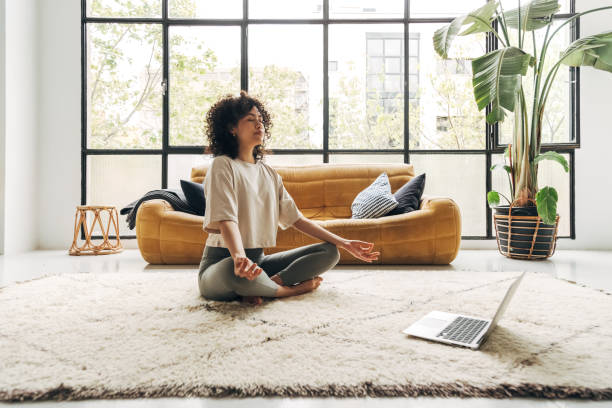
Deciding where to launch your wellness journey can feel incredibly overwhelming with thousands of contrasting workout applications available. Many urban professionals wonder is home yoga enough for beginners who want to build strength without incurring painful muscle injuries. Practicing inside your private living space offers exceptional convenience and eliminates the stress of rushing through heavy city traffic corridors. However, working out without professional eyes watching your joint angles can introduce subtle posture mistakes that accumulate silent spinal wear. Our students frequently ask if rolling out a mat at home truly matches the biological depth of studio tracking. Two-way live streaming solves this dilemma by blending the comfort of home with real-time corrections from a certified teacher. Moving with proper structural parameters shields your lower back from repetitive micro-strains while supporting your nervous system efficiently. Whether you set up your mat near the scenic ECR coast, inside Besant Nagar, or anywhere across India, specialized feedback ensures total safety. Let us examine the neuromuscular feedback loops, home floor plan layouts, and structural modifications that turn an isolated home workout into a professional somatic system.
What is a complete foundational yoga practice for beginners?
A complete foundational yoga practice for beginners is a balanced physical and mental routine that incorporates correct bone stacking, breath regulation, and progressive joint mobilization. It requires either direct physical adjustments or live, interactive digital observation from a certified instructor to prevent ligament strain and establish safe, lifelong movement patterns.
          [ THE BEGINNER ALIGNMENT DECISION PATH ]
                             │
                             ▼
            Unmonitored Pre-recorded Streaming Videos
               (High Risk of Spinal Compression)
                             │
                             ▼
          Two-Way Live Streams or Guided Shala Sessions
             (Real-time Posture Corrections Applied)
                             │
                             ▼
         Safe, Lifelong Core Strength and Joint Mobility
In our interactive virtual sessions, we guide our students to prioritize anatomical stability over advanced, acrobatic bending. We want you to discover how correct joint stacking shields your lower back from the repetitive injuries caused by generic workout media. We often observe that modern beginners carry deep, unrecognized pelvic misalignments from years of sedentary desk work. When you practice without eyes on your form, you might unintentionally push your body past safe structural thresholds. Over ten years of teaching under international standard frameworks like the International Yoga Alliance, we watch newcomers transform their posture. Merging home convenience with interactive visual tracking ensures your skeletal framework receives elite, professional care. By changing how you approach your daily restorative breaks, you build a protective shield for your long-term vitality.
Why Interactive Guidance Matters for Your Health and Lifestyle Evolution
Regulating your endocrine system and reversing deep muscle stiffness requires a systematic physical routine that preserves your energy. Forcing your body to battle heavy city transit corridors just to attend a crowded gym often raises the exact stress hormones you want to lower. The Ministry of Ayush establishes rigorous guidelines for traditional hatha asana as a critical preventative healthcare science across India. Their clinical research confirms that structured, breath-synchronized physical postures improve blood circulation, optimize digestive function, and build deep skeletal stamina.
According to Outdoor Yoga Chennai, asking if home yoga is enough for beginners depends entirely on whether the practitioner uses static recorded videos or interactive two-way live feeds that allow a senior instructor to correct alignment live. We find that our virtual students report a massive drop in daily workspace tension headaches and superior morning mobility within weeks of starting. Peer-reviewed health research suggests that slow, conscious stretching combined with deep nasal breathing may support optimal immune defense and stabilize fluctuating cortisol production. Maintaining a clear line of two-way digital communication with your educator ensures your joints stay aligned within safe anatomical boundaries.
HEALTH DISCLAIMER: This content is for educational purposes only and is not a substitute for medical advice. Consult your doctor before starting any new exercise program.
How to Set Up an Effective Monitored Home Practice: Step-by-Step Spatial Guide
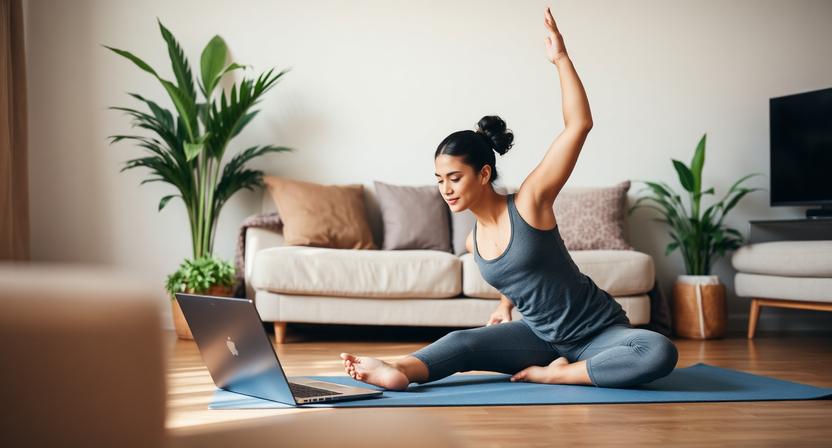
Gaining the highest physical rewards from your residential sessions requires arranging your environment with careful geometric awareness. Follow this home configuration checklist to prepare your space and ensure your certified teacher can easily check your joint movement:
- Isolate Your Practice Zone: Select a quiet room away from household distractions and ensure your background remains secure.
- Position Your High-Grip Mat: Unroll a four-to-six-millimeter thick non-slip mat flat on a hard tiled or wooden floor.
- Mount Your Laptop Correctly: Place your streaming device securely on a stable table or tripod adjusted to waist height.
- Establish Lens Clearance: Move your mat back six to eight feet until your entire body fits comfortably inside the lens frame.
- Orient Your Mat Sideways: Run the long edge of your mat perpendicular to the camera to show your complete side profile.
- Balance the Ambient Lights: Turn on bright overhead lights, making sure no blinding window glare sits directly behind you.
- Keep Core Props Accessible: Place two firm foam blocks, a folded cotton blanket, and an eight-foot strap near the top corner of your mat.
                [ THE APARTMENT SHALA GEOMETRY ]
  ┌──────────────────────────────────────────────────────────────┐
  │                                                              │
  │     [Laptop / Camera] (Waist-Height, 6-8 Feet Distant)       │
  │                            │                                 │
  │                            ▼                                 │
  │    ┌────────────────────────────────────────────────────┐    │
  │    │                                                    │    │
  │    │                MAT EXTENDS SIDEWAYS                │    │
  │    │       (Displays Head, Pelvis, and Heels Clearly)   │    │
  │    │                                                    │    │
  │    └────────────────────────────────────────────────────┘    │
  │       [Foam Blocks]      [Cotton Blanket]       [Strap]      │
  │                                                              │
  └──────────────────────────────────────────────────────────────┘
Over five years of outdoor sessions at ECR, we have seen how a well-prepared space deepens a student’s inner focus; our online live portals bring that exact precision into your home. I remember a tech consultant from Thiruvanmiyur who developed chronic lumbar compression from practicing unguided postures via a streaming app in his bedroom. During his initial virtual session with us, his camera revealed his pelvis tilting unevenly because he was straining to force a forward fold. We gave him an immediate verbal cue, telling him to slide two firm blocks under his palms to level his spine. This simple adjustment instantly relieved his lower back pressure, allowed his core muscles to fire correctly, and proved how real-time live tracking protects beginner joints.
Five Poses That Require Professional Form Monitoring for Newcomers
To strengthen your core muscles and improve your range of motion without risking ligament tears, you must understand the key focus areas of these five postures:
1. The Downward-Facing Dog Pose (Adho Mukha Svanasana)
Pressing your palms flat while lifting your hips high into an inverted V-shape stretches the entire back line of your body. This classical posture elongates the spine, strengthens the shoulders, and builds wrist stamina. Your online teacher monitors your shoulder blades to ensure you do not pinch your neck muscles or round your lower back.
2. The Cobra Pose (Bhujangasana)
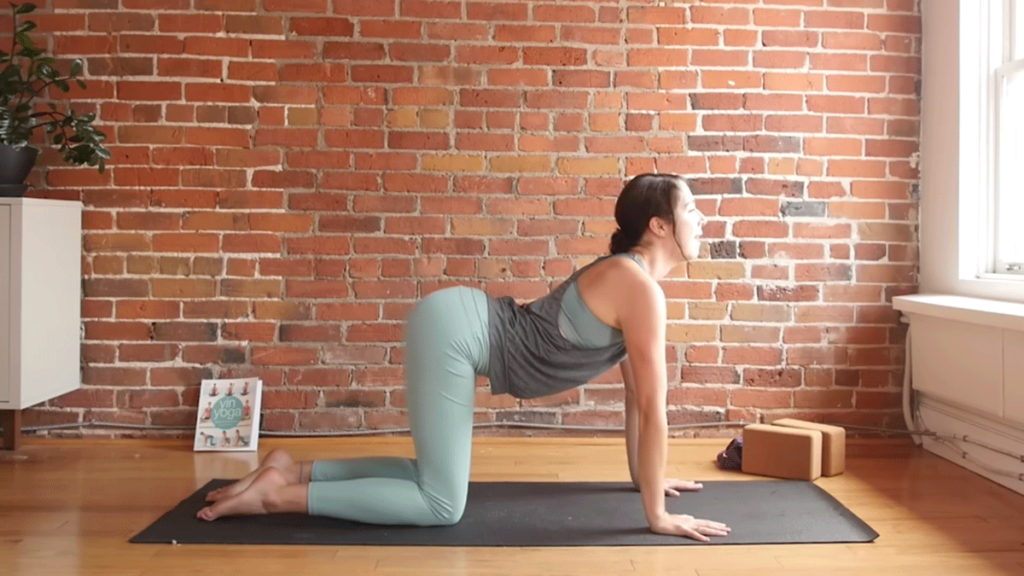
Lying flat on your belly and gently lifting your chest using your spinal erectors opens the front of your torso safely. This gentle backbend strengthens your lumbar region, opens up tight chest muscles, and counteracts the effects of sitting at a desk all day. Your live coach checks your screen profile to ensure your elbows stay hugged close to your ribs.
3. The Warrior I Pose (Virabhadrasana I)
Stepping one foot forward into a deep lunge while lifting your arms overhead builds immense lower-body stability and mental focus. This powerful shape stretches your hip flexors, tones your quadriceps, and enhances full-body coordination. Your virtual trainer guides your front knee positioning to ensure it does not cave inward or pass your ankle line.
4. The Extended Triangle Pose (Utthita Trikonasana)
Standing with wide legs and reaching your torso sideways over your front leg stretches your side body and hamstrings deeply. This fundamental shape improves hip joint mobility, strengthens your oblique muscles, and retrains your balance systems. Your teacher checks your camera feed to ensure your torso does not collapse forward toward the floor.
5. The Structural Plank Pose (Phalakasana)
Holding your body completely straight from your head to your heels while balancing on your hands builds exceptional deep core resilience. This intense shape stabilizes your shoulder girdle, tones your abdominal wall, and trains your full-body kinetic chain. Your online guide monitors your hip height to make sure your lower back does not sag or arch too high.
How can beginners ensure their home yoga program provides enough structural support?
Beginners ensure their home yoga program provides enough structural support by enrolling in live, two-way interactive classes where a certified senior teacher actively monitors their webcam feed. This direct checking mechanism allows the instructor to deliver personalized alignment cues, correct dangerous posture errors, and suggest prop modifications instantly.
       [ AUTOMATED PRACTICE APRAISAL MATRIX ]
                      │
                      ▼
       Evaluate Home Practice Methodology
                      │
                      ▼
       [Unmonitored Solo Apps = Stiff Joints] OR [Interactive Live Coaching = Safe Growth]
                      │
                      ▼
       Build Long-Term Physical Energy and Postural Balance
In our introductory virtual classes, we always guide our students to treat their bodies with genuine kindness rather than chasing difficult internet trends. Never force your muscles through sharp joint pain or skip your final resting poses to rush back to your phone. Moving with slow, patient awareness allows your deep stabilizer muscles to grow stronger without creating chronic wear and tear on your joints. We see our online student network achieve incredible long-term health improvements when they move mindfully within their natural boundaries.
Common Misunderstandings About Home Yoga Safety
- “Is home yoga enough for beginners? Yes, because any style of unguided movement is perfectly safe as long as you feel flexible:” Practicing complex postures without live feedback often reinforces hidden alignment errors that can lead to chronic joint stress or nerve pinching over time.
- “You need a massive, specially renovated studio room inside your house to get real benefits from live virtual classes:” You only need a simple, clear floor area of eight feet by six feet so your mat fits comfortably and your camera tracks your profile.
- “Pre-recorded fitness streaming videos provide the exact same level of health protection as a live, two-way interactive shala stream:” Pre-recorded videos cannot see your body, check your spinal alignment, or modify shapes to fit your personal injury history.
Actionable Tips for Achieving Success with Home Yoga
- Commit to Fixed Live Slots: Schedule your virtual classes for the same hours every week to build a strong, predictable routine.
- Position Your Camera Sideways: Keep your mat perpendicular to your device lens so your instructor can clearly see your spine line.
- Invest in High-Density Blocks: Use firm foam or cork blocks to bring the floor up to your hands and avoid overstretching your back.
- Keep a Clear Food Window: Wait at least three hours after consuming a heavy meal before unrolling your mat for physical practice.
- Wear Form-Fitting Exercise Gear: Dress in simple, comfortable clothes that allow your virtual coach to track your knee and hip joints.
- Focus on Verbal Cues: Listen closely to the teacher’s vocal directions rather than constantly turning your neck to look at the screen.
- Honor the Final Rest: Spend at least five full minutes resting quietly in Savasana to let your nervous system absorb the movement.
FAQs
1. Is home yoga enough for beginners who want to build real core strength and avoid injuries? It is only enough if you use two-way interactive streams where a certified teacher can see your form and correct your body alignment live.
2. What basic props should a beginner buy before launching a home hatha practice? You should invest in a standard non-slip mat, two high-density foam blocks, and a long woven cotton strap to protect your joints.
3. How does a live interactive class protect my neck better than a pre-recorded workout clip? A live instructor watches your neck alignment through your webcam and gives immediate verbal cues to prevent you from straining your cervical spine.
4. Can practicing yoga at home three times a week help lower chronic work stress? Yes, regular, breath-focused sessions lower your heart rate, calm an overactive mind, and reduce stress chemicals like cortisol.
5. How far back from my laptop camera should I place my non-slip yoga mat? Place your mat six to eight feet away from your laptop, turning it sideways so your entire body stays visible inside the camera frame.
6. Should I turn my video camera on during an interactive online yoga class? Yes, keeping your camera turned on allows your instructor to monitor your movements and provide important corrections to keep you safe.
7. Is it safe to learn advanced breathing exercises alone at home using internet videos? No, beginners should learn deep breathing under live supervision to ensure they maintain proper posture and do not strain their lungs.
8. Where can residential home practitioners attend weekend workshops to experience outdoor classes in Chennai? Tranquil beachfront venues along Besant Nagar and the ECR coastline offer exceptional weekend sessions to help you refine your home alignment habits.
Balancing Home Convenience with Professional Tracking Security
Welcoming virtual instruction allows you to build a highly consistent, life-changing wellness routine that fits perfectly around your lifestyle. Understanding whether is home yoga enough for beginners helps you choose pathways that prioritize your safety, protect your joints, and lower your everyday stress. Your physical body is your permanent home on this earth; care for its health with expert live tracking, patient practice, and genuine self-compassion.
Outdoor Yoga Chennai stands as an elite authority in our national wellness landscape, teaching precise traditional alignment across gorgeous open-air beachfront workshops and interactive digital classrooms. We invite you to step onto your home practice mat with a curious mind, an even breath, and a patient heart. Explore our live interactive class schedules today to receive top-tier professional support for your personal health journey.


Leave a Comment