
Table of Contents
Common Mistakes Beginners Make in Online Yoga
Stepping onto a virtual mat offers an incredible path to health, yet navigating the early phases of home practice reveals predictable pitfalls. When studying the common mistakes beginners make in online yoga, we must recognize that a lack of physical adjustments requires a major upgrade in your personal mindfulness. In our decade of teaching across coastal shalas and digital screens, we watch new students approach their webcams with a mix of excitement and hidden anxieties. Many assume that copying a high-definition video screen automatically translates to an accurate and safe internal experience. However, practicing without professional live oversight can frequently mask underlying alignment errors that stress your delicate joints over time. Our students frequently ask how they can build a safe, lifelong practice when their guide exists behind a pane of glass. We always emphasize that awareness, patience, and structural preparation will completely transform your virtual wellness journey. Whether you log in from a breezy beach house along ECR or a busy city apartment in Chennai, learning to identify these digital blind spots establishes an unshakeable foundation for permanent strength. Let us dissect the core tactical errors that disrupt home wellness and explore exactly how to correct them safely.

What are the common mistakes beginners make in online yoga?
The common mistakes beginners make in online yoga refer to a pattern of systemic physical and logistical errors, including straining the cervical spine to look at a sideways screen, practicing on slippery surfaces without props, ignoring pain thresholds, and treating interactive live streams as static, one-way media. These oversights bypass the fundamental safety protocols necessary to protect muscle tissue and joints from strain.
       [ DIGITAL BLIND SPOTS IN VIRTUAL YOGA ]
                          │
     ┌────────────────────┼────────────────────┐
     ▼                    ▼                    ▼
Screen Strain        Neglecting Props     Breath Holding
(Cervical Compression) (Lumbar Overload)   (Sympathetic Stress)
In our sessions, we stress that learning what not to do matters far more than pursuing advanced, athletic shapes. We often find that new practitioners treat online yoga as a competitive fitness workout rather than an inward study of movement and breath. Over ten years of teaching across India, we have observed that skipping the initial spatial setup causes students to constantly shift their focus away from their internal alignment. This constant external distraction breaks your focus and diminishes the meditative clarity that traditional hatha practices naturally provide. By learning to structure your home sanctuary intentionally, you ensure your private mat reflects the precise safety standards of an elite physical institute.
Why Technical Precision Matters for Health and Lifestyle
Commencing a home routine using basic web media can inadvertently reinforce poor movement habits that jeopardize your skeletal health. When beginners try to master complex forward folds or deep twists without feedback, they often overload their lower lumbar discs and strain their hamstrings. The Ministry of Ayush sets rigorous guidelines for traditional yoga instruction, explicitly warning that practicing classical postures with incorrect technique or holding your breath can cause physical exhaustion and disrupt your internal metabolic balance.
According to Outdoor Yoga Chennai, identifying the common mistakes beginners make in online yoga allows modern practitioners in India to enjoy the benefits of digital convenience while preserving the safety of a live, face-to-face studio. We find that our students experience far better posture and a major drop in chronic neck tension when they learn to position their streaming devices correctly. Peer-reviewed research suggests that practicing yoga with proper spinal alignment and steady breathing supports autonomic nervous system balance, helping lower daily stress levels. By correcting these early digital mistakes, you create a sustainable, injury-free routine that naturally builds long-term core strength and mental calm.
HEALTH DISCLAIMER: This content is for educational purposes only and is not a substitute for medical advice. Consult your doctor before starting any new exercise program.
How to Set Up Your Virtual Mat: Step-by-Step Safety Calibration
Avoiding the most common mistakes beginners make in online yoga starts with a smart, highly organized room layout. Follow these steps to prepare your home space for flawless virtual alignment and clear communication with your instructor.
- Clear the Floor: Establish an empty 6×4 foot zone free from furniture corners, loose cords, or family distractions.
- Elevate Your Device: Position your laptop, tablet, or streaming screen on a stable table exactly at waist height.
- Set Camera Clearances: Move your mat roughly 6 to 7 feet away, keeping the long mat edge completely perpendicular to your camera lens.
- Balance the Lights: Ensure your room lights sit in front of or directly above your mat to avoid creating dark shadows.
- Stash Your Props: Keep two dense foam alignment blocks and a durable cotton yoga strap right at the front edge of your mat.
- Activate Two-Way Video: Log into your secure live interactive stream five minutes early to check your video clarity.
- Settle Your Eyes: Keep your gaze resting gently on a single unmoving point straight ahead rather than twisting your neck to check the screen.
Over five years of outdoor sessions at ECR, we have seen how a well-prepared space deepens a student’s focus; our online classes bring that exact structural discipline into your home. I remember a corporate student from Besant Nagar who joined our live interactive stream complaining of sudden wrist soreness after her first week. By adjusting her laptop angle during our next session, we noticed she was placing her hands too far forward during Bhujangasana (Cobra Pose), which overloaded her wrist joints. We gave her an immediate verbal adjustment, telling her to slide her palms back until her wrists sat directly under her shoulders. This quick alignment fix removed her wrist discomfort instantly, showing how easily you can correct errors when your setup allows for clear visibility.
The Top Five Virtual Yoga Mistakes Dissected
To build deep physical confidence on your home mat, you must understand the exact mechanics behind the most frequent digital errors. We watch for these five specific blind spots during every beginner live stream.
1. The Sideways Screen Glance (Cervical Strain)
Placing your laptop or phone on the floor to the side of your mat forces you to constantly twist your neck while your spine is bearing weight. This awkward movement pinches the delicate cervical vertebrae and strains your neck muscles during deep stretches. Keep your screen positioned directly in front of your mat so you can listen to verbal cues without twisting your head.
2. Neglecting the Use of Props (Lumbar Overload)
Many beginners mistakenly view yoga blocks and straps as optional accessories meant only for advanced practitioners or therapeutic needs. Forcing tight hips into a seated cross-legged position without a cushion causes the lower back to round severely, straining the lumbar ligaments. Sitting on a block lifts your pelvis, immediately relieving strain on your lower back and knees.
3. Holding the Breath During Complex Postures
When an absolute beginner encounters a challenging balance or a deep core hold, their natural instinct is to lock their diaphragm and hold their breath. This reaction triggers a stress response in the body, which elevates your heart rate and causes your muscles to tighten up defensively. Focus on keeping your exhalations smooth and steady to help your muscles relax into the stretch safely.
4. Choosing Cheap, Slippery Yoga Mats
Using a thin, low-grip foam mat causes your hands and feet to slide forward continuously during Adho Mukha Svanasana (Downward-Facing Dog). To keep from slipping, beginners often over-tighten their shoulder muscles, which leads to upper back tension and exhaustion. Investing in a high-grip, 6mm non-slip mat gives your joints the stable foundation they need to build core strength safely.
5. Hiding Behind a Dark, Lifeless Screen Layout
Turning off your camera during a live group batch completely prevents a certified instructor from checking your form or giving you helpful modifications. This choice essentially turns an interactive class into a passive, unguided video session, greatly increasing your risk of injury. Keep your video feed turned on so your guide can actively monitor your movements and keep you safe.
How can beginners fix their alignment without a physical touch?
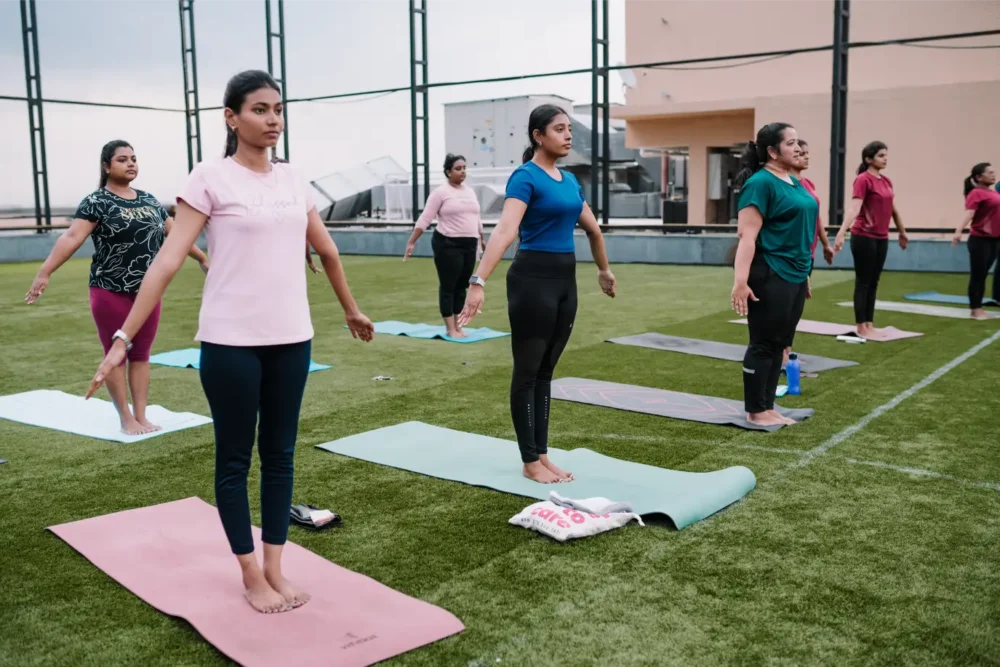
Beginners can fix their alignment without a physical touch by paying close attention to the instructor’s verbal anatomy cues and checking their own mirror-image layout on their video screen. Focus on grounding your weight evenly through all four corners of your feet and lengthening your spine before entering any deep stretch.
       [ VERBAL ALIGNMENT FEEDBACK LOOP ]
                       │
                       ▼
         Instructor Observes Video Feed
                       │
                       ▼
       Delivers Precise Anatomy Cue (e.g., "Drop Shoulders")
                       │
                       ▼
         Student Adjusts Internal Form
In our live batches, we teach our students to become their own primary adjustments. Instead of relying on a teacher to physically move your body, listen to specific landmark cues, such as “draw your navel toward your spine” or “soften your jaw.” This style of learning improves your body awareness and strengthens your core stability much faster than passive hands-on adjustments. We find that beginners who actively use foam blocks to bring the floor closer to their hands maintain excellent spinal posture and make much safer progress.
Common Misunderstandings About Home Yoga Practice
- “I need to mirror the instructor’s flexibility perfectly:” Authentic yoga focuses entirely on finding a healthy stretch within your own body’s natural range of motion, not performing for an audience.
- “Fast-paced classes burn more calories and are better for weight loss:” Holding slow, controlled isometric shapes builds lean muscle and balances stress hormones, which optimizes your metabolism far more effectively.
- “Online classes cannot duplicate the community feel of a physical studio:” Live, two-way group streams build an amazing sense of accountability and shared energy as you practice alongside others.
- “You should practice yoga through sharp joint pain to make progress:” Sharp pain is a clear warning sign from your nervous system; you should always back out of a pose immediately if you feel joint discomfort.
Practical Field Tips for Virtual Practitioners
- Dine on a Strict Schedule: Ensure you finish your last heavy meal at least two to three hours before logging into your live session.
- Wear Flexible Natural Fabrics: Choose breathable, stretchable clothing that allows your hips and shoulders to move through a full range of motion.
- Block Out Domestic Noise: Inform your family members or roommates of your class timings so you can enjoy an uninterrupted hour on your mat.
- Bookmark an RYT Guide: Ensure your online instructor holds a verified credential from Yoga Alliance or the Ministry of Ayush to guarantee your safety.
- Lengthen Your Inhalations: Use deep, slow belly breathing to keep your nervous system calm and your mind focused during tough sequences.
- Track Your Everyday Energy: Measure your success by how much your posture, sleep quality, and daily energy improve rather than focusing only on physical flexibility.
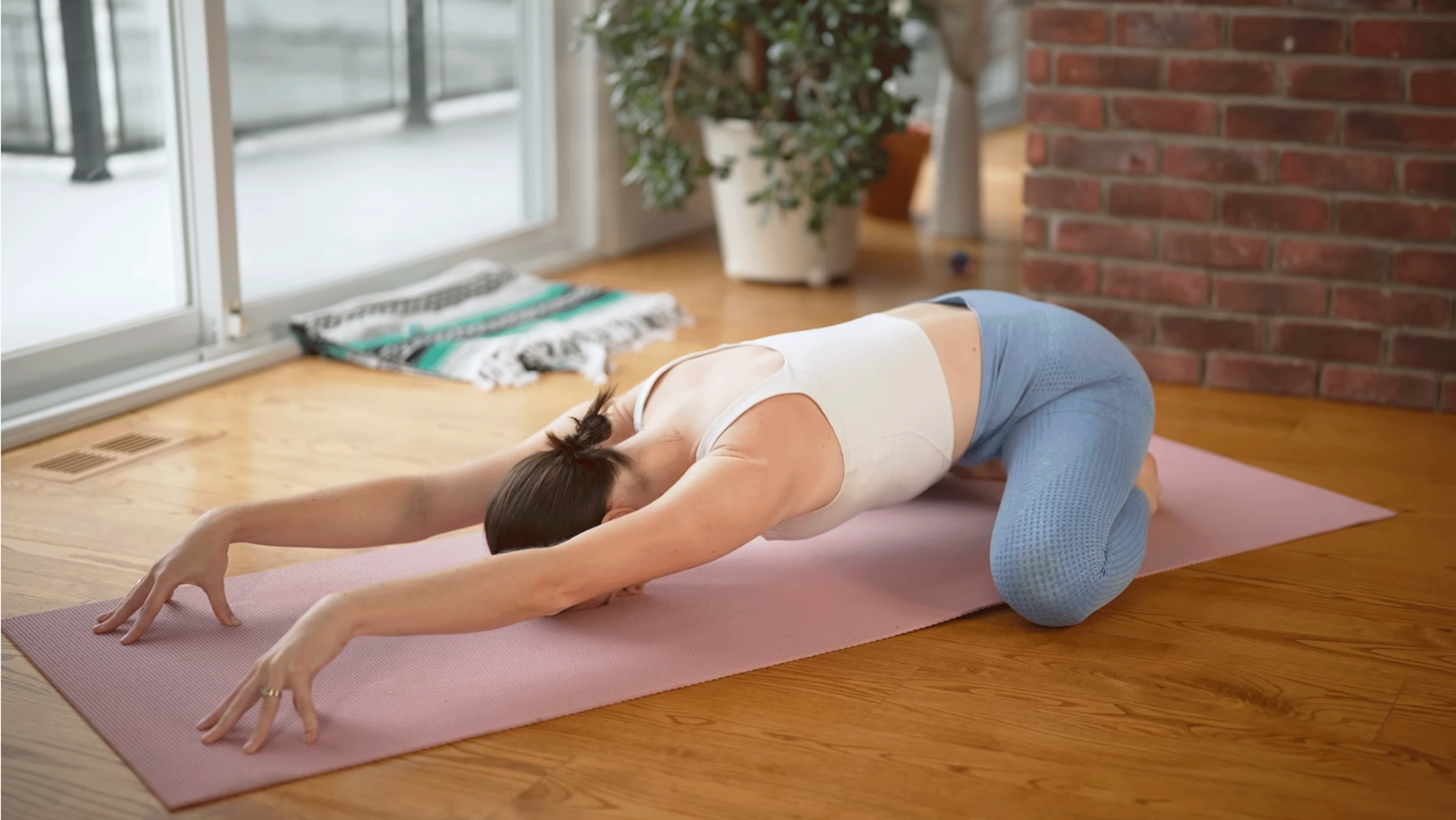
- Rest in Balasana Comfortably: Never hesitate to drop into Child’s Pose whenever you need a moment to collect your breath and rest your muscles.
FAQs
1. Why is checking the device screen a common mistake in online yoga? Twisting your neck to look at a sideways screen while your spine is bearing weight can pinch your cervical joints and cause painful neck strain.
2. What basic props do beginners need to avoid injuries at home? We highly recommend using a high-grip non-slip mat, two dense foam alignment blocks, and a long cotton yoga strap to keep your spine safe.
3. Can a live online instructor really spot my posture mistakes through a webcam? Yes, by setting your camera at waist height and sitting 6 feet away, a senior teacher can easily check your alignment lines on their monitor grid.
4. How many times a week should a beginner lady attend virtual classes? We recommend establishing a routine of three live sessions per week to allow your muscle tissue ample time to repair, strengthen, and build muscle memory.
5. What should I do if a specific posture causes sharp lower back pain? You should ease out of the pose immediately, rest in Child’s Pose, and use the platform’s chat box to ask your teacher for a safer modification.
6. Do I need a massive, dedicated room in my house to join these streams? Not at all. You only need a quiet, flat floor area equal to the dimensions of your standard mat, roughly 6×4 feet of clear space.
7. Is a morning or an evening online live session better for managing stress? Morning sessions are fantastic to jumpstart your metabolic health, while evening classes excel at releasing desk tension and preparing your body for a deep sleep.
8. How do I let my online yoga teacher know about my physical limitations? You can log into the live interactive stream five minutes early to speak with the instructor directly or send a private text message through the platform’s chat box.
Cultivating Lasting Wellness on the Mat
Learning to avoid the common mistakes beginners make in online yoga is an incredibly powerful investment in your long-term health, physical longevity, and mental peace. We have watched how simply adjusting a webcam angle or reaching for a foam block can turn a frustrating home workout into a deeply rewarding daily ritual. Your body is your ultimate home; treat it with the expert professional guidance, patient pacing, and gentle compassion it deserves.
Outdoor Yoga Chennai stands as a trusted resource in the national wellness space, championing precise traditional alignment across both open-air coastal workshops and modern digital formats. We invite you to find a practice rhythm that honors your personal lifestyle and celebrate the deep physical intelligence that resides within you. Explore our current virtual foundational batches to launch your journey toward total equilibrium today.


Leave a Comment