

Table of Contents
How to Improve Flexibility Slowly with Yoga
If you have ever stepped onto a yoga mat in a sun-drenched studio in Adyar or joined an outdoor yoga session at Besant Nagar, you have likely felt that sharp pang of “flexibility envy.” You see someone effortlessly folding in half while your own forward fold barely reaches your knees. You might ask yourself, “Why am I so stiff?” or “Is my body just not built for this?”
The frustration of feeling “locked” in your own skin is the primary reason many people abandon their practice within the first month. We live in a culture of “instant results,” but flexibility is a conversation, not a conquest. In a city like Chennai, where the heat can actually help soften our tissues, we often make the mistake of pushing too hard, too fast. If you are struggling to see progress, the problem isn’t your hamstrings—it is likely your pace. Learning how to improve flexibility slowly with yoga is the only way to ensure that your gains are permanent and your joints remain injury-free.
What Does “Stiffness” Really Mean?
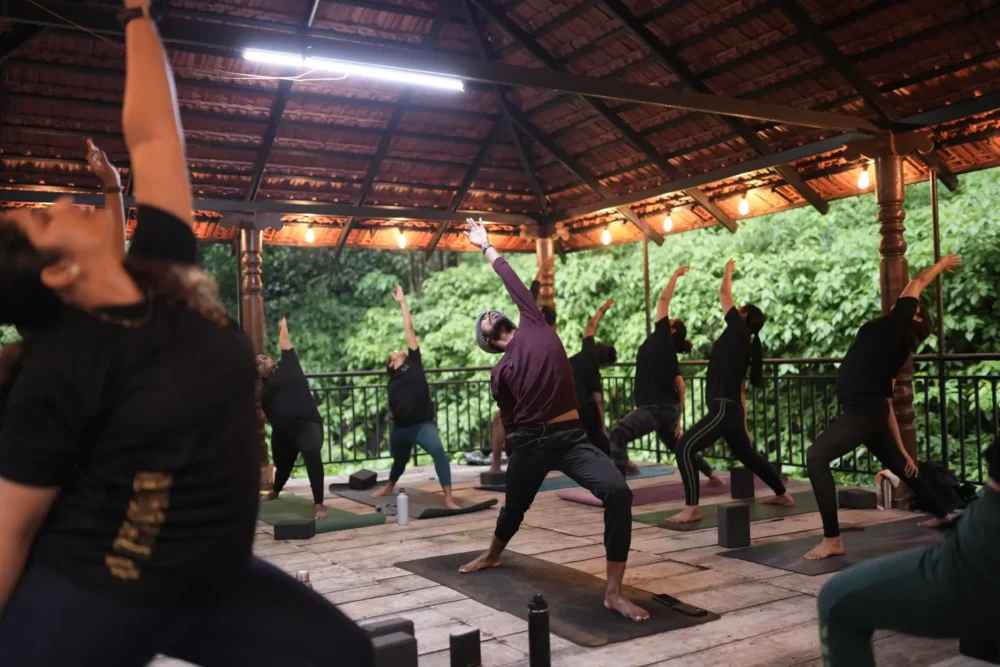
In holistic wellness, stiffness is rarely just about “short muscles.” It is an indication of your nervous system’s desire to protect you. When you feel tight, your brain is essentially pulling the handbrake because it doesn’t trust the stability of your joints at that specific range of motion.
True flexibility is a blend of muscle elasticity, fascial hydration, and neurological safety. If you force a stretch, your “stretch reflex” kicks in, causing the muscle to contract to prevent a tear. This is why “slow and steady” isn’t just a cliché; it is biological law. To get flexible, you must first convince your brain that it is safe to let go.
Common Causes of Limited Flexibility
1. The Sedentary Adaptive Response
For many Chennai professionals working in the IT corridors of OMR, “sitting is the new smoking.” When you sit for eight hours, your hip flexors shorten and your glutes “fall asleep.” Your body is highly efficient; it adapts to the shape you spend the most time in.
2. Chronic Dehydration
Fascia, the connective tissue that wraps around every muscle fiber, is primarily water. In the humid Chennai climate, many of us are “internally dry.” Dehydrated fascia becomes sticky and glue-like, preventing muscles from sliding over one another smoothly.
3. High Cortisol Levels
Stress is a physical constrictor. When you are stressed about a deadline or caught in Mount Road traffic, your body enters a mild “fight or flight” mode. This creates tension in the jaw, shoulders, and pelvic floor, which eventually locks up the entire posterior chain.
Step-by-Step Guidance: Improving Flexibility Safely
If you want to unlock your body without causing inflammation or injury, follow this methodical “slow-burn” approach:
Step 1: The 70% Rule
Never go to your maximum limit. Instead, find the point where you feel a gentle “breathable” stretch—usually about 70% of your range. This keeps the nervous system calm and prevents the protective contraction of the muscle.
Step 2: Utilize “Proprioceptive” Tools
In our Chennai yoga classes, we always advocate for the use of blocks and straps. Using a block in a triangle pose isn’t “cheating”; it provides the stability your brain needs to allow the hamstrings to release. It brings the floor to you, reducing the fear of falling.
Step 3: Long, Passive Holds (Yin Style)
To change the structure of the fascia, you need time rather than force. Holding a gentle pose for 3–5 minutes—with plenty of support—allows the deeper connective tissues to slowly hydrate and expand.
Step 4: Focus on Exhalations
Your breath is the remote control for your nervous system. Every time you exhale deeply through the nose, you send a signal to your muscles to relax. Try to make your exhalations twice as long as your inhalations during a stretch.
Practical Tips & Habit Hacks
- Hydrate with Mineral Water: Plain RO water can sometimes strip minerals. Add a pinch of sea salt or drink tender coconut water (elaneer) daily to ensure your fascia stays supple.
- Warm-up Before the “Deep Dive”: Never stretch cold muscles. Spend 10 minutes in a gentle Hatha yoga flow or take a warm shower before practicing to increase blood flow to the tissues.
- The “Micro-Dose” Strategy: Instead of one 90-minute session a week, do 10 minutes of mobility work every day. Consistency tells the brain that this new range of motion is “the new normal.”
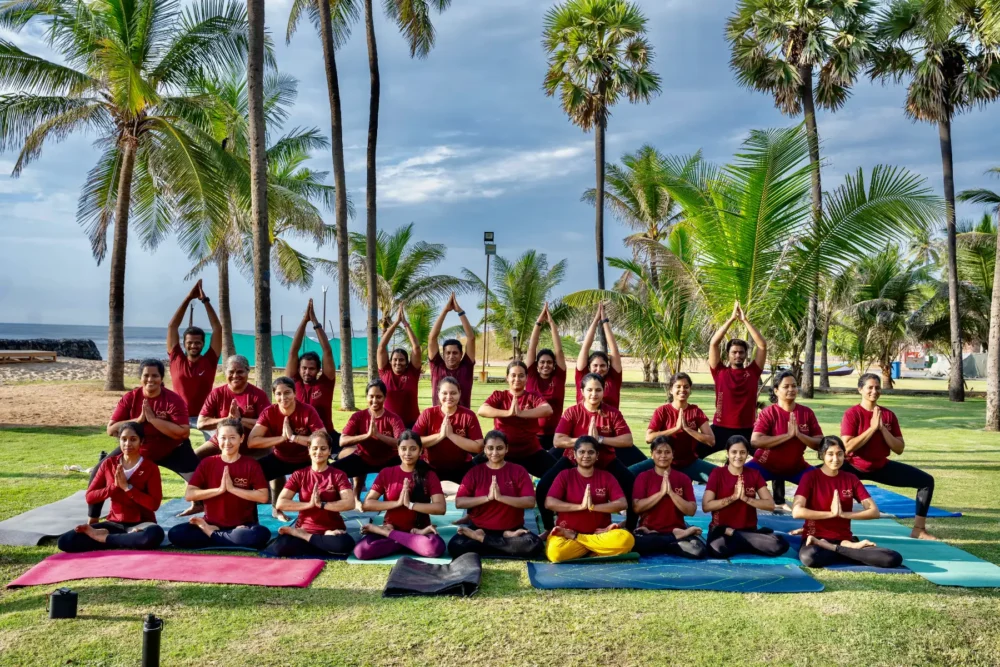
- Temperature Advantage: Leverage the Chennai warmth. Practicing in a non-AC environment (like an outdoor yoga session) allows your body to reach its natural pliability much faster.
Mistakes to Avoid
- Bouncing (Ballistic Stretching): This is the fastest way to trigger a muscle tear. Always move with slow, controlled transitions.
- Comparing Your “Day 1” to Someone’s “Year 10”: Your anatomy is unique. Some people have hip sockets that allow for deep splits; others don’t. Focus on your own sensation, not the mirror.
- Ignoring Pain: There is a difference between the “discomfort” of a stretch and “sharp pain.” If you feel a pinching or burning sensation, back out immediately.
- Forgetting Strength: Flexibility without strength is a recipe for joint instability. Always pair your stretching with core and stability exercises.
Real-World Examples: The Slow Transformation
Scenario A: The Stiff Corporate Leader
Rajesh, a 45-year-old CEO in Chennai, couldn’t touch his shins, let alone his toes. He was convinced he was “un-stretchable.” By committing to a daily 15-minute home yoga routine focused on “breath-led stretching” rather than “pushing,” he slowly regained his mobility. After 12 months, he could palm the floor. His secret? He never pushed to the point of pain.
Scenario B: The Post-Injury Runner
Anjali, a marathoner, had chronic tight IT bands that led to knee pain. She tried to “blast” through the tightness with intense sessions but kept getting injured. When she switched to slow yoga for flexibility, focusing on long, supported holds and hip mobility, her knee pain vanished. She learned that “slowing down” was actually the fastest way to get back to running.
FAQs
1. How long does it take to become flexible with yoga? While you might feel better after one class, structural changes in the fascia and muscle tissue usually take 3 to 6 months of consistent, slow practice.
2. Is it possible to be “too old” to become flexible? No. While children have more collagen, the human body is “plastic” at any age. Older adults can see massive improvements in mobility with a gentle, consistent practice.
3. Why do I feel tighter the day after a yoga session? This is often “Delayed Onset Muscle Soreness” (DOMS) or a slight inflammatory response from pushing too hard. It’s a sign to be even more gentle in your next session.
4. Can I do yoga for flexibility every day? Yes, provided it is gentle. If you are doing intense sessions, give your tissues 24–48 hours to recover.
5. Does “Hot Yoga” help you get flexible faster? Heat increases blood flow and makes you feel more flexible, but it can also lead to over-stretching if you aren’t careful. Natural warmth (like Chennai’s weather) is generally safer.
6. Should I stretch before or after a workout? Dynamic stretching (movement) is best before a workout. Static, long-hold stretching (like Yin) is best after a workout when the muscles are already warm.
7. Why are my hamstrings always tight? Often, “tight” hamstrings are actually “weak” or “over-stretched” because the pelvis is tilted. Strengthening the core and glutes often “releases” the hamstrings.
8. Do I need to be a vegetarian to be flexible? No. While an anti-inflammatory diet helps, flexibility is primarily a result of physical movement and nervous system regulation.
Conclusion: Honor the Journey
Improving your flexibility is a radical act of patience. In a world that wants you to go faster, yoga asks you to slow down. By embracing a slow, mindful approach, you aren’t just stretching your muscles; you are training your mind to be resilient, patient, and kind.
Whether you are practicing under the palms of a Chennai beach or in the quiet of your living room, remember that every millimeter of progress is a victory. Your body wants to be fluid; it just needs to know that it is safe to do so.
Ready to start your slow transformation? Join our [Outdoor Yoga Chennai] community for gentle, expert-led sessions designed for every body.

Leave a Comment