
Table of Contents
Daily Yoga Routine at Home
The beauty of yoga lies in its radical accessibility. While the iconic beaches of Chennai, like Besant Nagar or Thiruvanmiyur, offer a stunning backdrop for practice, the most transformative yoga often happens in the quiet corners of our own homes. Establishing a daily yoga routine at home is an act of reclaiming your time and mental space. In a world that demands we be constantly “on,” the mat becomes a sanctuary where the only requirement is to breathe.
Whether you are living in a compact apartment in T. Nagar or a spacious home in Adyar, your home practice is a personal laboratory for wellness. You don’t need expensive equipment or an Instagram-worthy studio. You simply need the willingness to show up for yourself for fifteen, twenty, or thirty minutes a day. By moving your practice home, you remove the barriers of traffic and scheduling, making consistency—the true secret of yoga—finally achievable. This guide will walk you through how to build a routine that feels like a gift, not a chore.
What is a Daily Yoga Routine at Home?
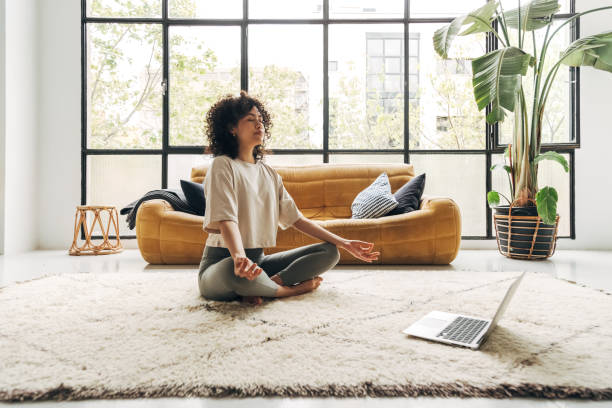
A daily yoga routine at home is a consistent, self-guided or virtually-led practice consisting of physical postures (asanas), controlled breathing (pranayama), and brief meditation. It is designed to be performed in a personal living space to improve physical flexibility, mental clarity, and emotional resilience on a day-to-day basis.
Why it Matters: The Anchor in the Storm
In 2026, the boundary between work and life has blurred significantly. For many professionals in Chennai’s booming tech and creative sectors, the home has become the office, the gym, and the rest area all at once. A home yoga routine matters because it provides a ritualistic “reset” button.
Without the rhythmic movement of yoga, the body begins to store the tension of long sitting hours—manifesting as tight hips, rounded shoulders, and shallow breathing. Mentally, the “noise” of digital notifications creates a state of constant low-level anxiety. A daily routine interrupts this cycle. It forces the nervous system to shift from the sympathetic (fight or flight) to the parasympathetic (rest and digest) state. Over time, this daily anchor builds a reservoir of calm that stays with you long after you’ve rolled up your mat.
How it Works: Building Your Home Sanctuary
Creating a successful home routine isn’t about doing the most difficult poses; it’s about the structure of your session. Here is how a balanced daily flow works:
- The Centering (2–3 Minutes): Sit in a comfortable cross-legged position. Close your eyes and observe your breath without trying to change it. This signals to your brain that the “yoga time” has begun.
- The Warm-up (5 Minutes): Gentle movements like neck rolls, cat-cow stretches, and wrist circles prepare the joints. This is crucial for preventing injury, especially if you’ve been sedentary all day.
- The Sun Salutations (10 Minutes): Surya Namaskar is the heart of a home routine. It is a complete workout that builds heat, improves cardiovascular health, and stretches every major muscle group.
- The Main Flow (10 Minutes): Incorporate standing poses for strength (like Warrior II) and seated twists for spinal health and digestion.
- The Closing (5 Minutes): Never skip Savasana (Corpse Pose). Lying still allows the nervous system to integrate the benefits of the movement.
Benefits of Practicing Every Day
Physical: Structural Longevity
Consistent home practice keeps the synovial fluid in your joints flowing. This “oils” your movement, making you less prone to the aches and pains commonly associated with aging or desk-bound lifestyles.
Mental: Cognitive Sharpness
Yoga increases blood flow to the brain and balances the left and right hemispheres. Practitioners often report better problem-solving skills and improved focus during their work hours.
Emotional: The “Internal Weather”
By observing your body daily, you become more aware of your emotions. You learn that just like a difficult pose, a difficult emotion is temporary and can be breathed through.
How Beginners Can Approach a Home Practice
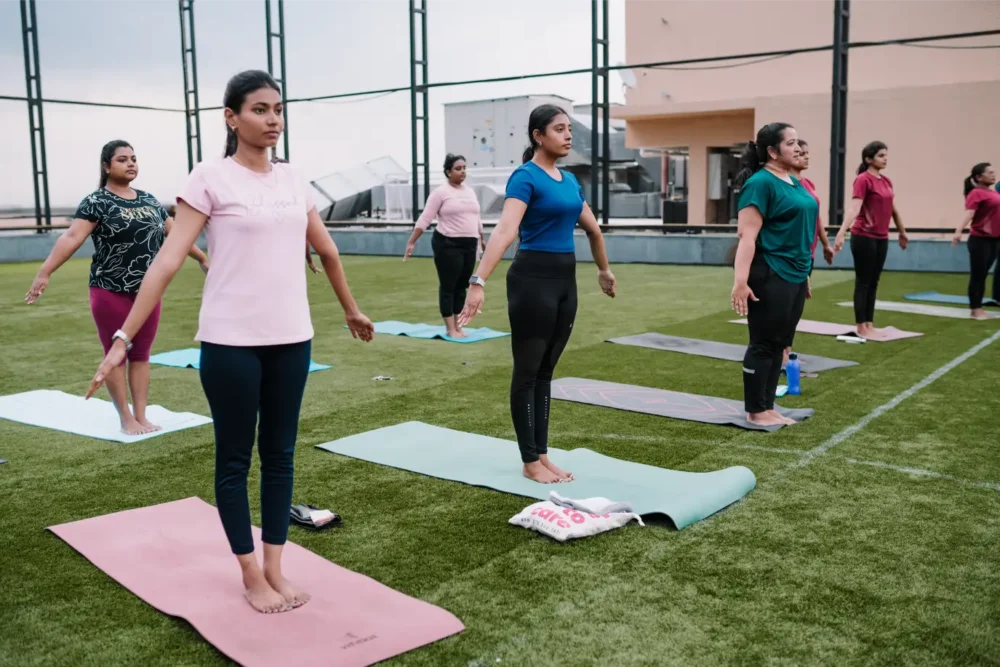
If you are a beginner in Chennai looking to start today, follow these low-pressure steps:
- Lower the Bar: Don’t aim for an hour. Aim for 10 minutes. It is easier to talk yourself into a 10-minute session on a busy morning.
- Use Technology Wisely: Join a live online yoga class or follow a reputable beginner’s video. Having a voice to guide you prevents the “what do I do next?” anxiety.
- Dedicate a Spot: You don’t need a whole room. Just enough space to spread your mat. Keep your mat visible—it serves as a powerful visual nudge.
- Invest in a Non-Slip Mat: Safety is paramount at home. A good mat prevents your hands from sliding during downward dog, protecting your wrists and shoulders.
Real-World Examples: The Power of the Mat
Scenario A: The Remote Developer
Kiran, a developer living in Velachery, suffered from recurring lower back pain. He committed to a daily yoga routine at home consisting of just 15 minutes of hip openers and spinal twists every evening at 6 PM. By creating this “work-to-life” transition, he not only healed his back but also stopped the habit of “doom-scrolling” on his phone immediately after work.
Scenario B: The Busy Parent
Anitha found it impossible to visit a studio in Anna Nagar because of her toddler’s schedule. She started a “Morning Micro-Practice”—doing three rounds of Sun Salutations while her coffee brewed. This small, consistent window of movement gave her the patience needed for the day ahead, proving that yoga doesn’t need to be long to be effective.
Common Misunderstandings About Home Yoga
“I need to be flexible to start.” Flexibility is a consequence of yoga, not a prerequisite. If you can’t touch your toes, you are exactly the person who should be doing yoga.
“I might do it wrong and hurt myself.” While safety is important, basic poses are very safe. Focus on how a pose feels rather than how it looks. If it hurts, back off.
“It’s not as good as a studio class.” A home practice is different, not “less than.” It builds self-reliance and allows you to customize the practice to your body’s specific needs that day.
Practical Tips for Staying Consistent
- Stack Your Habits: Do your yoga immediately after an existing habit, like brushing your teeth or making your bed.
- The “Roll Out” Rule: On days you don’t want to practice, just commit to rolling out the mat and standing on it for one minute. Usually, once you’re there, you’ll do a few stretches.
- Dress for Success: Wear your yoga clothes first thing in the morning. If you’re already dressed for it, you’re 50% more likely to do it.
- Listen to Your Body: Some days you’ll have the energy for a sweat-inducing flow; other days, you might just need five minutes of deep breathing. Both are “perfect” practices.

FAQs
1. Is 15 minutes of yoga a day enough? Yes. For habit-building and nervous system regulation, 15 minutes of daily consistency is far superior to a 90-minute session once a week.
2. Can I do yoga at home without a teacher? For beginners, it is highly recommended to use online yoga classes or apps to ensure proper alignment and safety until the poses become second nature.
3. What is the best time for a daily yoga routine? The “best” time is the one you can stick to. Morning practice (Brahma Muhurta) is traditional for energy, while evening practice is excellent for stress relief and better sleep.
4. Do I need props like blocks and straps? Not necessarily. You can use household items—a thick book instead of a block, or a belt/towel instead of a yoga strap.
5. Can a daily routine help with weight loss? Yes, especially if you include dynamic sequences like Surya Namaskar which boost metabolism and regulate hormones that cause weight gain.
6. Is it okay to do yoga on a carpet? A carpet provides cushioning but can be slippery. It is safer to place a yoga mat on top of the carpet to provide the necessary grip for your hands and feet.
7. Should I do yoga every single day? While daily movement is great, listen to your body. Taking one day a week for “Restorative” yoga or total rest is perfectly healthy.
8. How do I know if I’m progressing? Progression in yoga isn’t just about deeper stretches; it’s about how quickly you can return to a calm breath when you are stressed.
Conclusion: Honor the Small Steps
Building a daily yoga routine at home is a journey of self-discovery. It is a commitment to treat yourself with the same kindness and attention you give to your work and your family. In the vibrant, often chaotic energy of Chennai, your home mat is an island of peace.
Remember, there is no such thing as a “bad” yoga session. Whether you flow through twenty poses or simply sit in silence for five minutes, you are doing the work. Be patient with yourself, keep showing up, and let the practice unfold one breath at a time.

Leave a Comment