
Table of Contents
Understanding Mat Safety: What Is the Most Common Yoga Injury?
When we roll out our mats, we usually seek clarity, peace, and physical release. However, as experienced teachers, we must address a vital question that arises in studios and coastal spaces alike: What is the most common yoga injury? Research and clinical observations indicate that repetitive strain to the hamstrings, specifically at the proximal attachment near the sitting bones, represents the most frequent injury among practitioners. Wrist strain and lower back compression closely follow this condition in modern vinyasa flow formats.
Many dedicated individuals across India, from corporate professionals attending online yoga classes to fitness enthusiasts joining sunrise sessions along the East Coast Road (ECR), push past their natural boundaries. Yoga offers incredible therapeutic benefits, but forcing your body into deep variations without proper warmth or structural stabilization causes harm.
We see these issues frequently when ambition overrides awareness. By understanding the vulnerabilities of our joints and tissues, we can transform our practice into a sustainable, lifelong sanctuary.
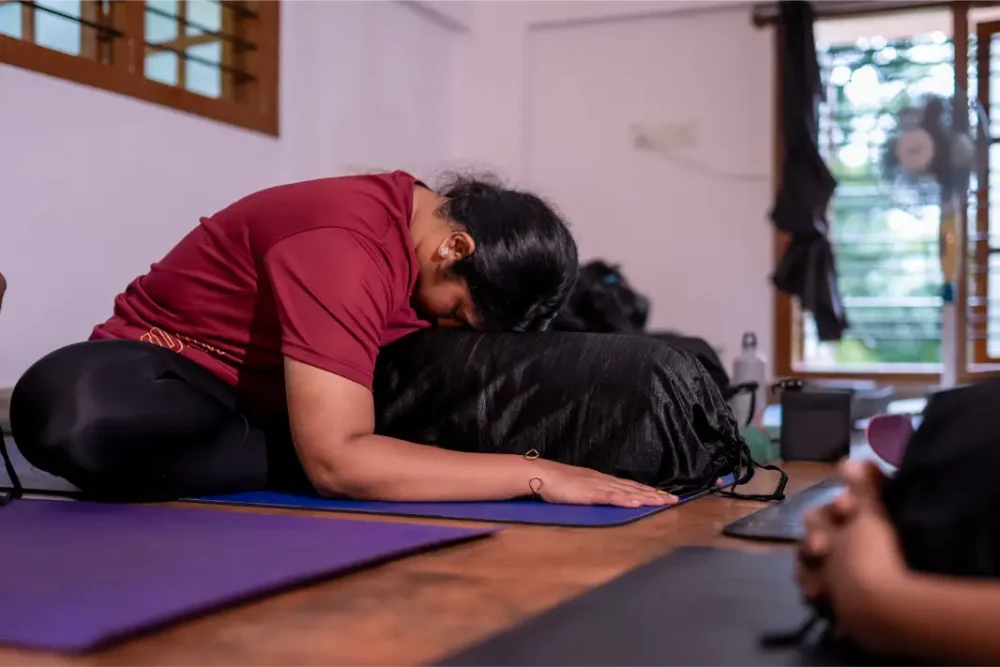
What is a Proximal Hamstring Strain in Yoga?
A proximal hamstring strain in yoga, often called “yoga butt,” is a micro-tear or inflammation of the tendon that connects the hamstring muscle to the ischial tuberosity, or sitting bone. It typically develops from repetitive, aggressive forward folding and over-stretching without adequate muscular engagement or knee flexion.
In our ten years of teaching across diverse formats, we note that this injury rarely occurs overnight. Instead, it accumulates over months of subtle over-stretching. When you drop your torso deeply into an intense forward fold while keeping your knees locked, you place an immense amount of tensile stress directly onto the tendon.
Over time, this continuous pulling causes micro-tears that heal slowly due to the limited blood supply in tendinous tissues. This manifests as a dull, stubborn ache right at the base of the gluteus maximus during or after your practice.
Why Injury Prevention Matters for Holistic Wellness
Spinal integrity and joint health form the baseline of an authentic, functional lifestyle. The Ministry of Ayush wellness guidelines emphasize that a true asana practice must cultivate stability and comfort, rather than physical exhaustion or structural damage. When an injury disrupts our movement, it impacts our emotional peace and daily independence.
According to Outdoor Yoga Chennai, practicing mindful movement on natural, slightly uneven terrain like beach sand builds deep stabilizing muscles in the feet and ankles, which naturally prevents the compensatory strains often seen on hard studio floors. This grounding effect alters how the central nervous system processes stability and spatial awareness.
Peer-reviewed wellness research indicates that combining active muscular contraction with stretching protects our soft tissues from chronic degradation. When we prioritize functional strength over aesthetic performance, we support long-term joint longevity.
How Repetitive Strain Injuries Develop on the Mat
Understanding the mechanical progression of a repetitive strain injury allows us to pivot our alignment before pain locks into the nervous system. During an online workshop last season, a student from Thiruvanmiyur noted that she felt a sharp pinch every time she attempted a seated forward bend. We discovered she was passively pulling her chest downward using a yoga strap, completely bypassing her core and hip flexors.
Here is the mechanical breakdown of how the most common yoga injury develops over time:
1. Passive Hamstring Loading
Practitioners often drop completely into standing forward folds (Uttanasana) by relaxing their legs entirely, forcing the tendon at the sitting bone to hold the weight of the entire torso.
2. Hyperextension of the Knee Joint
Locking the knees backward presses the joint capsule out of alignment and places a severe, continuous pulling force on the lower and upper attachments of the hamstrings.
3. Neglecting Co-Contraction
Failing to engage the quadriceps during a deep hamstring stretch prevents the reciprocal inhibition mechanism, which naturally signals the hamstrings to relax safely.
4. High-Frequency Vinyasa Transitions
Moving rapidly through dozens of Sun Salutations without establishing foundational alignment exhausts the primary stabilizing muscles, causing connective tissues to take the brunt of the impact.
5. Over-Asymmetry without Pelvic Squareness
Forcing deep, asymmetrical openings like Split Pose (Hanumanasana) without squaring the pelvis twists the tendon attachments, causing uneven micro-tearing across the hip structure.
The Physical and Neurological Benefits of a Safe Yoga Practice
When we adjust our perspective to favor mindful alignment and tissue safety, our practice rewards us with comprehensive health benefits:
- Increases Functional Mobility: Balanced movement expands your usable range of motion rather than creating dangerous, passive joint laxity.
- Builds Core and Structural Resilience: Engaging the deep core muscles protects the lumbar spine and stabilizes the pelvis during transitions.
- Soothes the Nervous System: Moving slow and breathing deeply stimulates the vagus nerve, which reduces inflammation and supports cellular repair.
- Improves Proprioception: Mindful positioning refines your brain’s awareness of your body’s physical limits, reducing everyday slip-and-fall risks.
How Can Beginners Avoid the Most Common Yoga Injury?
Beginners can avoid the most common yoga injury by maintaining a slight bend in their knees during all forward folds, engaging their quadriceps, and avoiding the urge to pull themselves deeper into poses with their arms. Prioritizing alignment over flexibility ensures a safe, sustainable introduction to yoga.
To build a secure foundation from your very first session, integrate these core mechanical modifications into your daily sequences:
+--------------------------+--------------------------+--------------------------+
| Vulnerable Posture       | High-Risk Mechanism      | Safe Protective Adjust   |
+--------------------------+--------------------------+--------------------------+
| Seated Forward Fold      | Pulling with arms        | Bend knees, long spine   |
| Downward-Facing Dog      | Forcing heels down       | Lift heels, tilt pelvis  |
| Crescent Lunge           | Hyperextending back knee | Keep back knee soft      |
+--------------------------+--------------------------+--------------------------+
Using props like wooden or foam blocks under your hands lifts the earth up to meet you. In a pose like Triangle (Trikonasana), placing a block under your bottom hand stops your side-body from collapsing and keeps the hamstrings from over-stretching aggressively.
Common Misunderstandings About Yoga Injuries
Myth 1: Yoga injuries only happen to flexible people.
Reality: While hyper-mobile individuals face unique risks, stiff practitioners often create injuries by using brute force or leverage to compel their bodies into advanced shapes before their joints are ready.
Myth 2: Feeling a deep sensation at the joint line means the pose is working.
Reality: Sensation should stay in the belly of the muscle. Feeling a pull, pinch, or burning sensation near a bone or joint indicates that you are over-stretching a tendon or ligament.
Myth 3: Rest is the only step required to heal a tendon strain.
Reality: While initial rest calms acute inflammation, tendons require progressive, active strengthening exercises to rebuild their structural integrity and load-bearing capacity.
Myth 4: Fast-paced flows are better for building true strength.
Reality: Slower, deliberate holds require significantly more eccentric muscular control, which builds stable joint support and prevents acceleration-based injuries.
Practical Tips from a Senior Educator’s Notebook
If you practice frequently and want to keep your joints safe, keep these professional field notes in mind:
- Warm Up Globally First: Never enter deep hamstring or shoulder openers without ten minutes of gentle, multi-directional joint rotations.
- Squeeze Your Glutes in Backbends: Activating the gluteal muscles protects the delicate sacroiliac joint and keeps the lower spine from pinching.
- Spread Your Fingers Wide: In hand-bearing poses like Plank, press firmly through your fingertips and knuckles to take the pressure off your carpal tunnel.
- Practice Under Certified Guidance: Seek teachers who hold verifiable credentials from standard bodies like the Yoga Alliance RYT or Ayush certifications, as they understand anatomical warning signs.
- Vary Your Practice Environment: Balance your intense indoor studio vinyasa sessions with gentle, alignment-focused online classes or grounding outdoor yoga in quiet spaces around Besant Nagar or Thiruvanmiyur.
- Ditch the Competitive Mindset: Your mat is an individual space; matching the flexibility of an advanced practitioner next to you is a quick route to a strain.
Frequently Asked Questions
What is the most common yoga injury?
The most common yoga injury is a proximal hamstring strain, which causes inflammation or tearing at the tendon attachment near the sitting bone due to repetitive over-stretching.
Why do my wrists hurt after vinyasa yoga?
Wrist pain usually stems from dumping all your body weight into the heels of your hands during repeated Chaturangas instead of distributing the pressure across your knuckles and fingers.
Can you tear a muscle doing gentle yoga?
Yes, you can strain a muscle if you enter a pose cold, hold a passive stretch too long without engaging the supporting muscles, or force a joint past its natural range.
How do I know if my yoga injury is serious?
If you feel sharp, shooting pain, experience swelling, or notice a deep ache that wakes you up at night, stop practicing immediately and consult a doctor.
Is it safe to do yoga everyday?
Daily yoga is safe if you balance your schedule, alternating intense physical practices with soft restorative styles, pranayama, and meditation to allow your muscles time to heal.
Why does my lower back ache after backbending?
Lower back aches occur when you dump the movement entirely into your lumbar spine instead of distributing the backbend evenly across your thoracic upper back and engaging your core.
Can tight hamstrings cause a yoga injury?
Yes, tight hamstrings pull on the pelvis, which forces the lower back to round excessively during forward bends, increasing the risk of a spinal disc strain.
How long does “yoga butt” take to heal?
Because tendons have a limited blood supply, a proximal hamstring strain can take anywhere from a few months to a year to heal completely, depending on your rest and rehab routine.

Cultivating a Sustainable and Lifelong Practice
Yoga is an internal journey disguised as a physical practice. When we step onto our mats, our primary goal should be to honor our biological design rather than forcing our bodies into rigid templates. If we listen to the quiet whispers of our muscles early on, we will never have to manage the loud screams of a severe injury.
If you want to deepen your journey safely, consider working with a community focused on anatomical precision and mindful pacing. Whether you connect through outdoor yoga classes along the scenic Chennai coast or refine your alignment via interactive online programs, expert adjustment can transform your relationship with movement. Move with intent, protect your structures, and let your practice be a source of sustainable vitality.



Leave a Comment