
Table of Contents
Can yoga be done on an empty stomach?
If you have ever attended a sunrise outdoor yoga session at Besant Nagar beach, you’ve likely noticed a common thread among the seasoned practitioners: they rarely arrive clutching a breakfast smoothie. There is an ancient wisdom to this quiet stillness. One of the most frequent questions we encounter from new students in Chennai is, “Can yoga be done on an empty stomach?”
The short, traditional answer is yes. In fact, practicing on an empty stomach is the gold standard in Hatha Yoga. Ideally, your last heavy meal should be at least 3 to 4 hours before you step onto the mat. This isn’t about restriction; it’s about biological efficiency. When your body isn’t diverted by the heavy labor of digestion, it can focus entirely on the movement of energy (Prana), the depth of your breath, and the flexibility of your tissues.
However, modern life in a bustling city like Chennai—with its humid climate and long commutes—requires a touch of nuance. While an empty stomach is ideal for a 6:00 AM practice, a student heading to a 6:00 PM class after a stressful day at the office might need a different strategy. This guide explores the “why” and “how” of timing your nutrition to ensure your yoga practice feels like an expansion, not a struggle.
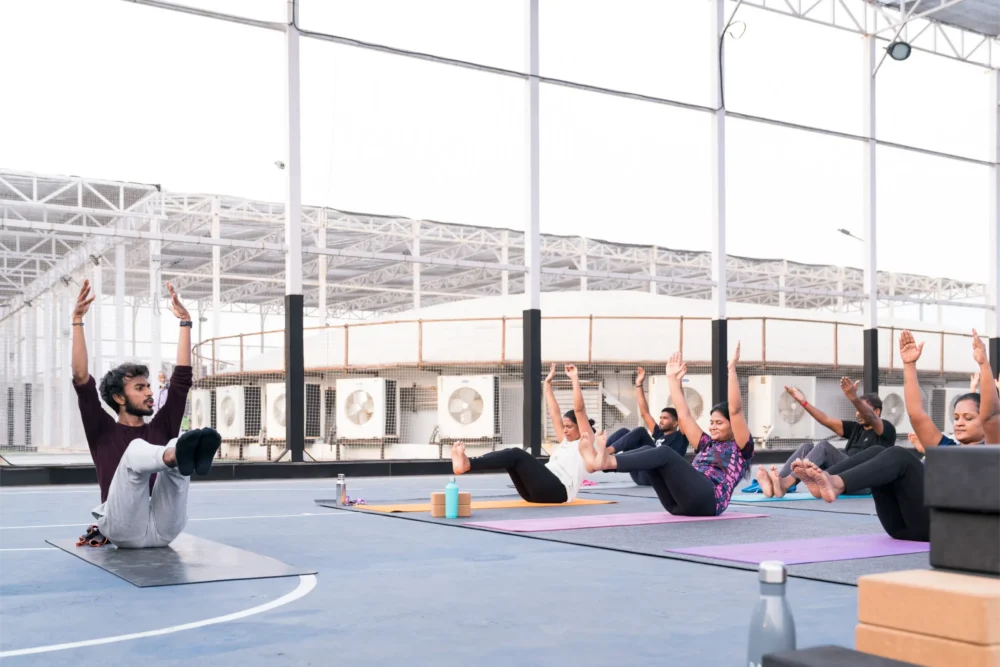
What is Empty Stomach Yoga?
Empty stomach yoga refers to the practice of performing asanas (postures) and pranayama (breathwork) when the digestive system is at rest. In yogic science, this state is known as Shaucha (purity), ensuring that the body’s internal fire (Agni) is directed toward purification and movement rather than breaking down food.
Why it Matters: The Science of Agni
In holistic wellness, your digestive fire, or Agni, is the engine of your health. When you eat, Agni concentrates in the stomach. If you attempt a vigorous yoga flow or deep twists immediately after eating, you force your body into a physiological conflict. Your blood flow is divided between your digestive organs and your working muscles.
This conflict leads to “sluggishness,” bloating, and sometimes acid reflux—especially during inversions like Downward Dog. Practicing on an empty stomach matters because it allows for a deeper range of motion. Without a full stomach pressing against your diaphragm, your breath becomes more expansive, and your internal organs can be “massaged” effectively by the postures, promoting a natural detoxification process that is the hallmark of a true yoga practice.
How it Works: The Digestion Timeline
To master the art of “Empty Stomach Yoga,” you need to understand the transit time of different foods. Here is how you should time your practice:
- Morning Practice: This is the most natural time. After a night’s sleep, your stomach is naturally empty. A glass of warm water or lemon water is all you need to “wake up” your system without breaking the fast.
- The 4-Hour Rule: If you’ve had a full South Indian meal (rice, sambar, etc.), wait at least 4 hours. These complex carbohydrates and fats take time to clear the stomach.
- The 2-Hour Rule: For light snacks like a piece of fruit or a small salad, a 2-hour gap is usually sufficient for the stomach to feel light enough for movement.
- The Immediate Exception: If you feel genuinely faint or have low blood sugar, a tiny “micro-snack” (like two dates) 30 minutes before class is better than pushing through a dangerous dizzy spell.
Benefits of Practicing on an Empty Stomach
Physical: Core Engagement and Flexibility
An empty stomach allows for deeper abdominal engagement. In poses like Uddiyana Bandha (the abdominal lock), a clear stomach is a requirement. You’ll also find that twists feel significantly more comfortable and effective.
Mental: Clarity and Focus
Digestion is an energy-intensive process. When the gut is quiet, the brain receives more oxygenated blood. Most practitioners report a “meditative lightness” and sharper focus when they practice before breakfast.
Emotional: Stability and Calm
Heavy digestion can lead to Tamas (lethargy or dullness). Practicing on an empty stomach promotes Sattva (purity and balance), helping you manage the emotional stresses of Chennai’s daily hustle with more grace.

How Beginners Can Approach It
If you are used to eating a heavy breakfast immediately upon waking, transitioning to an empty-stomach practice can feel daunting. Try this progression:
- Hydrate First: Drink a glass of room-temperature water. This eases “false hunger” and lubricates your joints.
- The “Banana Bridge”: If you feel weak, eat half a banana 45 minutes before class. It provides quick glucose but is light enough to digest rapidly.
- Shorten the Gap: Start by waiting 2 hours after a meal, then gradually increase it to 3 or 4 hours as your body adapts to the feeling of lightness.
- Listen to the Heat: In Chennai’s humidity, you might feel more tired. Ensure you are getting enough electrolytes the night before so you don’t feel depleted during your morning session.
Common Misunderstandings
“I won’t have the energy to finish the class.” Your body has plenty of stored glycogen to power a 60-minute yoga session. The “weakness” people feel is often psychological or a sign of mild dehydration rather than a lack of calories.
“Yoga is just stretching; food doesn’t matter.” Yoga involves internal organ compression. Unlike a walk or a light gym session, the “twisting” nature of yoga can be very disruptive to an active digestive tract.
“I have a fast metabolism, so I can eat before class.” Even if food “clears” your stomach quickly, the inflammatory markers and blood-flow diversion remain active for a significant time after eating.
Real-World Scenarios
Scenario A: The Early Morning Commuter
Ananya joins our outdoor yoga group at Elliot’s Beach at 6:30 AM. She used to have tea and biscuits before leaving her home in Adyar. She often felt “gassy” during her practice. After switching to just warm water and saving her tea for post-practice, she found she could finally hold her Crow Pose (Bakasana) without discomfort.
Scenario B: The Post-Office Yogi
Karthik attends an evening online yoga class after work. He used to snack on spicy mixtures and coffee at 4:30 PM for a 6:00 PM class. He suffered from frequent heartburn. By swapping his snack for a handful of soaked almonds at 3:30 PM, his heartburn vanished, and he felt more “present” on the mat.
Practical Tips for Your Wellness Journey
- The “Lemon Water” Trick: A squeeze of lemon in warm water helps clear residual mucus in the gut, preparing it for the “massaging” action of the poses.
- Avoid Caffeine: Coffee on a totally empty stomach can make some people jittery or acidic. Try to save the filter coffee for after Savasana.
- The Post-Practice Window: Wait 20–30 minutes after your practice before eating. This allows your blood flow to return from your muscles back to your digestive system.
- Morning Evacuation: Traditionally, yoga is practiced after the bowels have been cleared. Drinking warm water in the morning helps facilitate this, making the practice much more comfortable.
FAQs
1. Is it dangerous to do yoga on a completely empty stomach? For most healthy adults, no. It is the traditional way to practice. However, individuals with Type 1 diabetes or specific metabolic conditions should consult their doctor.
2. What if I have a 7:00 PM class and haven’t eaten since lunch? You might feel too weak. In this case, have a small, light snack like an apple or a few dates at 5:00 PM to bridge the gap.
3. Can I drink coconut water before yoga? Yes. Tender coconut water (elaneer) is an excellent pre-yoga drink in Chennai. It provides electrolytes and a tiny bit of natural sugar without being “heavy.”
4. Why do I feel nauseous during yoga even on an empty stomach? Nausea can sometimes be a sign of detoxification or mild dehydration. Ensure you drink plenty of water the night before your practice.
5. Does this rule apply to Yin Yoga? Yin Yoga is less vigorous, so the “empty stomach” rule is slightly more flexible, though a full stomach will still make deep forward folds uncomfortable.
6. Can I practice Pranayama after eating? Absolutely not. Breathwork requires full movement of the diaphragm. Any food in the stomach will severely limit your lung capacity and the effectiveness of the practice.
7. How long should I wait after a cup of tea? A simple cup of tea or coffee usually requires about 30–45 minutes to settle before you begin moving.
8. Is it better to practice hungry or full? Ideally, you shouldn’t feel “starving” or “stuffed.” You should feel “neutral”—light, clear, and ready to move.
Conclusion: The Joy of Lightness
Embracing the practice of yoga on an empty stomach is one of the quickest ways to elevate your experience on the mat. In our busy Chennai lives, we are so used to “consuming” that the idea of “emptying” can feel strange. Yet, it is in this emptiness that we find space—space to breathe, space to stretch, and space to simply be.
Whether you are flowing through Sun Salutations in a park in Anna Nagar or practicing silently in your room, remember that yoga is a journey inward. By giving your digestive system a break, you allow your inner self to take center stage.


Leave a Comment