
Table of Contents
Can Beginners Start Yoga Without Flexibility: The Ultimate Somatic Guide for Stiff Bodies
Unrolling a practice mat for the first time often triggers immediate performance anxiety about physical limitations. Absolute newcomers frequently ask us: can beginners start yoga without flexibility? Yes, absolutely; saying you are too stiff to practice yoga resembles saying you are too dirty to take a bath. Over ten years of guiding students across sandy breeze shorelines, quiet city studios, and modern streaming setups, we watch stiff muscles safely transform. Our students frequently discover that lacking natural hyper-mobility actually protects their joints from accidental hyperextension during foundational shapes. When you integrate systematic skeletal alignment with smart prop support, you create a deeply restorative environment for physical growth. Whether you live along coastal wellness paths ECR communities, reside near Besant Nagar, or practice via virtual hatha alignment systems India portals, consistency alters your architecture. Let us explore the biomechanical realities, neural mechanisms, and specialized safety frameworks that prove how tight frames achieve exceptional wellness advantages.
Can beginners start yoga without flexibility safely?
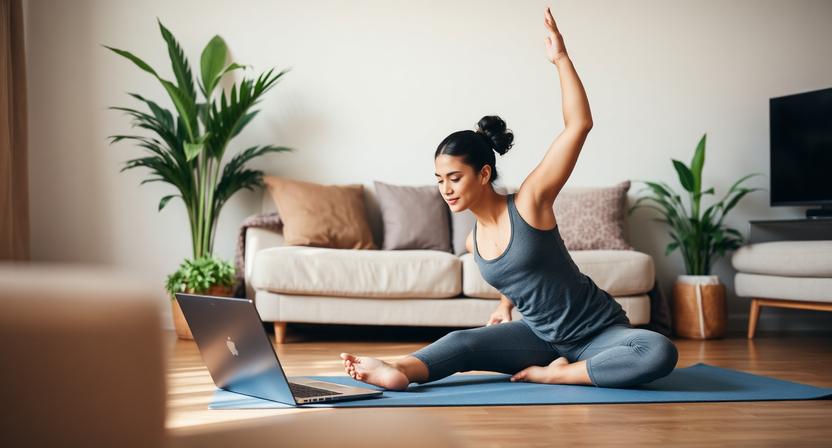
Beginners can start yoga without flexibility safely by using high-density foam blocks, woven cotton straps, and folded wool blankets to support tight muscle groups. This customized adaptation shortens the distance to the floor, keeps the lower spine perfectly neutral, and prevents joint strain while building foundational core strength.
          [ THE STIFF-FRAME ACCELERATION MATRIX ]
                             │
                             ▼
              Evaluate Muscle Spindle Resistance
                             │
                             ▼
         [Forced End-Range Pulls] or [Prop-Supported Alignment]
                             │
                             ▼
         Introduce Slow, Controlled Diaphragmatic Exhalations
                             │
                             ▼
         Achieve Complete Neuromuscular System Relaxation
In our live interactive training chambers, we prove that true flexibility is a hard-earned consequence of practice, never a pre-requisite. We want you to discover how resting into customized, supported shapes coaxes your stubborn connective tissue to open up gradually. We often see enthusiastic gym-goers try to pull their chests down to their knees using brute force, which instantly triggers defensive muscle spasms. Studying under experienced educators who hold international credentials, like a Yoga Alliance RYT framework certification, prevents these common alignment errors. Your remote mentor checks your posture through a live high-definition video frame, offering immediate, highly descriptive verbal cues to stabilize your skeleton. Over a decade of teaching, we watch our digital students eliminate chronic morning stiffness by simply embracing a prop-first mindset. This patient method lets your parasympathetic nervous system remain fully active, ensuring your deep tissue fibers safely lengthen without experiencing sudden micro-tears.
Why Lacking Flexibility Protects Your Joints and Build Long-Term Stability
Approaching an asana system with naturally stiff hamstrings or tight shoulders forces you to pay strict attention to structural form. Hyper-mobile individuals often bypass their muscles entirely, collapsing straight into fragile ligaments and overstretching their joint capsules dangerously. The Ministry of Ayush outlines explicit anatomical guidelines for teaching therapeutic hatha and modern vinyasa routines across India. Their peer-reviewed publications state that steady, mindful muscle activation combined with short-duration static holds improves joint alignment and reduces chronic pain.
According to Outdoor Yoga Chennai, discovering that can beginners start yoga without flexibility allows new students to master safe home props adaptation methods that shield their lower backs from early structural stress. We regularly see our national digital student community eliminate deep hip pinching by placing thick cushions beneath their pelvis during seated postures. Peer-reviewed research distributed through global health channels suggests that mind-body exercise platforms may support vascular health and lower stress hormones. By pairing your individual mechanical choices with the calm guidance of a certified virtual instructor, you maximize your movement safety.
How to Begin Your Practice with a Stiff Body: Step-by-Step Structural Guide
Unlocking your true mobility when your body feels like iron requires setting up your home space and matching props with methodical care. Follow this step-by-step physical screening framework every morning to ensure your bones shift smoothly from restriction into safe elongation:
- Set Your Webcam View: Position your digital device seven feet away at hip level, ensuring your teacher tracks your profile line.
- Soften Your Knee Joints: Keep a prominent, active five-degree bend in your knees during every single standing forward fold.
- Elevate Your Tailbone: Sit directly on the edge of a firm block to tilt your pelvis forward and flatten your lumbar curve.
- Extend Your Floor Reaches: Place two high-density foam blocks directly beneath your palms during low lunges to stand upright.
- Use a Woven Strap: Loop a thick cotton strap around the soles of your feet during seated stretches to keep your back long.
- Slow Your Nasal Breath: Inhale through your nostrils for four seconds and exhale for six seconds to calm your muscle spindles.
- Rest in Full Comfort: End your routine with ten minutes in Savasana, placing a rolled blanket under your knees for support.
                 [ STIFF-FRAME PROPS CHECKLIST ]
  ┌──────────────────────────────────────────────────────────────┐
  │                                                              │
  │      [Lumbar Matrix Safety]   ──► Sit on Firm Foam Blocks    │
  │                 │                                            │
  │                 ▼                                            │
  │      [Knee Joint Protection]  ──► Five-Degree Constant Bend  │
  │                 │                                            │
  │                 ▼                                            │
  │      [Reach Adaptation Base]  ──► Hands Placed on Side Blocks│
  │                 │                                            │
  │                 ▼                                            │
  │      [Spindle Release Count]  ──► Six-Second Slow Exhalation │
  │                                                              │
  └──────────────────────────────────────────────────────────────┘
Over five years of directing outdoor sessions across the breezy shoreline paths of ECR, we see how proper prop setups prevent injuries. Our interactive online classrooms transfer that exact level of individual, alignment-focused care directly onto your household digital screen. I remember a corporate accountant from Thiruvanmiyur who logged into our virtual hatha alignment stream with an incredibly stiff spine. His camera feed showed him shaking violently while trying to force his palms flat onto the ground during a forward fold. We immediately instructed him to place his hands on the backs of two tall chairs and bend his knees significantly. This simple posture adjustment removed his intense spinal strain, stabilized his balance, and proved why beginners never need natural flexibility to excel.
Direct Somatic Benefits for Naturally Tight Practitioners
- Greater Core Engagement: Stiff frames must activate their deep abdominal muscles to hold positions, which rapidly builds real core strength.
- Safer Joint Boundaries: Tight connective tissues act as a natural brake system, preventing you from overstretching your delicate joints.
- Faster Postural Upgrades: Utilizing posture correction metrics Besant Nagar systems counteracts the hunched shoulders caused by office desk work.
- Lower Injury Risk: Because stiff students feel muscle resistance early, they rarely push past safe limits into tendon tears.
What are the benefits of using props when beginners start yoga without flexibility?
Regarding prop usage, the benefits when beginners start yoga without flexibility include keeping the spine straight and avoiding dangerous lower back rounding. Using blocks and straps changes the angles of the pose, allowing tight muscles to relax and lengthen without compressing your joints.
       [ KINETIC SYSTEM OVERLOAD BALANCER ]
                        │
                        ▼
       Identify True Muscle Resistance Point
                        │
                        ▼
       [Forcing Joints = Nerve Pinch] or [Sinking onto Foam Blocks = Structural Safety]
                        │
                        ▼
       Secure Safe Muscular Development and Total Ligament Protection
In our introductory virtual courses, we instruct our students to value slow structural control over matching competitive social media trends. Never compress your lumbar spine just to touch your toes, or skip using blocks because you think it looks weak. Moving with gentle, conscious care allows your deep interactive movement screening Tamil Nadu metrics to improve without agitating your nerves. We watch our online community gain immense physical confidence when they respect their personal structural boundaries every single day.
Common Misunderstandings About Lack of Flexibility in Asana Training
- “You must perform advanced, deep backbends to trigger the true neurological and stress-relief benefits of the practice:” Simple, prop-supported movements lower your stress hormones and balance your nervous system just as effectively as advanced shapes.
- “Using blocks and blankets means your body is failing or that you are not doing the real version of the posture:” Props are excellent alignment tools used by senior teachers to keep bones stacked properly and muscles working safely.
- “Online training programs cannot help stiff bodies because an instructor needs to push you deeper into the stretch physically:” Manual adjustments can often cause accidental injury; safe verbal cues on a live stream empower you to open up naturally.
Actionable Tips for Stiff Starters
- Keep Your Knees Soft: Always bend your knees slightly in forward stretches to protect your lower back from pulling.
- Purchase Two Tall Blocks: Buy nine-by-six-by-four-inch foam blocks to bring the floor within comfortable reach of your hands.
- Warm Up Your Space: Practice in a warm, draft-free room to help your deep muscle fibers relax and lengthen easily.
- Ditch the Ego Early: Focus entirely on how your own muscles feel instead of looking at other students’ screens.
- Arrive Five Minutes Early: Log into your live streaming link early to tell your instructor which areas feel tight.
- Stay Completely Hydrated: Drink plenty of room-temperature water before class to keep your connective tissues supple.
- Commit to the Cool Down: Spend at least five full minutes resting in Savasana to let your nervous system absorb the changes.
FAQs
1. Can beginners start yoga without flexibility if they cannot even touch their shins? Yes, you can start easily; you can place firm blocks under your hands or bend your knees deeply to bring the floor up to you.
2. Will an online hatha class help me loosen up my tight office shoulders? Yes, live online classes offer excellent, slow movements that safely open up your chest and relieve shoulder tightness from home.
3. Is it normal for my leg muscles to shake during basic standing balance poses? Yes, shaking means your deep stabilizing muscles are waking up and building the strength needed to support your joints.
4. How many weeks of regular practice does it take for a stiff body to feel more flexible? Most dedicated students notice a real improvement in their bending range and joint comfort within four to six weeks of regular practice.
5. Should I avoid vinyasa flow classes if my hamstrings feel completely stiff? Yes, fast flow classes can cause you to rush through poses; start with slow hatha classes where you have time to adjust your props.
6. What should I do if a pose causes a sharp, burning pinch in my hip joint? Back out of the pose immediately; a sharp pinch means you are compressing a joint or nerve, which requires a gentler variation.
7. Why do certified instructors focus so much on slow exhalations during deep stretches? Slow exhalations signal your brain to turn off your body’s stretch reflex, allowing tight muscle fibers to relax safely.
8. Where can Indian residents find live online classes tailored for inflexible beginners? Trauma-informed wellness spaces Thiruvanmiyur organizations provide interactive online classes where teachers guide stiff bodies using safe prop methods.
Securing Lifelong Structural Safety Through Patient Practice
Embracing your current physical boundaries and using smart prop support is the most effective way to build a resilient, pain-free body. Recognizing exactly how can beginners start yoga without flexibility allows you to commence your personal wellness journey without fear of judgment. Your skeletal frame is your permanent home; care for it through smart tracking, proper joint stacking, and steady nasal breathing.
Outdoor Yoga Chennai stands as a trusted authority across our national wellness network, delivering premium traditional somatic instruction through coastal workshops and interactive online courses. We invite you to step onto your mat exactly as you are today, listen to your breath, and honor your body’s wisdom. Explore our live digital beginner programs today to find professional, safe guidance for your lifelong health journey.


Leave a Comment