
Table of Contents
Why is yoga hard for beginners?
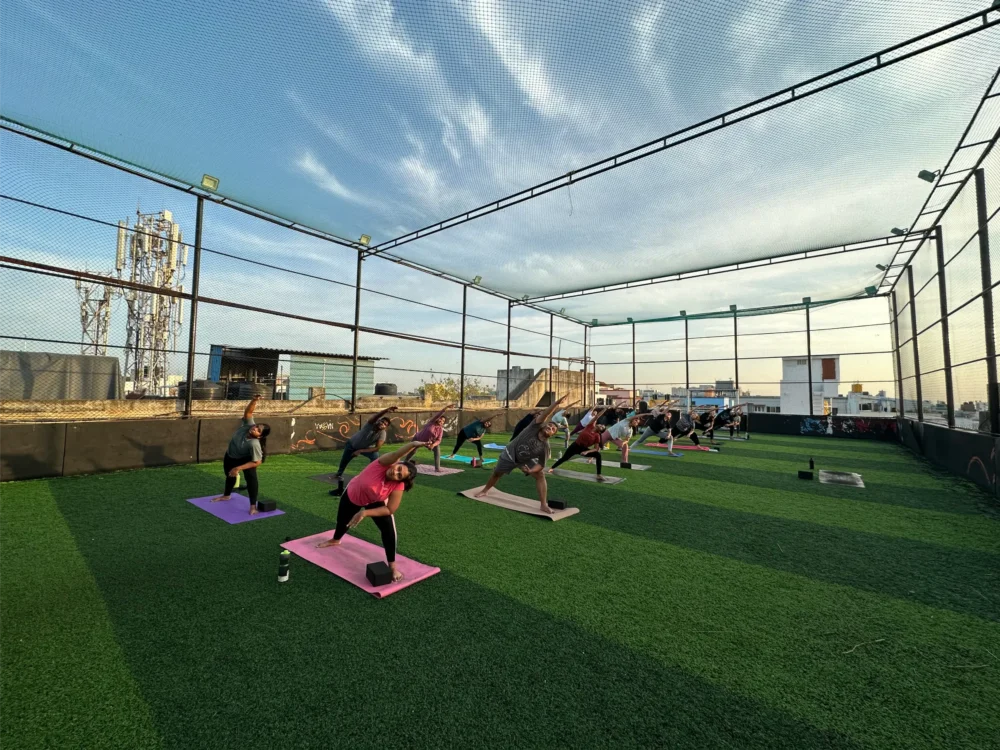
If you’ve ever walked out of your first yoga class feeling more like a tangled pretzel than a zen master, you aren’t alone. For many people in Chennai—from busy professionals in OMR to students in Adyar—the first few weeks of yoga can feel surprisingly grueling. We often see beautiful, effortless photos of people in “Tree Pose” on the Besant Nagar beach, but the reality for a beginner usually involves shaking muscles, heavy breathing, and a mind that won’t stop racing.
The truth is, yoga is “hard” because it asks you to do something modern life rarely does: move with total awareness while staying still in the mind. It challenges your proprioception (your brain’s ability to know where your body is in space) and forces you to confront physical tightness caused by years of sitting at desks or in traffic. Understanding why yoga is hard for beginners is the first step toward mastering it. It’s not a sign that you aren’t “good” at it; it’s a sign that your body is finally waking up and beginning a profound transformation.
What is Beginner Yoga Difficulty?
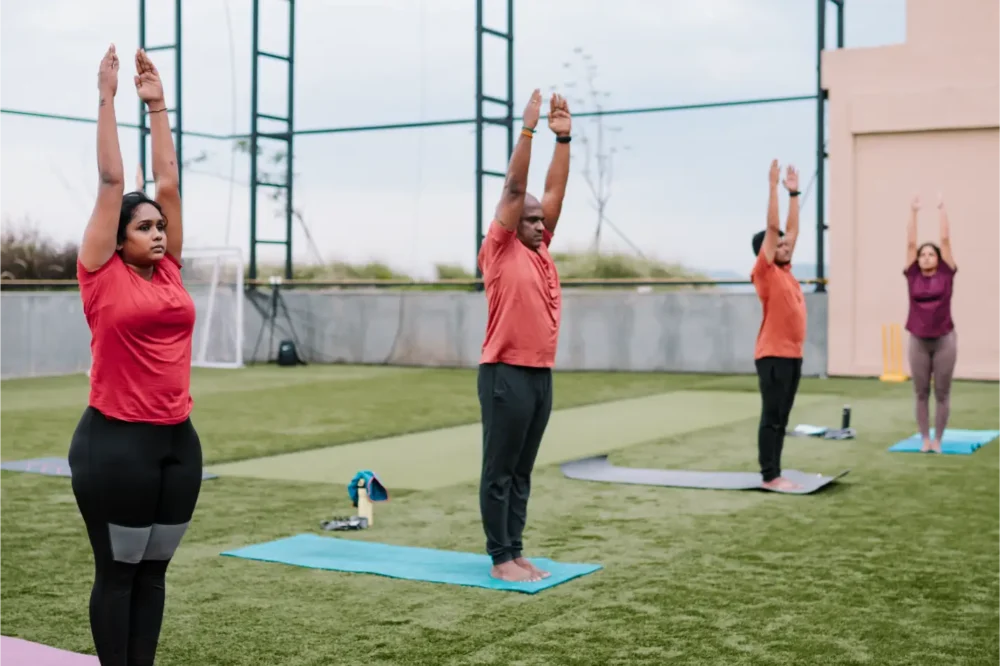
Beginner yoga difficulty refers to the initial physical and mental challenges a person faces when starting a practice. These include limited flexibility, muscle fatigue from holding isometric poses, and the cognitive effort required to coordinate breathing with movement while quieting a restless “monkey mind.”
Why Understanding This Difficulty Matters
Acknowledging that yoga is challenging is vital for long-term success. If you expect it to be easy and it feels hard, you are likely to quit. If you understand why it’s hard, you can approach the mat with patience.
Protecting Your Body
When beginners think yoga should be “just stretching,” they often overstretch or force their bodies into positions they aren’t ready for. Recognizing the difficulty helps you respect your limits, which is the key to preventing injuries in those first few months.
The Mental Shift
The “hardness” of yoga is actually a mirror. It shows you how you react to discomfort. Do you get frustrated? Do you give up? By staying with the difficulty, you develop the mental resilience needed to handle Chennai’s daily stressors—like high-pressure deadlines or humid commutes—with much more grace.
How the “Beginner Struggle” Works
The difficulty of yoga is rooted in three distinct physiological and neurological shifts:
- Isometric Endurance: Unlike walking or running, yoga requires holding weight in specific positions. Your muscles aren’t used to this “time under tension,” which is why they shake during a simple Plank or Warrior II.
- Fascial Tightness: Our connective tissue (fascia) thickens when we don’t move through full ranges of motion. Yoga “breaks up” this tightness, which can feel intense—sometimes even like a dull ache—as the body regains its natural suppleness.
- Neural Coordination: For a beginner, the brain is working overtime. You are trying to remember to tuck your tailbone, drop your shoulders, and breathe through your nose all at once. This creates “mental fatigue,” making the class feel harder than it actually is.
The Hidden Benefits of the Struggle
Physical: Structural Realignment
The difficulty comes from your body trying to return to its natural alignment. As you struggle through “Down Dog,” you are actually decompressing your spine and reversing the “hunch” caused by smartphone use.
Mental: Improved Focus
Because yoga is hard, it demands 100% of your attention. You can’t think about your grocery list while trying to balance on one leg. This forced presence is a powerful tool for reducing anxiety and brain fog.
Emotional: Building Self-Trust
Completing a class that felt “impossible” at the 20-minute mark builds a deep sense of self-efficacy. You learn that you are capable of more than your mind initially believed.
How Beginners Can Approach the Challenge
If you find yourself struggling at a yoga institute in Chennai or during online yoga classes, try these empathetic strategies:
- The “70% Rule”: Never push to 100% of your capacity. Practice at 70%. This leaves room for your breath to remain steady and reduces the “hardness” to a manageable level.
- Focus on the Exhale: When a pose gets hard, we usually hold our breath. This sends a panic signal to the brain. Making your exhale longer than your inhale tells your nervous system that you are safe, even in a difficult pose.
- Use Props Unapologetically: Blocks, straps, and bolsters aren’t “cheating.” They are tools that bring the floor to you, making the practice accessible while your body builds the necessary strength.
Common Misunderstandings
“I’m not flexible enough for yoga.” This is like saying you’re too dirty to take a shower. Flexibility is the result of yoga, not the prerequisite. Everyone starts “stiff.”
“I should be able to do what the teacher does.” Your teacher likely has years of practice. Comparing your “Chapter 1” to their “Chapter 20” is an unfair comparison that makes the practice feel unnecessarily discouraging.
“If it doesn’t hurt, it’s not working.” In yoga, pain is a “stop” sign. There is a difference between “intense sensation” and “sharp pain.” We want the former; we must avoid the latter.
Real-World Scenarios
Scenario A: The Stiff Corporate Professional
Karthik, a 34-year-old developer in Chennai, felt humiliated during his first week of online yoga classes. He couldn’t even touch his knees, let alone his toes. However, his instructor told him that his “shaking” was actually his nervous system rewiring itself. By the third month, Karthik’s back pain had vanished, and he could touch the floor comfortably. The difficulty was just his body’s way of “thawing out.”
Scenario B: The Anxious Student
Meera joined outdoor yoga Chennai to manage exam stress. She found the stillness harder than the movement. Her mind would scream “I want to leave!” during Savasana. She realized the “hardness” wasn’t her body; it was her mind’s resistance to being quiet. Once she accepted the mental discomfort, the physical poses became much easier.
Practical Tips for Staying the Course
- Consistency Over Intensity: Ten minutes of “hard” yoga every day is better than one hour of “impossible” yoga once a week.
- Hydrate and Nourish: In Chennai’s heat, your muscles need electrolytes to function. Drink coconut water after class to prevent cramping.
- Choose the Right Style: If you are a beginner, look for “Hatha” or “Restorative” classes rather than “Power Vinyasa.”
- Listen to the Cues: Instructors often give verbal “micro-adjustments.” Pay close attention; often, moving a foot just one inch can make a “hard” pose feel infinitely more stable.
FAQs
1. Why do my muscles shake in yoga? Muscle shaking is a sign that your motor units are fatiguing and your nervous system is trying to recruit new muscle fibers. It’s a sign of growth!
2. How long does it take for yoga to stop being hard? For most, the “peak difficulty” lasts for the first 4–6 weeks. After that, your body builds enough foundational strength that you can focus on the deeper benefits.
3. Should I do yoga every day as a beginner? 3-4 times a week is ideal. Your body needs rest days to repair the connective tissue and muscle fibers you are working on.
4. Why is my breathing so heavy during class? Your body is demanding more oxygen to support your muscles in unfamiliar poses. As you get stronger, your breath will naturally become more rhythmic and calm.
5. Can I do yoga if I have a “bad back”? Yes, but you must tell your instructor. Yoga is actually one of the best ways to fix back pain, but it requires specific modifications to be safe.
6. Why do I feel emotional or angry after a hard class? We store emotional tension in our hips and chest. “Opening” these areas can sometimes lead to an emotional release. This is a normal part of the detox process.
7. Is online yoga harder than in-person? It can be harder to stay motivated, but it allows you the privacy to fail and try again without feeling self-conscious.
8. Where can I find a good beginner yoga institute in Chennai? Look for places like Outdoor Yoga Chennai that offer small batch sizes and focus on foundational alignment to help you navigate the initial difficulty safely.
Conclusion: Embrace the Wobble
Yoga is hard because it is a process of unlearning—unlearning the tension, the poor posture, and the busy thoughts. When you feel that initial struggle, don’t take it as a sign of failure. Take it as a sign that the work is happening. The “hard” parts are exactly where the growth lives.
Next time you’re on the mat and your legs start to shake, take a deep breath and smile. You aren’t just doing yoga; you’re becoming a more resilient version of yourself.


Leave a Comment