
Table of Contents
What Makes Yoga Sustainable Long Term?
The Secret to Lifelong Vitality: Why Yoga Sticks
In a world obsessed with “30-day shreds” and high-intensity interval training that often leads to burnout or injury by day 31, many people are searching for a movement practice that grows with them. Whether you are navigating the high-pressure corporate environment of OMR or enjoying a quieter life in Adyar, the question remains: how do we stay healthy for decades, not just weeks?
The answer lies in sustainability. If you’ve ever wondered what makes yoga sustainable long term, you aren’t just looking for a workout; you are looking for a lifestyle. Unlike many fitness regimes that rely on sheer willpower and peak physical youth, yoga is designed to adapt to the changing seasons of the human body. It is one of the few practices where your “peak” might actually happen in your 50s or 60s because the practice values wisdom and breath over raw muscular force.
In Chennai, we see a growing shift toward this “slow fitness” movement. People are realizing that the goal isn’t just to look good in the mirror today, but to be able to move with ease and mental clarity twenty years from now. Yoga is sustainable because it treats the body as a sanctuary, not a machine to be broken down.
What is a Sustainable Yoga Practice?
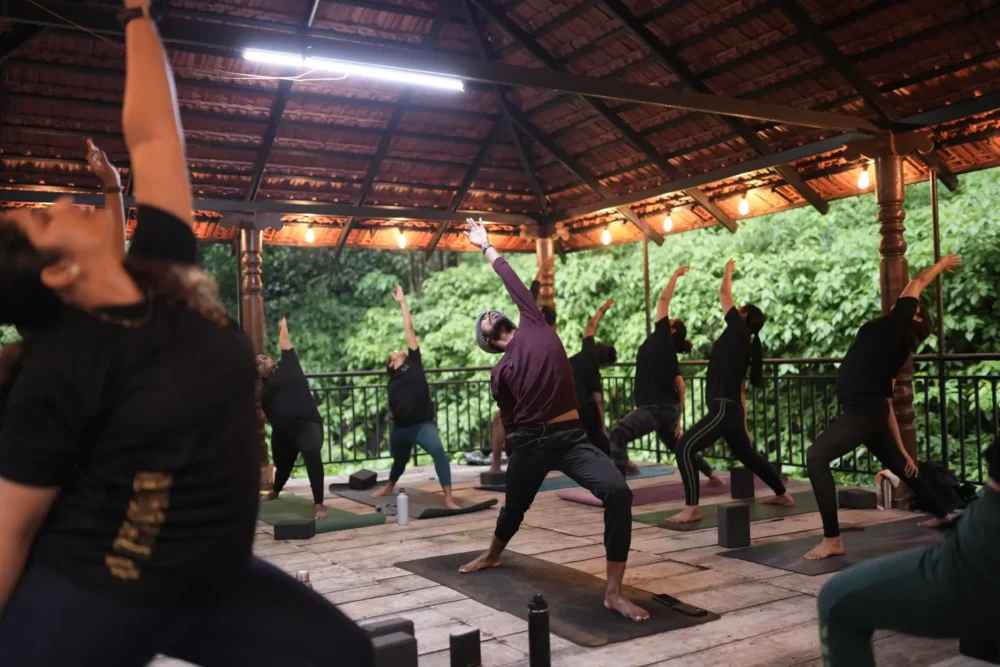
A sustainable yoga practice is a lifelong approach to wellness that prioritizes joint safety, nervous system regulation, and mental adaptability over aesthetic performance. It involves adjusting intensity based on daily energy levels, ensuring the practice supports the body’s longevity rather than causing repetitive stress or physical exhaustion.
Why Long-Term Sustainability Matters
Sustainability in wellness is the only path to true health. In the hustle of Chennai’s urban life, we often treat our bodies like high-interest credit cards—drawing energy we don’t have and ignoring the “interest” in the form of chronic pain or stress.
When a practice is sustainable, it prevents the “stop-start” cycle that kills progress. A lifelong yogi experiences fewer chronic injuries because they have spent years building functional mobility. Furthermore, the mental sustainability of yoga means it becomes a tool for emotional regulation. In times of grief, career shifts, or aging, the mat remains a constant, providing a safe space to process life’s transitions.
How It Works: The Mechanics of Longevity
Yoga achieves long-term sustainability through several unique physiological and psychological mechanisms:
- Low-Impact Strengthening: Yoga builds “lean” muscle and bone density without the heavy eccentric loading that can wear down cartilage in the knees and hips over time.
- Nervous System Toggling: By moving between active asanas and restorative poses, yoga trains the Vagus nerve. This improves your “Heart Rate Variability” (HRV), a key marker for biological age and stress resilience.
- Synovial Fluid Stimulation: The gentle, varied movements of yoga “oil” the joints by stimulating the production of synovial fluid, which is essential for preventing stiffness as we age.
- The Breath Connection: Yoga is the only “exercise” where the breath leads the movement. This ensures you never push past your body’s actual capacity, as a labored breath is a signal to back off.
The Triple Benefits: More Than Just Stretching
Physical Sustainability
Yoga focuses on “functional range of motion.” This means you aren’t just flexible; you are strong within that flexibility. This prevents the common “slips and falls” in later life and keeps the spine supple—a core tenet of youth in traditional Indian wellness.
Mental Sustainability
Unlike a treadmill where you might distract yourself with a screen, yoga requires “Pratyahara” (withdrawal of senses). This mental hygiene prevents cognitive burnout and improves focus, which is a massive advantage for professionals in Chennai’s competitive sectors.
Emotional Sustainability
Yoga teaches “Santosha” (contentment). By learning to be okay with where your body is today—even if you are stiff or tired—you remove the “shame” often associated with fitness, making it much more likely you’ll return to the mat tomorrow.
How Beginners Can Approach a Lifelong Practice
If you are just starting your journey in Chennai, here is how to ensure your first month leads to a first decade:
- Ditch the “No Pain, No Gain” Mentality: In yoga, pain is a red light, not a green one. If it hurts, you are doing it wrong.
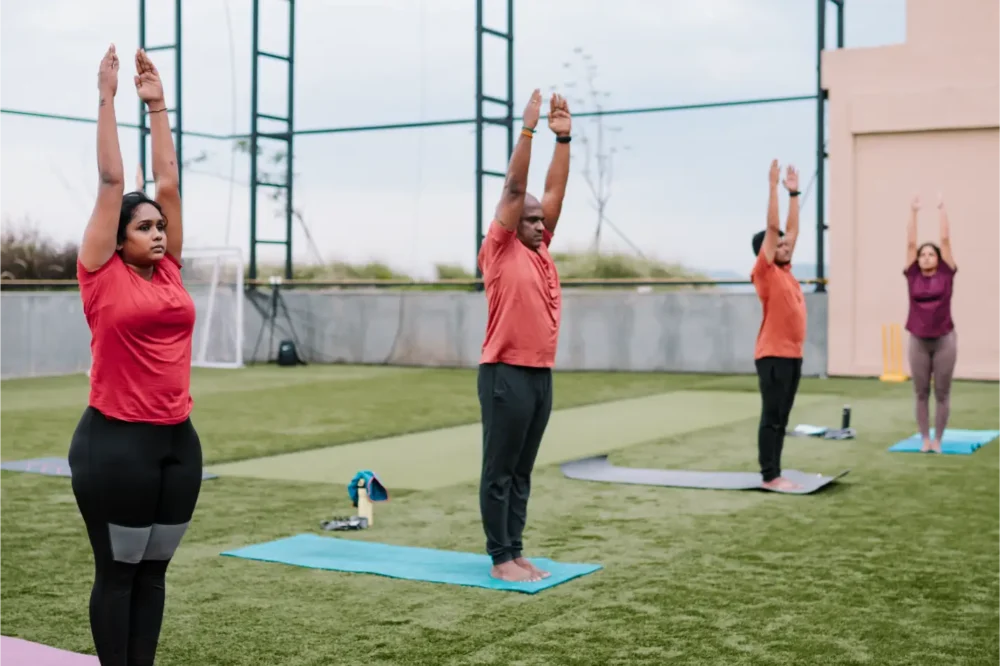
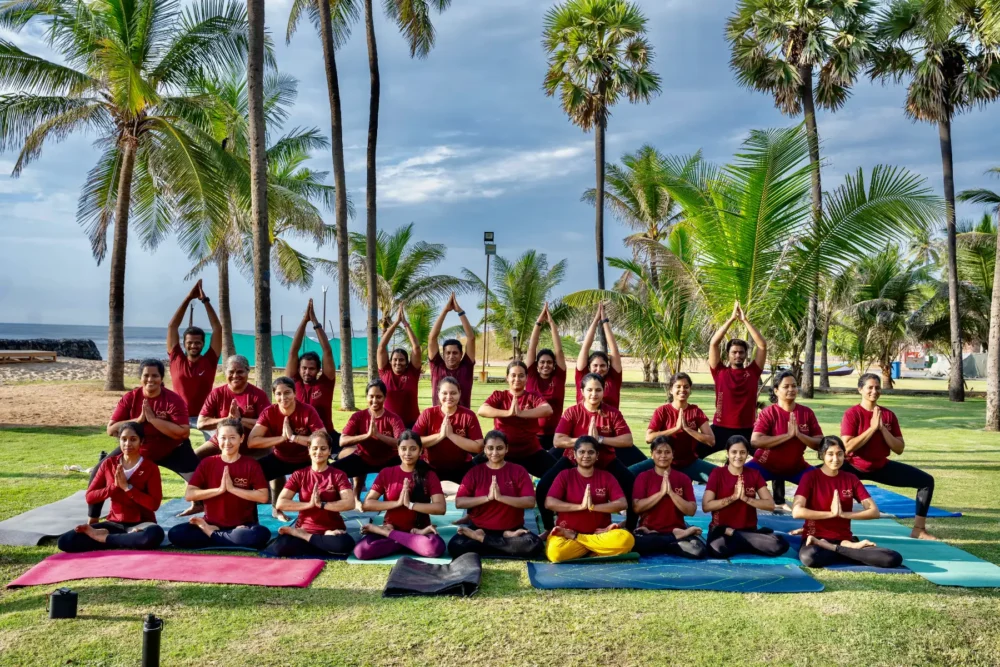
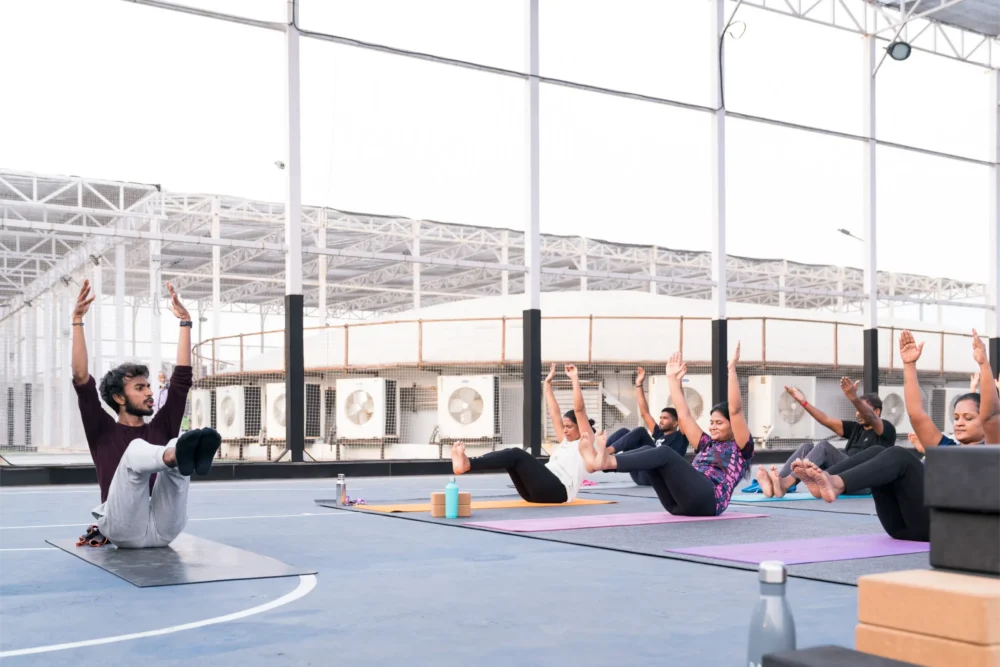
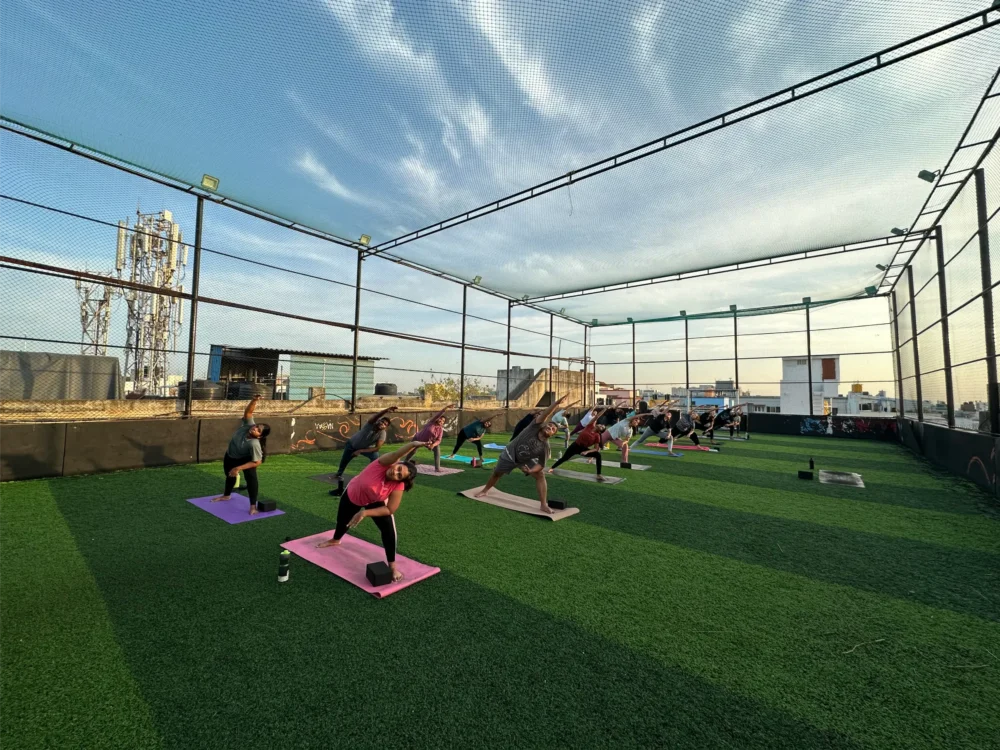
- Find a Community (Sangha): Joining an outdoor yoga Chennai group or a local studio creates accountability. Sharing a sunrise practice at the beach makes the habit feel like a social joy rather than a chore.
- Start with Hatha: Don’t jump into advanced “Power Yoga.” Build your foundation in Hatha, where you learn the alignment that protects your joints for years to come.
- Focus on the 10-Minute Win: On busy days, don’t skip your practice. Do 10 minutes of Sun Salutations. Sustainability is built on frequency, not just duration.
Common Misunderstandings
- “Yoga is only for the flexible”: Flexibility is the result of yoga, not the prerequisite. If you are stiff, you actually have the most to gain from a sustainable practice.
- “I need to do it for an hour”: Some of the most sustainable practitioners do 20 minutes a day. The body responds better to daily consistency than a once-a-week marathon session.
- “It’s not a real workout”: Try holding a steady Warrior II for two minutes. Yoga builds “isometric” strength, which is incredibly taxing and rewarding for the metabolism.
Real-World Scenarios
Scenario 1: The OMR Tech Lead Anand, a 42-year-old software architect, used to run marathons but suffered from chronic knee pain. He switched to yoga, initially thinking it would be “easy.” He soon realized that yoga’s focus on hip stability and core strength actually supported his body better. Five years later, he is pain-free and practices 4 times a week, something he could never do with high-impact running.
Scenario 2: The Senior Resident in Anna Nagar Mrs. Lakshmi started yoga at 60. She chose a gentle, outdoor-based program in Chennai. Because the practice was sustainable and non-competitive, she didn’t feel discouraged by her initial limitations. At 70, she still attends her morning sessions, citing yoga as the reason she can still play with her grandchildren on the floor without assistance.
Practical Tips for Longevity
- Listen to the Weather: In Chennai’s humidity, stay hydrated with tender coconut water. Don’t push for “hot yoga” intensity during the peak of summer; opt for cooling Sheetali breathwork instead.
- Invest in a Good Mat: A mat with high “grip” prevents micro-slips that can strain your wrists and ankles.
- Vary Your Practice: Some days your body needs a “Fire” practice (Vinyasa), and some days it needs a “Water” practice (Yin). True sustainability is knowing the difference.
- Respect Your Cycle: For women, adjusting the practice during different phases of the menstrual cycle or life stages (like menopause) is the ultimate act of sustainable wellness.
FAQs
1. Is yoga better than the gym for long-term health? It depends on your goals, but for joint longevity and stress management, yoga is often more sustainable as it places less repetitive mechanical stress on the body.
2. Can I do yoga every day? Yes, provided you vary the intensity. A mix of active and restorative sessions makes daily practice very sustainable.
3. Why do I feel more tired after some yoga classes? This often happens if you are “performing” the poses rather than “practicing” them. Focus on the breath to ensure the practice energizes rather than drains you.
4. Does outdoor yoga improve sustainability? Absolutely. The fresh air and Vitamin D from sunlight in Chennai’s open spaces improve mood and respiratory health, making you more likely to stick with the habit.
5. How do I know if I’m overdoing it? If you cannot maintain a steady, nasal breath, you are likely pushing too hard. Back off until the breath is calm.
6. Can yoga help with aging joints? Yes, by increasing the flow of synovial fluid and strengthening the muscles around the joints, yoga is a primary tool for managing arthritis and stiffness.
Conclusion: The Journey of a Thousand Breaths
Yoga is not a destination you reach; it is a relationship you develop with your body. What makes it sustainable long term is its inherent kindness. It is a practice that meets you exactly where you are—whether you are 25 or 75, whether you are at the beach or in your living room.
By prioritizing breath over ego and consistency over intensity, you turn yoga into a lifelong companion. In the vibrant, bustling heart of Chennai, let your mat be the one place where time slows down, and health becomes a natural, sustainable byproduct of your presence.
Would you like me to help you design a 15-minute sustainable morning flow tailored to your current fitness level?

Leave a Comment