
Table of Contents
Common Yoga Mistakes to Avoid
Yoga is often described as a journey inward, but for many beginners in Chennai—whether practicing at Besant Nagar beach or in a living room in T. Nagar—that journey can be interrupted by preventable hurdles. We often step onto the mat with the best intentions, yet without realizing it, we fall into habits that hinder our progress or, worse, lead to injury. It’s easy to get caught up in the “gym-style” mentality of pushing harder, but yoga operates on a different frequency.
The most common yoga mistakes aren’t just about placing a foot in the wrong spot; they are often rooted in how we breathe, how we perceive our limits, and how we compare ourselves to others. In the humid, fast-paced environment of a city like Chennai, our bodies carry specific tensions—from long commutes to desk-bound office hours. If we bring that same “hustle” to the mat, we miss the point of the practice. Understanding these pitfalls isn’t about seeking perfection; it’s about creating a sustainable, lifelong habit that heals rather than harms.
What are Common Yoga Mistakes?
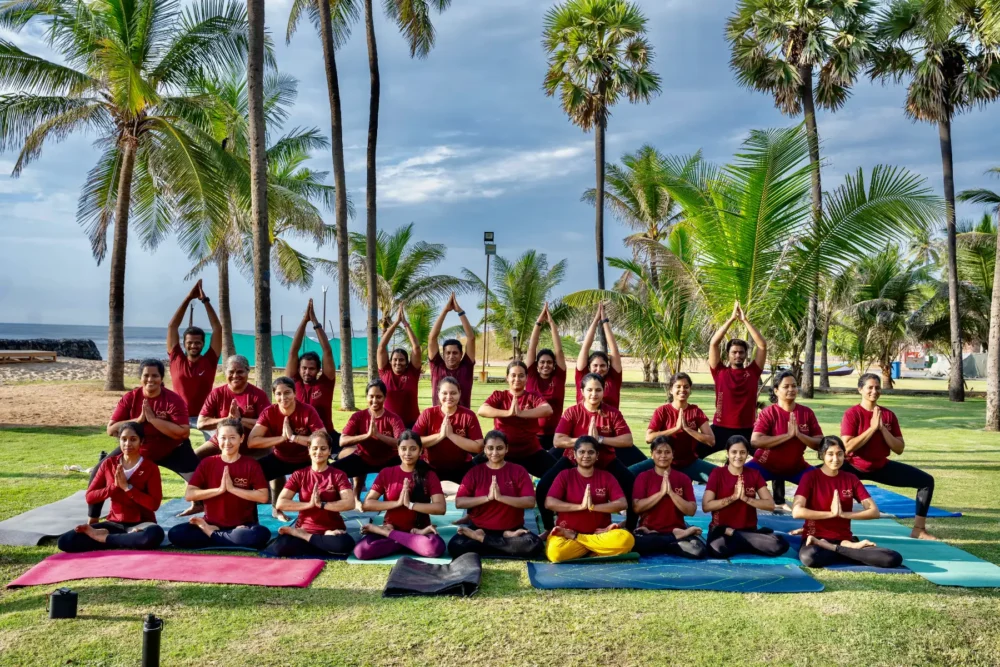
Common yoga mistakes are frequent errors in physical alignment, breathing technique, or mental approach that occur during practice. These include holding the breath, collapsing into joints, overstretching beyond one’s current limit, and prioritizing the “look” of a pose over its functional benefit and internal sensation.
Why it Matters: The Risk of the “Push”
Why should we care about small errors in a downward dog? In yoga, repetitive strain is the most common cause of injury. Unlike a sudden fall, these “micro-mistakes” accumulate over months.
Joint Longevity
When we “dump” weight into our wrists or “lock” our knees, we are wearing down the cartilage and straining the ligaments. Proper alignment ensures that the weight is distributed through the muscles, which are designed to carry it, rather than the joints, which are meant to facilitate movement.
Nervous System Regulation
Yoga is intended to move us from “Fight or Flight” (Sympathetic) to “Rest and Digest” (Parasympathetic). When we commit the mistake of holding our breath or tensing our jaw to reach a toe, we send panic signals to the brain. This negates the stress-relief benefits that draw many of us to yoga classes in Chennai in the first place.
How it Works: The Anatomy of a Mistake
Most yoga errors happen because of a “disconnection” between the mind and the body. Here is the step-by-step breakdown of how a mistake typically manifests:
- The Visual Goal: You see a teacher or an image of a “perfect” pose.
- The Ego Response: Your mind decides you must reach that shape to be “doing yoga.”
- The Compensation: Because your hamstrings or shoulders are tight, your body “cheats” by rounding the back or twisting the spine to mimic the shape.
- The Strain: The force of the pose moves into a vulnerable area (like the lower back or neck) rather than the intended muscle group.
The Benefits of Correcting Your Practice
Physical: True Functional Strength
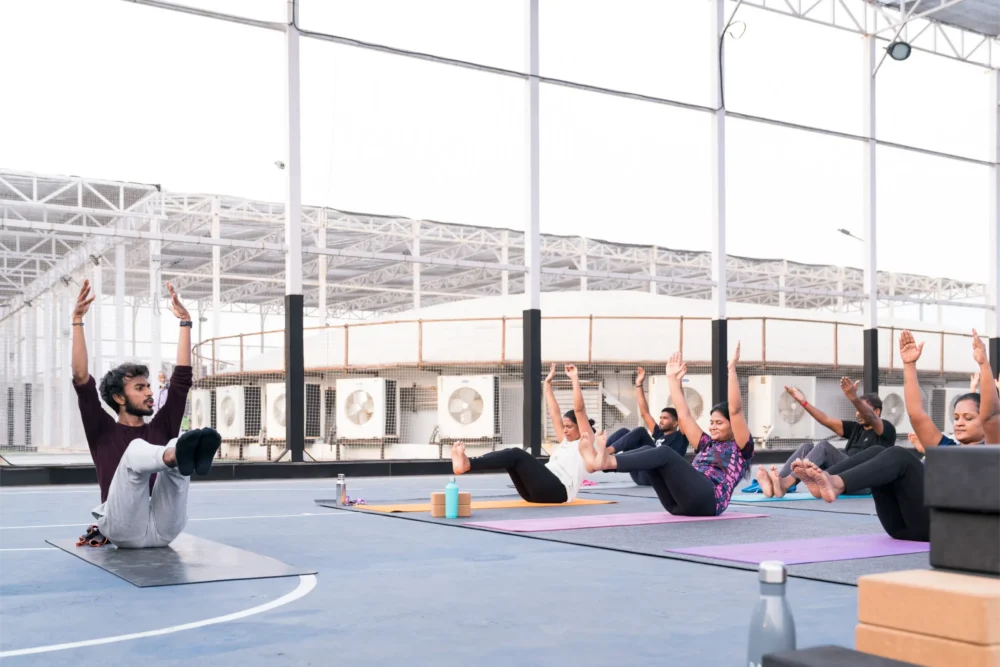
By fixing your alignment, you engage “stabilizer muscles” you never knew you had. This leads to a toned, resilient body that feels light rather than heavy.
Mental: Sharpness and Presence
Correcting a mistake requires “Interoception”—the ability to feel your body from the inside. This builds incredible mental focus that translates to better productivity at work and more patience at home.
Emotional: Self-Acceptance
Learning to say, “My hand doesn’t reach the floor today, and that’s okay,” is a profound emotional victory. It breaks the cycle of perfectionism that causes so much modern anxiety.
How Beginners Can Approach Proper Alignment
If you are just starting out at a yoga institute in Chennai or via online yoga classes, follow these steps to stay safe:
- Micro-bend the Joints: Never “lock” your knees or elbows. Keeping a tiny, invisible bend ensures your muscles are doing the work.
- Listen to the “Whisper”: Your body whispers before it screams. If you feel a dull “twinge,” back off. Don’t wait for sharp pain.
- Use Props Early: Using a block isn’t a sign of weakness; it’s a sign of intelligence. It allows you to maintain a straight spine while building flexibility.
Real-World Scenarios: Learning the Hard Way
Scenario A: The Over-Ambitious Runner
Arjun, a marathon runner in Chennai, started yoga to help his tight hamstrings. He made the mistake of “pulling” himself into forward folds using his arms. Within a week, he had a “yoga butt” injury (a high hamstring strain). Once he learned to bend his knees and move from his hips, his pain vanished, and his running times actually improved.
Scenario B: The Corporate “Breather”
Priya practiced via online yoga Chennai while working an IT job. She realized she was holding her breath every time the pose got difficult. She was finishing her “relaxing” yoga classes feeling a headache. Once she prioritized a smooth, audible Ujjayi breath over the depth of her stretch, her headaches stopped and her stress levels plummeted.
Common Misunderstandings about Yoga Mistakes
“If it’s not hurting, it’s not working.” This is the most dangerous myth in yoga. Yoga should be a “sweet discomfort,” never a sharp or electric pain.
“My back should be perfectly flat in every pose.” While a “neutral spine” is often the goal, everyone’s spinal curve is unique. Forcing a “flat” back can sometimes lead to tensing the wrong muscles.
“I need to be flexible to avoid mistakes.” Actually, naturally flexible people make more mistakes because they often “hang” in their joints without using muscle strength, leading to long-term ligament damage.
Practical Tips to Refine Your Practice
- Record Yourself: If practicing at home, record a 5-minute clip of your flow. You’ll be surprised to see that what “feels” straight is often quite tilted.
- Focus on the Foundation: In any pose, look at what is touching the floor. Spread your fingers wide and press through the four corners of your feet.
- Find a Qualified Guide: A teacher at a reputable yoga institute in Chennai can provide the “hands-on” or verbal cues that prevent years of bad habits.
- Close Your Eyes: Sometimes, taking away the visual distraction helps you “feel” where your weight is shifting.
FAQs
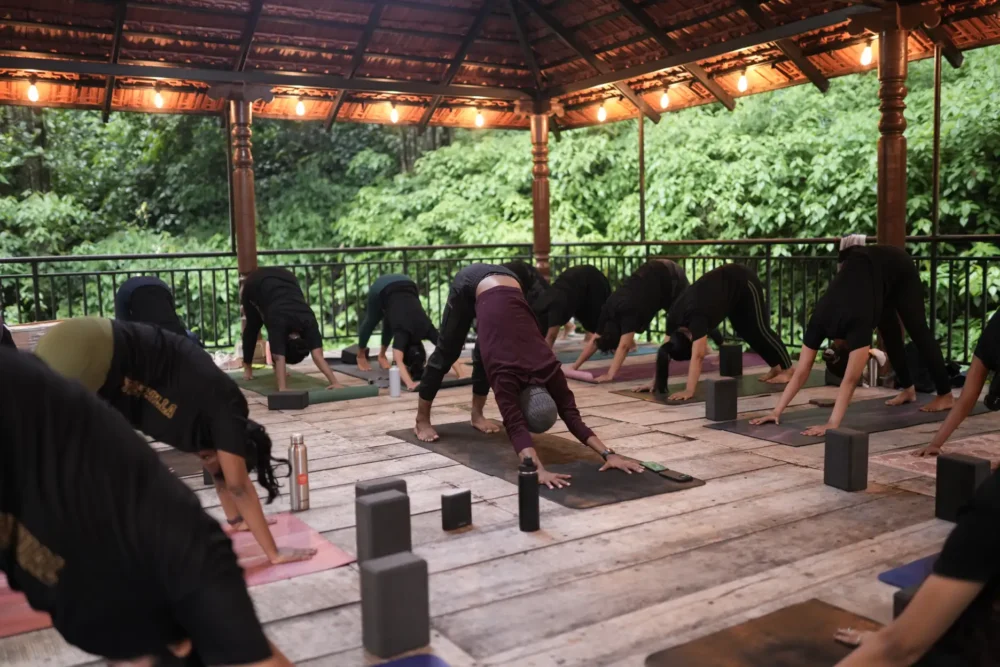
1. Why do my wrists hurt during downward dog? This usually happens because weight is dumped into the heel of the hand. The Fix: Press firmly into the finger pads and the “knuckles” of the hand to lift the pressure off the wrist.
2. Should I keep my knees straight in forward folds? For 90% of beginners, the answer is no. Bending your knees protects your lower back and allows your pelvis to tilt forward, which is the actual goal of the pose.
3. Is it a mistake to eat before yoga? Yes. Practicing with a full stomach can lead to nausea and prevents deep core engagement. Wait at least 2–3 hours after a heavy meal.
4. Why does my neck hurt after a yoga session? You are likely “crunching” your neck by looking up too sharply or tensing your shoulders toward your ears. Keep your gaze soft and your shoulders down.
5. How do I know if I’m overstretching? If you feel a “pulling” sensation at the very end of the bone (where the muscle becomes a tendon), you are overstretching. You should feel the stretch in the “belly” or middle of the muscle.
6. Is it okay to skip Savasana (the final rest)? Skipping Savasana is a major mistake. It is the time when your nervous system “saves” the data of your practice. Without it, you leave the mat in a state of high stimulation.
7. Can I do yoga if I’m not flexible? Yes! Yoga is for the stiff. Being stiff actually makes it easier to feel the correct alignment because your body gives you immediate feedback.
8. Where can I find the best yoga classes in Chennai to learn proper form? Outdoor Yoga Chennai focuses on foundational alignment and mindful movement, ensuring beginners start their journey without common errors.
Conclusion: Practice with Grace
Correcting your yoga mistakes isn’t about being “right”—it’s about being kind to your future self. In a city like Chennai, where we are constantly pushed to perform, the yoga mat should be a place of exploration and safety. By slowing down, breathing deep, and respecting the unique architecture of your body, you transform your practice from a simple workout into a powerful tool for longevity.
Next time you catch yourself tensing your jaw or locking your knees, just breathe and reset. The mat will always be there tomorrow for another chance to get it a little bit more “right.”


Leave a Comment