
Table of Contents
Wake Up and Win: Morning stretches that prepare your body for work
For many professionals in Chennai, the workday doesn’t start at the office; it starts with the high-speed dash of the morning routine. Whether you are navigating the traffic on the IT Expressway (OMR) or jumping straight into a virtual meeting from your home in Anna Nagar, your body often transitions from “sleep mode” to “stress mode” without a middle ground. This sudden jump is a primary cause of chronic back pain, neck stiffness, and the dreaded 3 PM energy crash.
The direct answer to a better workday is a dedicated sequence of morning stretches that prepare your body for work. Spending just 10 to 15 minutes on your mat before the “digital noise” begins can recalibrate your nervous system. By gently lengthening the muscles that tighten during prolonged sitting—such as the hip flexors, hamstrings, and pectoral muscles—you create a physical “buffer zone.”
Choosing to stretch in the morning isn’t just about flexibility; it’s about blood flow. It signals to your brain that you are awake and capable. In our local Chennai wellness community, we have seen that those who prioritize these few minutes of mindful movement report higher levels of focus and significantly lower instances of postural fatigue by the time they reach their evening filter coffee.
What are Morning Stretches for Work?
Morning stretches that prepare your body for work are a series of low-impact movements designed to wake up the musculoskeletal system, improve joint mobility, and stimulate circulation. These stretches specifically target areas prone to “desk-slouching,” such as the neck, shoulders, and lower back, creating a foundation of physical readiness for the professional day.
Why Morning Movement Matters for Your Career Longevity
In the competitive landscape of 2026, we often treat our bodies like machines, expecting them to perform without maintenance. However, “biological rust” is real. When you sit for 8–10 hours, your hip flexors shorten, and your glutes “fall asleep”—a condition often called dead-butt syndrome. Over time, this leads to structural imbalances that affect your concentration and mood.
Morning stretches matter because they act as a “pre-emptive strike” against sedentary lifestyle diseases. Physically, they lubricate the joints with synovial fluid. Mentally, they provide a sense of agency. Starting the day with a win for your health makes you less likely to succumb to the “decision fatigue” that plagues high-performing professionals in Chennai’s busy economy.
How It Works: The 10-Minute Professional Reset
Preparing your body for work isn’t about doing an intense workout; it’s about “unfolding” your posture. Here is a step-by-step approach to an effective morning routine:
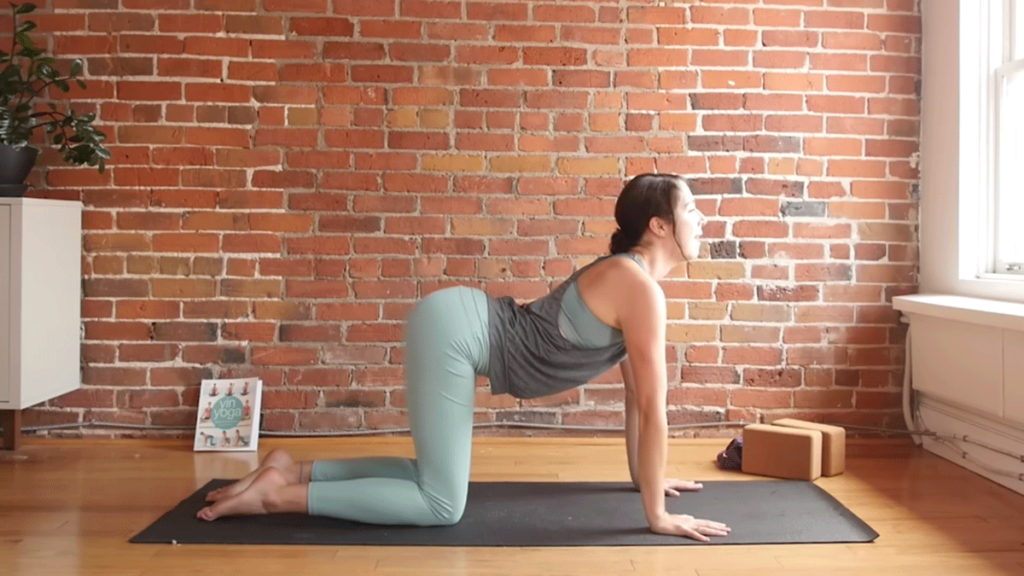
- The Spinal Wake-up (Cat-Cow): Start on all fours. Inhale as you arch your back, looking up; exhale as you round your spine. This lubricates the vertebrae and prepares your back for the chair.
- The Shoulder Opener (Thread the Needle): While on all fours, reach one arm under the other to stretch the upper back. This counters the “rounding” effect of typing on a laptop.
- The Hip Releaser (Low Lunge): Step one foot forward and sink into the hips. This releases the psoas muscle, which is the most common victim of long sitting sessions.
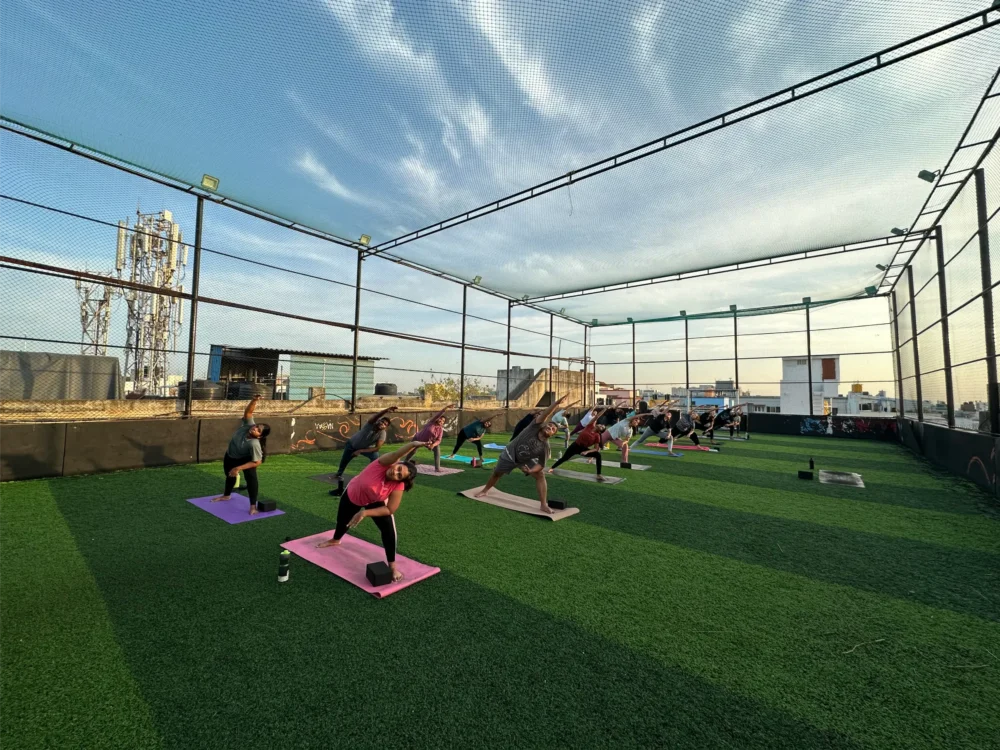
- The Lateral Stretch (Standing Crescent): Reach your arms overhead and lean to each side. This opens the intercostal muscles (between your ribs), allowing for deeper breathing and better oxygenation during meetings.
- The Neck Release: Gently drop your ear to your shoulder on both sides. This simple move prevents the “forward head posture” common in smartphone users.
The Benefits: Physical, Mental, and Metabolic
Physical: Postural Resilience
By stretching the chest and strengthening the upper back, you naturally sit taller. This reduces the mechanical load on your spine, meaning you won’t feel “physically drained” by noon.
Mental: Cognitive Kickstart
Stretching increases blood flow to the brain. This “oxygen bath” for your neurons helps clear morning brain fog faster than a double-shot espresso, leading to sharper decision-making.
Emotional: Stress Buffering
The deep breathing associated with yoga-based stretches lowers cortisol. When you start the day in a “Parasympathetic State” (Rest and Digest), you are less likely to react impulsively to an annoying email or a traffic jam.
How Beginners Can Approach Morning Stretches
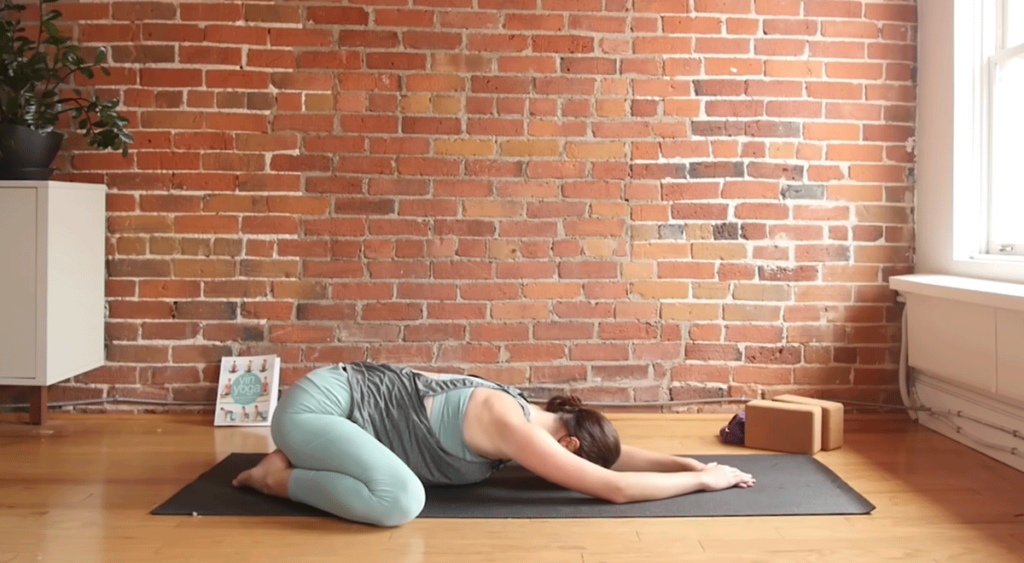
If you haven’t unrolled a yoga mat in years, don’t worry. The morning is the best time to be a beginner because your body is naturally more receptive to gentle cues.
- Don’t Push the Limit: Your muscles are cold in the morning. Aim for 60% of your maximum stretch. It should feel like a “sweet ache,” never sharp pain.
- Consistency over Complexity: You don’t need fancy poses. Five minutes of consistent daily stretching is better than an hour-long session once a week.
- Stack the Habit: Do your stretches right after you brush your teeth or while the kettle is boiling. Linking it to an existing habit ensures you won’t forget.
- Consider Online Guidance: If you find it hard to motivate yourself, joining online yoga classes in Chennai can provide the structure you need to stay accountable.
Common Misunderstandings
1. “I need to be flexible to stretch.” This is like saying you need to be clean to take a shower. Stretching is the tool we use to attain mobility. If you are stiff, you are the person who needs this routine the most.
2. “It takes too much time.” You can effectively prep your body for work in the time it takes for your computer to run its morning updates. Ten minutes is all it takes to shift your physiological state.
3. “Stretching is only for athletes.” The “Corporate Athlete”—the person sitting in meetings and solving complex problems—undergoes immense neurological and postural stress. Stretching is vital for professional performance.
Real-World Scenarios
Scenario 1: The OMR Developer Vijay, a 30-year-old developer in Sholinganallur, suffered from severe lower back pain by 4 PM every day. He began a 10-minute morning routine focused on hip and hamstring stretches. Within two weeks, the “nagging” pain during his commute vanished, and he found he could focus for longer stretches without needing to stand up and pace.
Scenario 2: The Freelancer in Besant Nagar Deepa worked from her dining table, leading to chronic shoulder tension. She joined a 15-minute morning virtual yoga batch. The routine focused on “Heart Openers” and neck releases. She noticed that her “work-induced headaches” disappeared, and she felt more energized to tackle her creative projects.
Practical Tips for Your Daily Routine
- The Hydration Rule: Drink a glass of warm water before you stretch. Dehydrated muscles are like dry rubber bands—they snap. Hydrated muscles are like wet sponges—they stretch.
- The “Sunshine” Boost: If possible, stretch near a window or on your balcony. Natural light helps regulate your circadian rhythm, making you feel more awake.
- Keep Your Mat Unrolled: Visual cues are powerful. Seeing your mat ready to go in the corner of the room makes it 50% more likely you’ll actually use it.
- Breathe into the Tightness: When you feel a tight spot, don’t pull away. Exhale deeply into that area. The breath is the “permission slip” your nervous system needs to let go of tension.

FAQs
1. Is it better to stretch before or after my morning coffee? Ideally before. Coffee is a diuretic and can tighten the muscles slightly. Stretching first helps you “wake up” naturally, making that coffee even more enjoyable afterward.
2. Can these stretches help with carpal tunnel? Yes, including wrist flexor and extensor stretches in your morning routine is a great preventative measure for anyone typing for long hours.
3. What if I feel a sharp pain while stretching? Stop immediately. Sharp pain is a signal of a potential tear or nerve impingement. Consult a professional or stick to very gentle, intuitive movements.
4. How long should I hold each stretch? For a morning routine, 15–30 seconds per pose is sufficient. You want to “thaw” the muscles, not overtax them before the workday.
5. Can I stretch in my work clothes? Yes, but breathable, flexible clothing is better. If you’re in a rush, even stretching in your pajamas is better than not stretching at all!
6. Do I need a yoga mat? While helpful for grip, you can perform most morning stretches on a carpeted floor or even sitting on the edge of your bed.
7. Is morning stretching safe for people with slip discs? It can be, but you must avoid deep forward folds and aggressive twists. Focus on gentle “Spinal Extension” and always check with your physiotherapist first.
8. Can online yoga classes help me learn these routines? Absolutely. Professional instructors in Chennai can curate a “Morning Office Prep” sequence specifically for your body type and job requirements.
Conclusion: Starting with Intention
Your workday is a marathon of the mind, but it is fueled by the body. By dedicating just a fraction of your morning to morning stretches that prepare your body for work, you are setting a boundary against the chaos of the city. You aren’t just stretching muscles; you are stretching your capacity for patience, focus, and health.
In the busy streets of Chennai, find your quiet corner. Unroll your mat. Breathe. And then, and only then, start your work.
Would you like me to create a printable PDF checklist of these five core morning stretches for your desk?

Leave a Comment