
Table of Contents
The Human Connection in a Digital Space: The True Value of Live Yoga
In the bustling heart of Chennai—from the tech corridors of OMR to the heritage lanes of Mylapore—the quest for balance often feels like a second job. While the internet is flooded with pre-recorded workout videos, a significant shift is happening in the wellness world. Practitioners are moving toward the benefits of live online yoga classes as a way to bridge the gap between digital convenience and authentic, human-led instruction.
The direct answer to why “live” beats “recorded” lies in interaction and accountability. In a live virtual session, you aren’t just following a screen; you are being seen. An instructor monitors your alignment in real-time, offering verbal cues that prevent injury and deepen your practice. This two-way communication transforms your living room into a sacred shala, ensuring that you don’t just “do” yoga, but you practice it correctly.
For many in India, where the commute to a high-quality studio can take over an hour, live online classes offer a revolutionary compromise. You get the expertise of a world-class teacher and the energy of a group setting without ever leaving your home. It’s the perfect blend of modern technology and ancient wisdom, designed for a lifestyle that demands both flexibility and depth.
What are Live Online Yoga Classes?
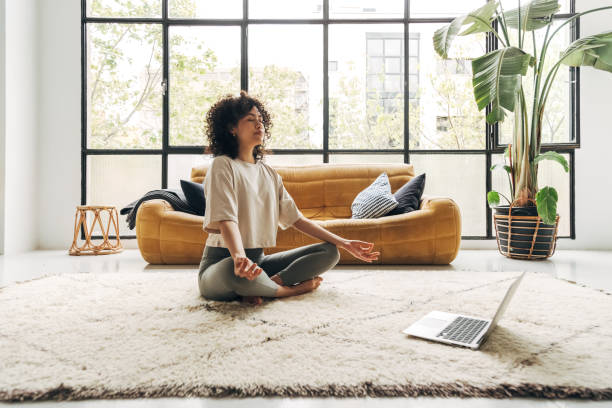
Live online yoga classes are interactive, real-time instructional sessions conducted via video conferencing platforms. Unlike pre-recorded videos, these classes allow for two-way communication, enabling instructors to provide immediate alignment corrections, personalized modifications, and a shared sense of community among participants joining from different locations simultaneously.
Why Real-Time Interaction Matters for Your Wellness
In 2026, we are more digitally connected yet more physically isolated than ever. This is why the “live” aspect of online yoga matters so deeply. When you press play on a recorded video, it’s easy to get distracted by a phone notification or a household chore. There is no one to notice if you skip that difficult plank or round your back in a forward fold.
Live classes introduce a necessary layer of social accountability. Knowing that a teacher is waiting for you at 7:00 AM creates a psychological commitment that pre-recorded content lacks. Furthermore, the energetic “vibe” of practicing with others in real-time—even through a screen—reduces the feelings of isolation that often accompany home workouts. It’s a holistic commitment to your mental and physical health that respects your time.
How Live Online Yoga Works: A Step-by-Step Guide
If you are transitioning from a physical studio to a virtual one, the process is designed to be seamless. Here is how the modern live experience unfolds:
- Booking and Link Access: You sign up for a specific time slot. A secure meeting link (Zoom, Google Meet, or a private app) is sent to your email or WhatsApp.
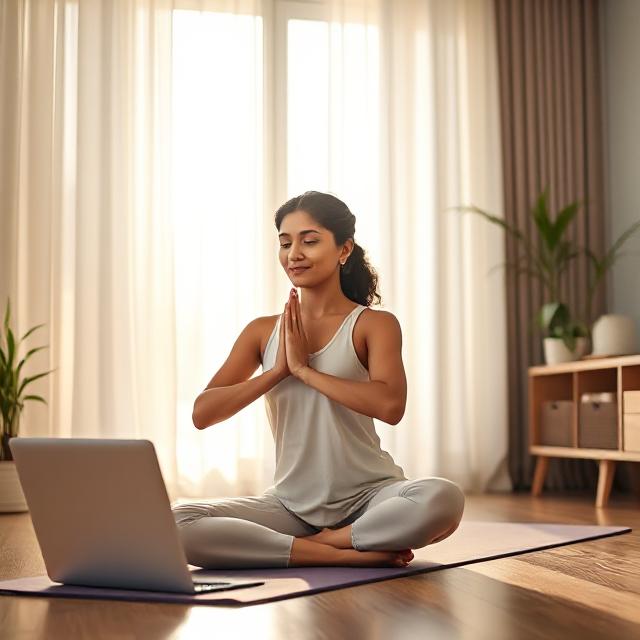
- The Digital Setup: You position your laptop or tablet about 6-8 feet away from your mat. Ideally, the camera should capture your full profile so the teacher can see your spine and limb alignment.
- The Check-In: Most live classes begin with a 2-minute “Satsang” or check-in. The teacher might ask, “How is everyone’s lower back today?” or “Are there any injuries I should know about?”
- Guided Practice with Verbal Cues: As you move through the flow, the teacher watches the gallery view. You might hear: “Anjali, lift your chest slightly more in Cobra,” or “Karthik, widen your stance for better stability.”
- Closing and Q&A: Sessions usually end with Savasana and a short window where you can ask specific questions about poses that felt challenging.
The Benefits: Physical, Mental, and Emotional
Physical: Safety and Precision
The biggest physical benefit is the prevention of “bad habits.” Beginners often overextend their joints in poses like Downward Dog. A live teacher spots these errors instantly, ensuring you build functional strength rather than just “stretching.”
Mental: Cognitive Presence
Because the class is happening “now,” your brain stays in the “now.” The presence of a live guide helps anchor your focus, making the session a true meditative experience rather than a distracted chore.
Emotional: Community and Belonging
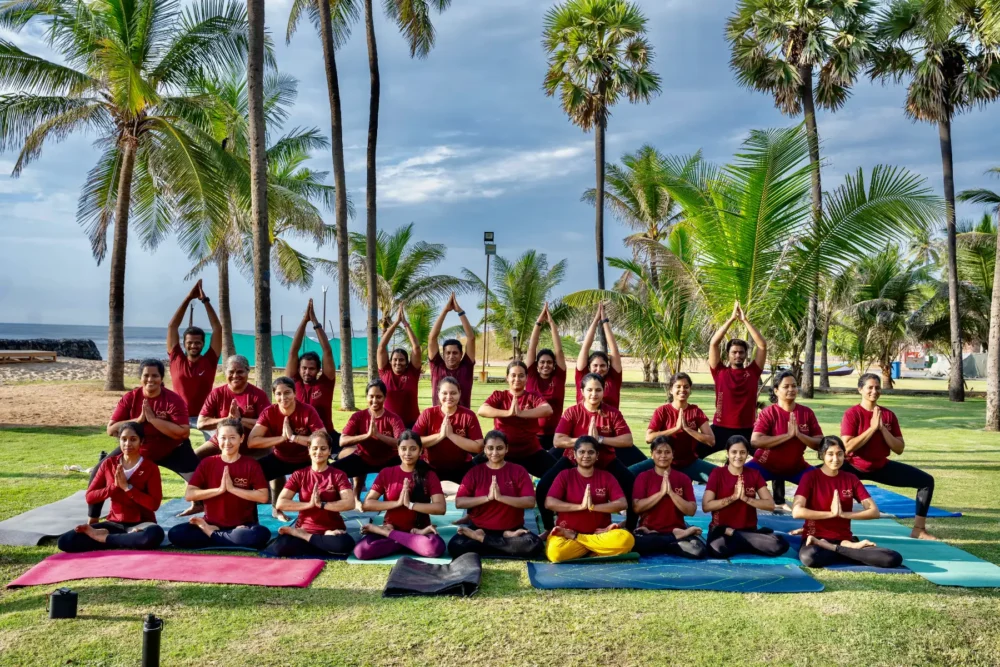
There is a profound emotional boost in seeing other friendly faces on your screen. In a live class, you are part of a community. Celebrating “International Yoga Day” or simply a tough Monday morning with a group creates a sense of belonging that is vital for emotional health.

How Beginners Can Approach Live Virtual Yoga
Starting something new can be intimidating, but the digital mat is a very forgiving place. Here is how to begin:
- Choose a ‘Beginner-Friendly’ Live Batch: Look for keywords like “Hatha Foundations” or “Gentle Flow.” These instructors are specifically trained to explain terminology clearly for newcomers.
- Test Your Tech Early: Log in 5 minutes before the start time to ensure your audio and video are working. This prevents the “tech-stress” that can ruin a relaxing session.
- Keep Your Video On: It’s tempting to hide, but the primary benefit of a live class is the teacher seeing you. Trust the instructor—they are there to support, not judge.
- Inform the Teacher of Injuries: Use the chat box or the verbal check-in to mention any chronic pain (like “IT-professional neck pain” or knee issues).
Common Misunderstandings About Live Virtual Yoga
1. “The teacher can’t really see what I’m doing.” Actually, with modern high-definition cameras and a proper setup, an experienced teacher can see alignment errors almost as clearly as they would in person. They look for the “silhouette” of your spine and the angle of your joints.
2. “I need a high-end studio-quality setup at home.” All you need is a stable internet connection and enough space to unroll a mat. Your living room doesn’t need to be aesthetic; it just needs to be yours.
3. “It’s too expensive compared to YouTube.” While YouTube is free, you are paying for the teacher’s eyes and expertise in a live class. Think of it as a “semi-private” training session that is still much cheaper than a personal trainer at a gym.
Practical Tips for the Best Experience
- Lighting is Key: Ensure the light is in front of you, not behind you. If there is a bright window behind you, the teacher will only see a dark silhouette and won’t be able to correct your form.
- Use Bluetooth Earbuds: If you live in a noisy part of Chennai, earbuds help you hear the teacher’s subtle breathing cues without the interference of street noise.
- The ‘Sacred Corner’ Ritual: Even if you practice in your bedroom, keep a small ritual—like lighting a candle or an incense stick—to signal to your brain that “work-life” is over and “yoga-life” has begun.
- Hydration: Have water nearby, but try to sip it only before or after the class to keep the “internal fire” (Agni) going during the practice.
Real-World Scenarios
Scenario 1: The OMR Corporate Leader Srinivasan, a 40-year-old IT manager, struggled with “tech-neck” and stress. He couldn’t commit to a studio because his meetings often ran late. By joining a 7:00 PM live online batch, he gained the accountability he needed. The teacher’s real-time reminders to “soften the shoulders” helped him undo 10 hours of desk-strain in just 60 minutes.
Scenario 2: The Stay-at-Home Parent in Anna Nagar Priya found it impossible to leave her kids to go to a gym. She joined a live “Morning Energy” virtual batch. The ability to see other parents on the screen gave her a social outlet, and the live corrections ensured she stayed safe while regaining her core strength after pregnancy.
FAQs
1. How do live online yoga classes differ from pre-recorded videos? Live classes offer real-time interaction, personalized feedback, and social accountability, whereas pre-recorded videos are static and do not account for your specific body needs or mistakes.
2. Do I need a lot of space for a live online class? No. You only need enough space to unroll a standard yoga mat (approx. 6ft x 2ft) and a bit of clearance for your arms and legs.
3. What if my internet connection fails during a live session? Most professional yoga studios in Chennai provide a recording of the live session to participants, which is usually valid for 24 hours in case of technical glitches.
4. Is it safe for someone with back pain? Yes, but only if it’s a live class. You must inform the teacher beforehand so they can provide specific “Kriyas” or modifications to protect your spine.
5. Can the other students see me? Usually, yes, in a “Gallery View” setting. However, most practitioners are focused on the teacher. If you are very shy, you can ask the host if “Spotlight” mode is used, where only the teacher is prominent.
6. Do I need special equipment? Just a non-slip yoga mat. As you progress, the teacher might suggest household items like a firm pillow or a belt to act as yoga props.
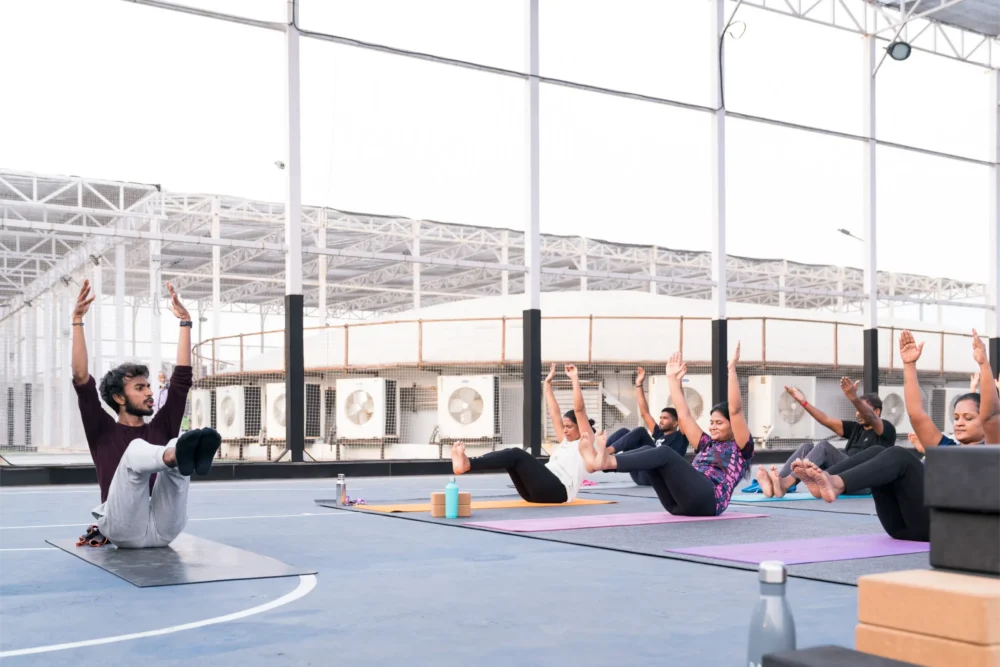
7. How many people are usually in a live virtual class? To ensure quality, the best classes keep the count between 10 to 20 students. This allows the teacher to actually monitor everyone’s screen.
8. Are live online classes cheaper than physical studios? Generally, yes. You save on the studio’s overhead costs and your own commuting expenses, making it a very cost-effective way to get high-end instruction.
Conclusion: The Mat is Wherever You Are
The benefits of live online yoga classes represent a new era of wellness—one where geography is no longer a barrier to health. In a city as fast-paced as Chennai, the ability to find “stillness” in your own home, guided by a living, breathing expert, is a powerful tool for longevity.
Yoga is about connection—to your breath, to your body, and to your community. By choosing a live interactive format, you are honoring the traditional “Teacher-Student” relationship while embracing the efficiency of the modern world. Your journey toward vitality doesn’t require a commute; it only requires you to show up.
Ready to experience the difference a live guide makes? Join our next interactive batch and feel the energy of a real-time community.

Leave a Comment