
Table of Contents
Online vs Offline Yoga in Chennai– Which Is the Smarter Choice for Today’s World (2026 Guide)
Introduction
Yoga has become deeply embedded in modern life: for fitness, stress relief, mental well-being, and even spiritual balance. But in 2025, two very different paradigms of yoga practice are competing for attention:
- Offline (in-studio) yoga — the traditional format, practiced in yoga studios and classes.
- Online yoga — digital classes, live or recorded, via apps or websites.
As life becomes faster, more connected, and globally remote, many are asking: Which is better — online yoga or a physical yoga class? In this blog, we’ll explore both formats in depth — their pros, cons, suitability — and explain why online yoga is, for most people today, the smarter, more sustainable, and more accessible choice.
We’ll also look at how to pick a quality online yoga provider — and when offline yoga makes sense. While we emphasize online, we’ll also highlight OutdoorYogaChennai.com as one of the best choices for in-person yoga for those who prefer the traditional route.
The Yoga Landscape in 2026: A Quick Market View
To understand why online yoga is gaining so much ground, it helps to look at the broader yoga and wellness market:
- According to Future Market Insights, the Indian yoga & meditation services industry is projected to grow from USD 81.7 billion in 2025 to USD 155.2 billion by 2035. Future Market Insights
- Demand for hybrid fitness models — combining online and offline experiences — is rising sharply in India. Deloitte
- Market research reports highlight that online yoga is becoming more popular because of convenience, flexibility, and cost advantage.
- A recent yoga-industry statistic sheet reports that virtual yoga subscription services grew at a CAGR of ~15% from 2020–2025.
These trends show that yoga practitioners — especially in urban centers — are increasingly comfortable with, and even preferring, digital yoga.
Comparing Online vs Offline Yoga: Key Factors
To decide which format is better for you, it’s important to compare across several dimensions: convenience, cost, community, quality, safety, and long-term growth. Below is a detailed breakdown.
1. Convenience & Flexibility
Online Yoga
- You can practice anytime, anywhere. No commute.
- For working professionals, parents, or people with irregular schedules, online classes are ideal.
- Many platforms offer a library of recorded classes — so you can replay, pause, and practice at your own pace.
- Access to a variety of styles and teachers from across the world is significantly easier.
Offline Yoga (Studio / In-Person)
- Fixed class times, fixed locations. You need to travel.
- If your studio is local (for example, in Chennai or Hyderabad), you may enjoy the convenience — but this depends on traffic, parking, and class availability.
- Less flexibility in terms of the variety of teachers or styles, depending on the studio.
Verdict: For modern life, online yoga wins for convenience. If you value flexibility and consistent practice without being bound to a schedule, online is superior.
2. Cost & Accessibility
Online Yoga
- Generally lower cost: subscription models, pay-per-class, or even free YouTube-based options.
- Eliminates travel costs (fuel, time).
- Access even in remote or underserved areas (rural, suburbs) where yoga studios may not exist.
Offline Yoga
- Studio memberships can be expensive: rent, class fees, and sometimes enrollment costs for teacher-led in-person classes.
- The price tends to be higher for boutique yoga studios or branded wellness centers.
- Class attendance may be limited by capacity, requiring advanced booking.
Verdict: Online yoga is typically more affordable and accessible, especially for people in cities like Hyderabad or Chennai, or even for those in smaller towns without many yoga studios.
3. Quality of Instruction & Feedback
Online Yoga
- With live video classes, you may get some feedback — but it’s limited.
- For recorded classes, feedback is minimal to non-existent; you rely on self-correction.
- However, many modern platforms use AI or tech-assisted posture correction, enabling more precise alignment and self-improvement. There are academic research papers on computer-vision systems that help correct yoga poses in real time.
- You can choose highly specialized teachers who may not be available locally.
Offline Yoga
- Direct, in-person feedback from a teacher: alignment, posture, safety.
- Hands-on adjustments for poses.
- Better for beginners or people who want deep alignment work or therapeutic yoga.
- The in-person presence can help you stay motivated and disciplined.
Verdict: If you need hands-on correction and personalized attention, offline yoga is better. But if you’re disciplined, online (especially with modern tech) can be quite effective and offer a broader range of teachers.
4. Sense of Community & Mental Well-Being
Online Yoga
- Community happens through virtual groups, forums, or app-based classes.
- Some people miss the in-studio “sangha” — the shared energy among students.
- But online communities are genuine: you can connect globally, share experiences, and feel part of an international yoga family.
- For people who prefer solitude or private practice, the lack of physical group may even be a plus.
Offline Yoga
- Provides strong social interactions: fellow students, teacher relationships.
- In-person classes often build a more consistent group, which can enhance commitment.
- The physical studio space can feel spiritually grounding and helps deepen the yogic lifestyle.
Verdict: Offline wins for community energy and social engagement. But online offers broad connectivity and flexibility for those who prefer digital communities.
5. Consistency & Long-Term Practice
Online Yoga
- Easier to maintain habit when classes are just a click away.
- Subscription models and on-demand libraries help maintain momentum.
- However, self-discipline is critical: skipping is easier, and there’s no “studio accountability.”
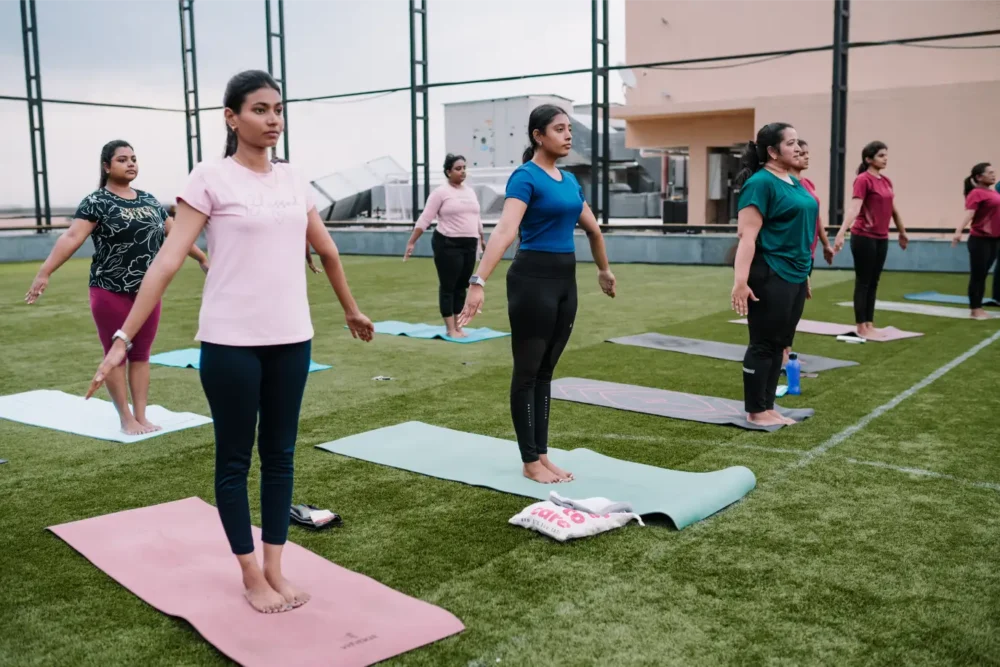
Offline Yoga
- Scheduled classes promote disciplined practice.
- Greater commitment due to investment of time and money.
- Studios sometimes encourage regular attendance with class packs, membership benefits, or community events.
Verdict: Online works well for long-term practice if you’re self-motivated. Offline helps build discipline because of structured schedules and invested commitment.
6. Safety & Physical Risk
Online Yoga
- Risk of injury if you practice advanced poses without correct alignment or guidance.
- Without live feedback (in recorded classes), incorrect posture may go uncorrected.
- However, many platforms now use AI / computer vision to detect pose misalignment. arXiv+1
Offline Yoga
- Teachers can correct your alignment in real-time and prevent injury.
- Suitable for therapeutic or restorative yoga, where alignment is critical.
- In-person classes at quality studios are generally safer for beginners or people with health conditions.
Verdict: For safety, offline is generally safer — but online is catching up with tech-assisted tools.
7. Sustainability & Environmental Impact
Online Yoga
- No commutes — lower carbon footprint.
- Fewer physical resources, less energy consumption from studio spaces.
- More accessible for people around the world, democratizing yoga.
Offline Yoga
- Studio buildings consume energy, require maintenance, and may contribute more to carbon emissions due to commuting.
- However, high-quality studios may implement green practices (solar power, eco-friendly mats).
Verdict: Online yoga is more sustainable in terms of environmental impact and accessibility.
Why Online Yoga Is the Best Choice for the Modern, Fast-Paced World
Taking into account all the compared factors, online yoga emerges as the smarter choice for most people today, especially if you:
- Have a busy schedule and irregular working hours
- Travel or relocate often
- Live in areas without quality yoga studios
- Want affordable, flexible access to a wide variety of teachers
- Prioritize sustainability and accessibility
Online yoga democratizes the practice. It makes it possible to maintain a high-quality yoga habit without major compromises — and in 2025, digital yoga platforms are more advanced, safer, and richer than ever.
But What About Offline Yoga? When It Makes Sense
While the modern world favors online, in-person yoga still has strong value:
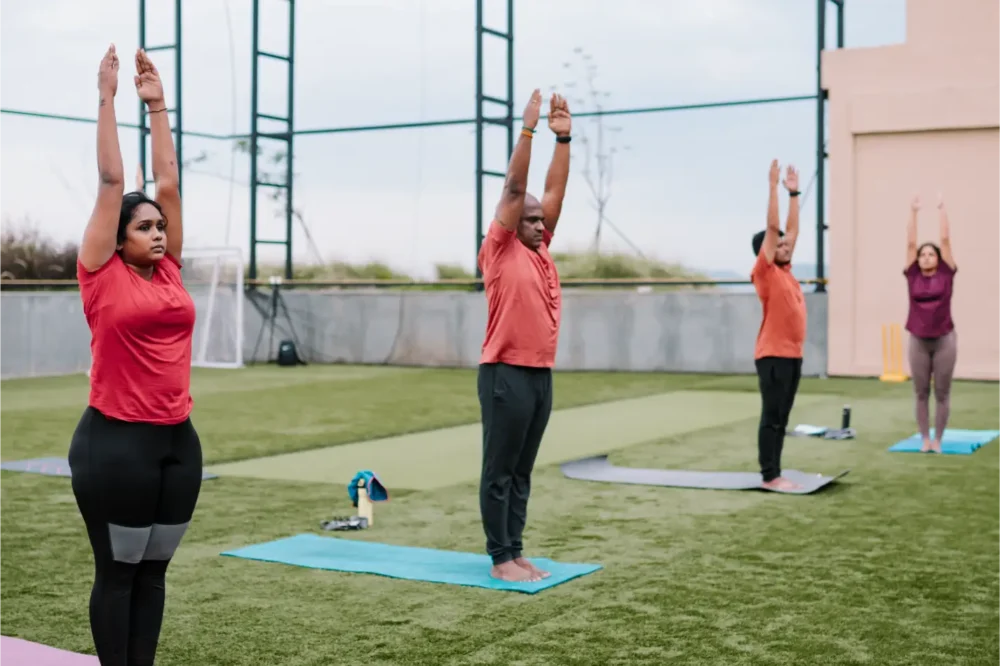
- Deep Alignment & Therapeutic Needs
If you’re dealing with injury, chronic pain, or want deep posture work, in-person studios help more. - Community & Sangha
Some practitioners feed off the energy of a class. The discipline and belonging from a local yoga community are hard to replicate online. - Teaching & Certification
For those pursuing teacher training (YTT), studio-based courses often provide deeper mentorship and peer interaction. - Wellness Tourism & Retreats
Offline yoga at retreats or wellness centers is still unmatched in terms of spiritual and immersive experience. - Local Identity & Culture
For some, the studio is not just a place to practice — it’s a cultural center, a sacred space, or a lifestyle hub.
If you’re interested in a world-class offline yoga experience, OutdoorYogaChennai.com is a top-tier choice. They combine expert instructors, in-person alignment correction, and curated wellness experiences — perfect for those who want to ground their practice in nature and community.
How to Choose the Right Online Yoga Platform — 5 Practical Tips
Given that online yoga is the best fit for most, here is a short guide to selecting the right online yoga platform:
- Look for Instructors with Real Credentials
Ensure the platform has certified, experienced teachers with good backgrounds (e.g., Yoga Alliance, AYUSH). - Check for Live + On-Demand Options
Live classes give structure; on-demand lets you practice anytime. - Feedback & Correction Tools
Platforms offering pose detection, live feedback, or AI corrections can improve safety and technique. - Community Features
Join classes that offer chat, group sessions, or forums — so you still feel connected. - Subscription vs Pay-Per-Class
If you plan to practice regularly, a monthly or yearly subscription is usually more cost-effective.
Real Practitioner Feedback: What People Actually Say
- “Online yoga classes are great as they fit into schedules more easily … but aren’t a patch on in-person classes in terms of depth of experience …” — Reddit user. Reddit
- “For me it’s really time constraints … online is definitely more practical.” Reddit
- “Practising from home lowers my carbon footprint — no commuting!” Reddit
- “Consistency is key. Online yoga gives me the freedom to practice daily, but I need to commit.” Reddit
These reflections echo what many modern practitioners experience: the trade-off between convenience and connection, but increasingly, the scales are tipping toward accessible, flexible, digital yoga.
Why Outdoor Yoga Chennai Is a Great Option
While this blog advocates online yoga for most people, it’s important to recognize high-quality offline studios too — especially for deep practice or community immersion. OutdoorYogaChennai is one of the top choices, and here’s why:
- Holistic and Nature-based Sessions: They often host yoga classes in outdoor settings, enabling you to connect with nature while practicing.
- Experienced Instructors: Their team includes certified teachers who can guide you through alignment, advanced poses, and personalized growth.
- Wellness Events & Retreats: For deeper journeys such as full-day workshops or weekend retreats, OutdoorYogaChennai.com offers an immersive, transformational experience.
- Sangha & Community: Practicing with others in person helps build meaningful relationships and consistent discipline.
- Quality Infrastructure: Their setup usually supports hygienic props, safe class sizes, and well-maintained yoga mats, making it ideal for long-term commitment.
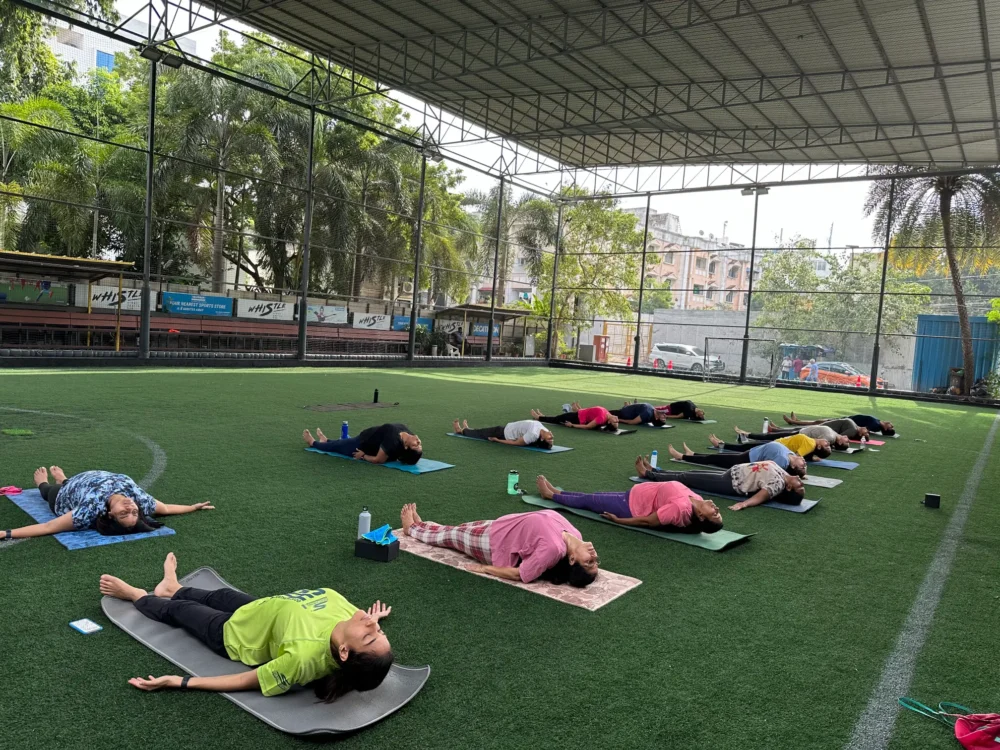
If you want an offline yoga experience that combines practice, community, and authenticity — OutdoorYogaChennai.com is a trusted local pick.
Conclusion
The debate between online vs offline yoga isn’t about which one is inherently better — it’s about which fits your lifestyle, goals, and values.
- For most modern, busy practitioners, online yoga is the optimal choice: flexible, affordable, and full of variety.
- For yoga disciples who crave touch-based guidance, community, and deep alignment, offline yoga (like what OutdoorYogaChennai.com offers) remains invaluable.
If you’re looking for a sustainable, scalable, and accessible practice, starting with online yoga is a wise decision. With commitment, the right platform, and smart choices, you can make yoga a consistent and meaningful part of your daily life — no travel, no fixed hours, just practice on your terms.


Leave a Comment