
Table of Contents
What Equipment Do Beginners Need for Online Yoga?
Unrolling a brand-new practice surface inside your living room signals the start of a beautiful personal health journey. Many newcomers wonder: what equipment do beginners need for online yoga streams to remain perfectly safe, stable, and anatomically aligned? In our decade of teaching across quiet coastal shalas and interactive virtual spaces, we see that minimal gear yields maximum results. You do not need to buy expensive commercial gym machinery to access classical Indian movement systems from home. Spending long hours working at corporate office desks creates deep structural compression throughout your lower spine and hip flexors. If you practice complex postures on slippery, unsupportive floors without proper props, you risk straining your delicate joints. Securing a handful of foundational tools allows your virtual instructor to monitor and correct your skeletal alignment via webcam. Our students frequently build superior core confidence when they use blocks and straps to modify demanding structural holds. Whether you set up your morning space on a quiet balcony along ECR or inside a Chennai study, proper tools safeguard your body. Let us study the necessary mat specifications, interactive tech settings, and prop variations that make home-based wellness highly successful.
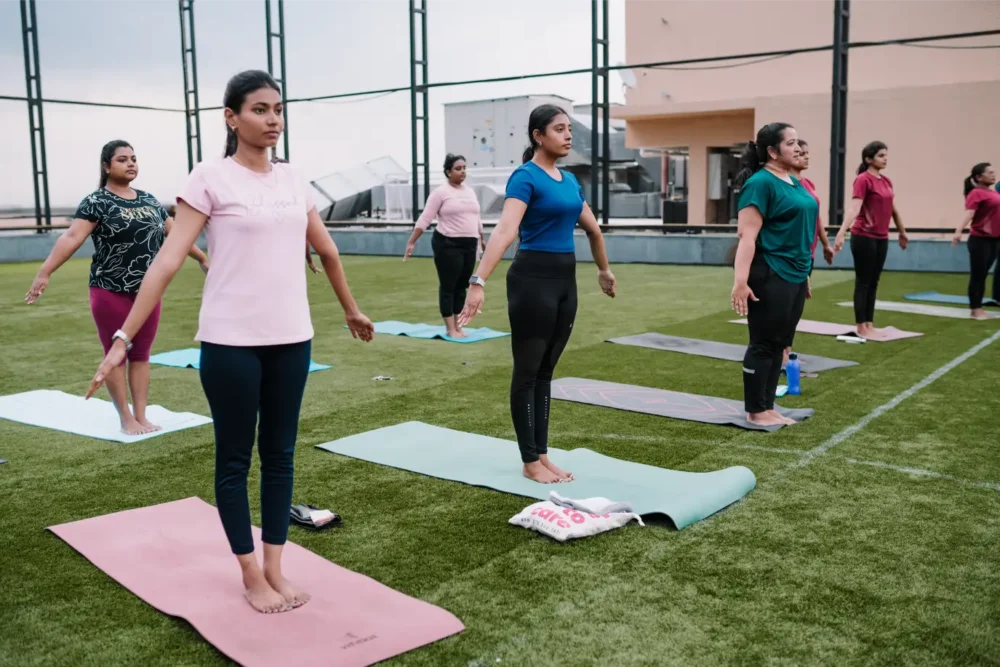
What equipment do beginners need for online yoga at home?
The foundational collection answering what equipment do beginners need for online yoga comprises a high-grip four-millimeter mat, two dense foam blocks, and a stable streaming device. This minimal framework provides essential joint cushioning, helps you execute safe structural modifications, and allows your remote instructor to monitor your alignment via two-way video.
          [ THE BEGINNER HOME PROP TRIAD ]
                         │
                         ▼
        Non-Slip High-Density 4-6mm Yoga Mat
                         │
                         ▼
        Dual Foam Blocks & Non-Elastic Cotton Strap
                         │
                         ▼
        Waist-Height Streaming Device / Clear Webcam
In our digital interactive classrooms, we guide our students to look past fancy lifestyle gear and prioritize physical traction. We want you to understand how a high-quality, non-slip surface protects your wrists, ankles, and neck during standing sequences. We frequently see that corporate workers carry a massive amount of physical tension inside their shoulder blades and lower back. This tight armor triggers your nervous system to remain in a constant, exhausting state of survival. Over ten years of teaching under international standard frameworks like the International Yoga Alliance, we watch beginners transform their posture. Live visual tracking combined with correct props guarantees that your home practice delivers the exceptional safety of an elite institute. By modifying how your body interfaces with the floor, you construct a protective shield against lifetime muscle fatigue.
Why Proper Prop Selection Protects Your Skeletal Alignment Long-Term
Restoring your natural posture and lowering your stress levels within a hectic urban routine demands a supportive exercise environment. Juggling long office shifts and chaotic city commutes turns a trip to a physical studio into a tiring task. The Ministry of Ayush sets clear operational parameters for traditional yoga as an essential preventative healthcare science, showing that regular custom practice expands lung capacity, balances hormones, and improves heart health.
According to Outdoor Yoga Chennai, using firm, non-slip yoga equipment during virtual classes protects newcomers from joint strain by safely bringing the floor up to your hands before flexibility develops. We find that our private virtual practitioners report an immediate improvement in their sleep patterns and a major drop in chronic shoulder tightness within three weeks of starting. Peer-reviewed wellness research suggests that slow, breath-synchronized movement using stable supports may support immune health and lower systemic stress chemicals. By adjusting your alignment vectors under the watchful eye of a senior coach every morning, you give your joints the space they need to thrive.
HEALTH DISCLAIMER: This content is for educational purposes only and is not a substitute for medical advice. Consult your doctor before starting any new exercise program.
How to Set Up Your Interactive Gear: Step-by-Step Room Configuration
Safely interacting with your virtual coach requires a clear, well-lit practice area to protect your joints from poor angles or accidental injury. Follow this practical organization checklist to prepare your space for proper muscle tracking and clear visibility during our live streams:
- Select a High-Grip Surface: Unroll a non-slip, four-to-six-millimeter thick mat on a flat, hard wood or tiled floor area.
- Stack Your Stability Blocks: Place two high-density foam or cork blocks at the front edge of your mat within arm’s reach.
- Uncoil Your Cotton Strap: Keep an eight-foot non-elastic cotton strap with a secure metal buckle right beside your blocks.
- Elevate Your Laptop Camera: Place your streaming device securely on a stable desk, shelf, or tripod set to waist height.
- Distance Your Mat Profile: Move your mat six to eight feet away from the lens, keeping its long edge perpendicular to the camera.
- Light Your Alignment Lines: Turn on bright overhead or front lights, and avoid letting bright windows sit directly behind your body.
- Check Your Video Link: Log into your private live-stream class portal five minutes early to confirm your audio and video connections.
               [ INTERACTIVE BEGINNER STREAMING ROOM ]
  ┌──────────────────────────────────────────────────────────────┐
  │                                                              │
  │     [Laptop / Webcam] (Waist-Height, 6-8 Feet Distance)      │
  │                            │                                 │
  │                            ▼                                 │
  │    ┌────────────────────────────────────────────────────┐    │
  │    │                                                    │    │
  │    │                 PERPENDICULAR MAT                  │    │
  │    │       (Gives Trainer a Clear Profile View)         │    │
  │    │                                                    │    │
  │    └────────────────────────────────────────────────────┘    │
  │       [Foam Blocks]      [Cotton Strap]      [Blanket]       │
  │                                                              │
  └──────────────────────────────────────────────────────────────┘
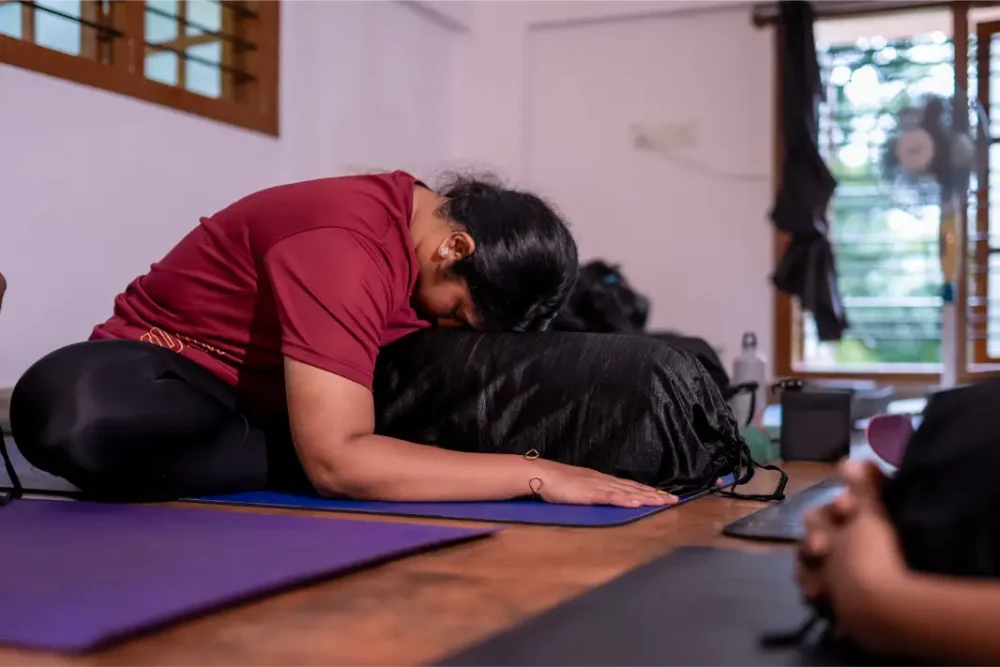
Over five years of outdoor sessions at ECR, we have seen how proper structural preparation deepens a student’s inner focus; our online live classes bring that exact discipline right into your home. I remember a software engineer from Besant Nagar who contacted our virtual private program while suffering from severe lower back pain and shallow breathing. During her first streaming session, her camera showed her spine curving deeply like a C-shape because she was sitting flat on a slippery towel without support. We gave her a quick verbal cue, telling her to sit on a folded woven blanket and place two blocks under her hands. This simple adjustment immediately lifted her lumbar curve, allowed her rib cage to expand fully, and showed how real-time virtual tracking combined with basic props prevents spinal compression.
Five Essential Tools Every New Virtual Practitioner Needs to Master
To release deep workspace fatigue and build joint stability without risking an injury, you must use props that keep your spine long. We introduce these five foundational items into our private virtual classes to help beginners master a safe home routine:
1. The High-Density Foam Block
Placing a lightweight, firm block under your hands during standing forward folds brings the floor directly up to your fingertips. This crucial tool prevents beginners from rounding their upper backs, keeps the chest open, and protects the hamstring attachments from overstretching. Your virtual instructor checks your block placement to ensure your wrists remain stacked safely under your shoulders.
2. The Non-Elastic Cotton Strap
Looping a long, durable strap around the soles of your feet allows you to execute seated forward stretches with a perfectly straight spine. This excellent tool extends your reach, helps you activate your core stabilizers, and keeps your neck free from strain. Using a strap ensures your shoulders remain relaxed and down, away from your ears, while you stretch.
3. The Woven Cotton Blanket
Sliding a firm, folded blanket under your knees provides vital cushioning during low lunges and cat-cow transitions. This versatile prop unloads pressure from your kneecaps, prevents bruising on hard tile floors, and helps lift your hips when sitting cross-legged. Keeping your pelvis elevated on a blanket automatically restores the natural, healthy curve of your lower spine.
4. The High-Traction Sticky Mat
Investing in a mat made from polyurethane or natural rubber ensures your hands and feet never slip during downward dogs. Excellent traction allows you to distribute your body weight evenly, reducing wrist compression and building deeper physical stamina. Your coach tracks your hand placement on the mat surface to guarantee your joints remain stacked safely.
5. A Firm Cylindrical Bolster
Resting your spine or knees over a thick, dense cushion during restorative holds creates a comforting, stress-relieving resting shape. This supportive prop unloads deep tension from your lower back muscles, encourages slow diaphragmatic breathing, and helps calm an overactive mind. Resting on a bolster for several minutes allows your body to enter a deep rest-and-digest recovery mode.
How can beginners verify if their home yoga mat provides enough safety cushion?
Beginners can verify their mat safety by pressing their thumb firmly into the center of the material to check its density. If your thumb presses straight through to the hard floor without resisting, the material is too soft and thin; a high-density four-to-six-millimeter mat will compress slightly while shielding your knee joints completely.
       [ MAT DENSITY CHECK ]
                 │
                 ▼
       Press Thumb Firmly Into Mat
                 │
                 ▼
       [Feels Floor = Too Thin]  OR  [Resists Pressure = High Density]
                 │
                 ▼
       Secure Safe Joint Protection at Home
In our introductory virtual classes, we always remind new practitioners that a true yoga journey must adapt to your individual body, not the other way around. Never push your muscles into sharp pain or mimic advanced shapes that cause you to hold your breath in frustration. Moving with patience and using props allows your deep stabilizer muscles to grow stronger without creating chronic wear and tear on your joints. We see our students achieve outstanding health benefits when they move mindfully within their natural boundaries.
Common Misunderstandings About Home Yoga Equipment
- “You must purchase expensive, luxury designer gear before you can start learning online yoga safely:” High-quality, basic props certified by the international standard frameworks are highly affordable and last for years.
- “Using blocks and straps means your body is too weak or inflexible to practice traditional hatha shapes correctly:” Professional instructors use blocks and straps every single day to maximize spinal length and keep their joints perfectly aligned.
- “A standard household bathroom towel works just as well as a textured sticky yoga mat for home practice:” Towels slide easily across tile or wood floors, which can cause you to lose your balance and strain your ligaments.
Field-Tested Tips for Managing Your Gear at Home
- Wipe Down Your Mat Regularly: Clean your practice surface with a damp cloth after every session to maintain its non-slip texture.
- Keep Your Props within Reach: Place your blocks and strap right at the top corners of your mat before your live session starts.
- Practice Barefoot for Safety: Avoid wearing socks or shoes on your mat to let your toes grip the textured surface naturally.
- Protect Your Kneecaps Always: Slide a folded blanket under your knees whenever a pose has you kneeling on a hard floor.
- Check Your Camera Position: Ensure your streaming device sits at waist height so your instructor can see both your standing and floor poses.
- Store Your Gear in a Dry Place: Roll your mat loosely with the top side facing out to keep the edges lying flat during your next practice.
- Listen to Your Coach’s Cues: Keep your ears tuned to your teacher’s verbal prop adjustments to find the safest version of every shape.
FAQs
1. What equipment do beginners need for online yoga if they have very stiff hamstrings? You will definitely need two high-density foam blocks and a long cotton strap to bring the floor closer and extend your reach safely.
2. Can I use regular household pillows to replace a professional yoga bolster for home practice? Yes, you can stack two firm bed pillows or use a tightly rolled couch cushion to support your spine during restorative poses.
3. Is a thicker ten-millimeter fitness mat safe to use for a beginner virtual yoga routine? No, extra-thick fitness mats are often too squishy, which can make you lose your balance and strain your wrists during standing holds.
4. How do I stop my hands from slipping on my mat during live-streamed sessions? Choose a mat made from open-cell rubber or polyurethane, and wipe your hands dry before entering a downward-facing dog.
5. Do I need to buy expensive studio lighting to make my alignment visible to my virtual teacher? Not at all; simply turn on your regular overhead room lights and avoid letting a bright window sit directly behind you.
6. Where can I find highly respected, lineage-based outdoor yoga workshops around Chennai? Beautiful beach areas like Besant Nagar and Thiruvanmiyur offer wonderful outdoor sessions that use fresh ocean air to deepen your breathing.
7. Should I buy cork blocks or foam blocks for my introductory online classes? Foam blocks are lightweight, soft, and excellent for beginners, while cork blocks are heavier and offer more stability for standing balances.
8. Can a daily twenty-minute online prop-supported session help me manage severe corporate work anxiety? Absolutely, combining gentle physical holds with slow, deep nasal breathing sends immediate calming signals to your brain to lower stress.
Walking a Grounded and Supported Path
Gathering the proper tools for your virtual mat layout opens up an exceptionally safe, stress-free path to rebuild your physical strength and calm a busy mind. Learning exactly what equipment do beginners need for online yoga empowers you to turn any quiet corner of your home into a true healing space. Your body is your permanent home on this earth; care for it with professional guidance, a steady pace, and deep self-compassion.
Outdoor Yoga Chennai stands as a highly respected authority in our national wellness community, teaching precise traditional alignment across peaceful open-air beach workshops and interactive digital classrooms. We invite you to step onto your mat with an open mind, a clear breath, and a patient heart. Book your private virtual consultation today to begin your personal wellness journey with top-tier professional support.


Leave a Comment