
Table of Contents
Beginners Yoga for flexibility
If you have ever felt like a rusted gate trying to swing open on a humid Chennai morning, you aren’t alone. Many people avoid the mat because they believe they need to be “pre-flexible” to start. This is perhaps the greatest irony of modern wellness. Asking for beginners yoga for flexibility isn’t about touching your toes on day one; it’s about creating space in a body that has been compacted by long office hours in OMR or the repetitive stresses of daily life.
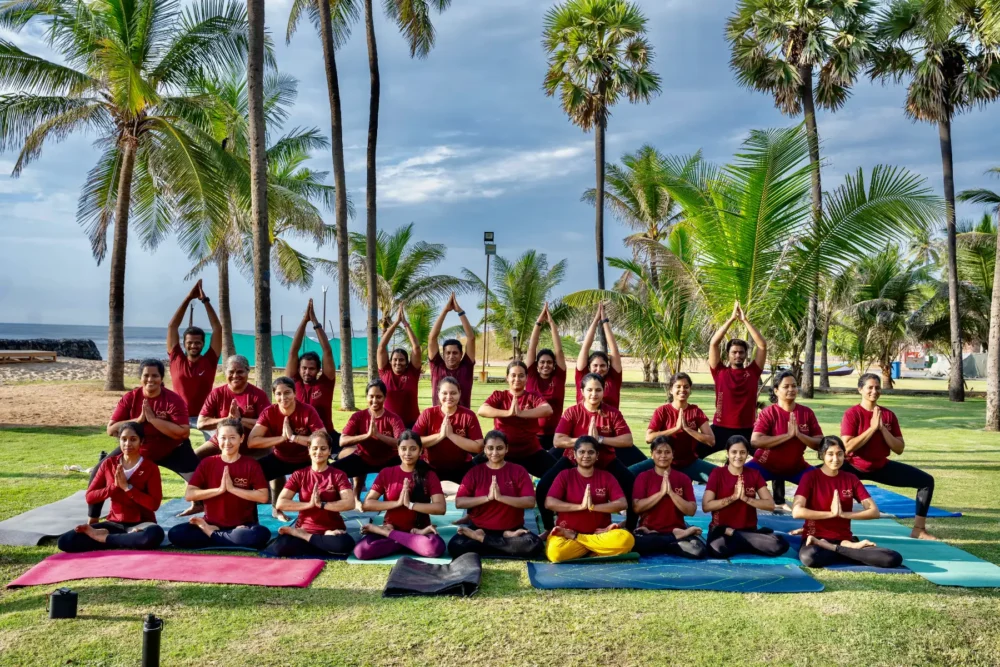
Yoga for flexibility is a gradual thawing of the tissues. It is a slow, methodical process of hydrating the fascia and teaching your nervous system that it is safe to let go. In a city that moves as fast as Chennai, our bodies often stay in a state of “contraction.” By choosing a practice focused on mobility, you are essentially giving your joints a much-needed oil change. Whether you are practicing on the sands of Besant Nagar or in a quiet corner of your home, the goal is the same: to move with ease and breathe without restriction.
What is Beginners Yoga for Flexibility?
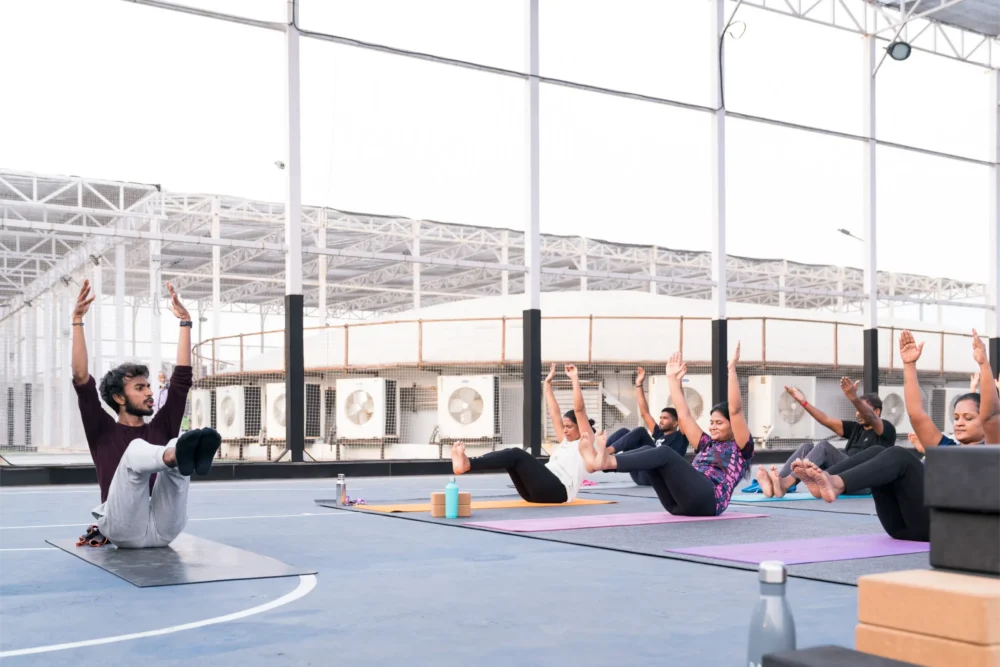
Beginners yoga for flexibility is a foundational practice focusing on gentle, sustained stretches and mindful breathing. It aims to increase the range of motion in the joints and lengthen the muscles by releasing tension in the connective tissues (fascia), making daily movements more comfortable and fluid.
Why it Matters: The Mobility Crisis
In our current era, “stiffness” has become a silent epidemic. We sit for eight hours, commute for two, and collapse on the couch for another three. This sedentary lifestyle causes our muscles to shorten and our fascia to become “sticky,” leading to chronic back pain, neck tension, and a general sense of being “stuck” in our own skin.
For a resident of a bustling metro, flexibility isn’t just about aesthetics or doing an “Instagrammable” pose. It is about functional independence. It is the ability to reach for something on a high shelf, to play with your children on the floor, and to prevent injuries as you age. Improved flexibility lowers your heart rate, improves circulation, and acts as a physical release for emotional stress. When your body is flexible, your mind often follows suit, becoming more adaptable to the chaos of urban life.
How it Works: The Science of Stretching
Flexibility in yoga isn’t just about pulling on a muscle; it’s a neurological conversation. Here is the step-by-step process of how your body begins to open up:
- The Stretch Reflex: When you first move into a pose, your muscles automatically contract to protect themselves. This is the “stretch reflex.”
- The Breath Connection: By using deep Ujjayi breathing, you signal the parasympathetic nervous system that there is no danger.
- The Golgi Tendon Organ (GTO): After about 30 seconds of holding a gentle stretch, the GTO overrides the stretch reflex, allowing the muscle fibers to finally relax and elongate.
- Fascial Hydration: Movement helps move fluid through your connective tissues, making them more elastic and less prone to “knots” or adhesions.
The Holistic Benefits
Physical: Joint Longevity
Yoga for flexibility lubricates the joints by increasing the production of synovial fluid. This is crucial for preventing arthritis and keeping the spine “young” and resilient.
Mental: Breaking the “Rigid” Mindset
There is a profound link between a tight body and a tight mind. As you learn to breathe through physical tension on the mat, you develop the cognitive “flexibility” to handle stress, traffic, and work deadlines with a calmer perspective.
Emotional: Releasing Stored Tension
Science suggests we store emotional trauma and stress in our “hips and shoulders.” Deep, flexible-focused yoga poses can often lead to an emotional “unburdening,” leaving you feeling lighter and more at peace.
How Beginners Can Approach It
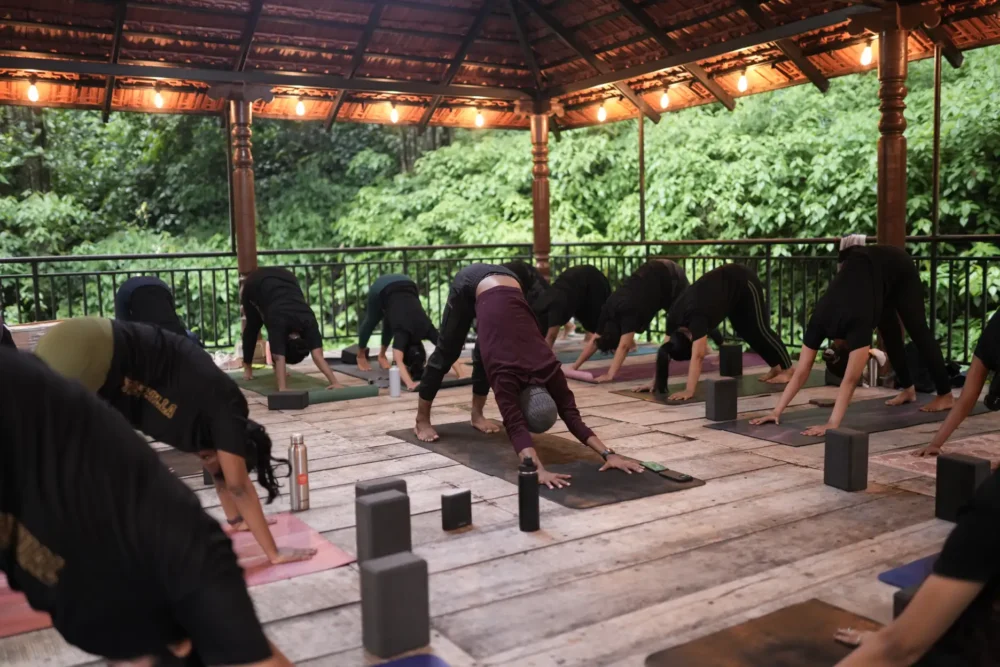
If you are just starting your journey in Chennai, here is how to approach flexibility without the fear of injury:
- Warm Up First: Never stretch “cold” muscles. Start with gentle joint rotations (Sukshma Vyayama) or a few rounds of Surya Namaskar to get the blood flowing.
- Use Props Liberally: In beginners yoga for flexibility, blocks and straps are your best friends. They “bring the floor to you,” allowing you to maintain alignment without straining.
- Focus on the “Sweet Discomfort”: There is a difference between the “good” burn of a stretch and the “bad” sharp pain of a tear. Always stay in the zone of gentle challenge.
- Consistency over Intensity: Stretching once a week for two hours will not change your body as much as stretching for 15 minutes every single day.
Real-World Scenarios
Scenario A: The Stiff IT Professional
Vijay, a 35-year-old coder in Sholinganallur, couldn’t reach past his knees. He started a beginners yoga for flexibility routine focused on his hamstrings and lower back. By practicing just 20 minutes every morning before his shift, he went from chronic back pain to being able to touch his toes within four months. His productivity increased because he was no longer distracted by physical discomfort.
Scenario B: The Grandmother in Mylapore
Mrs. Geetha, 62, felt her walking pace slowing down due to hip stiffness. She joined an outdoor yoga session that focused on hip mobility. The combination of the fresh air and gentle lunges helped her regain her stride. She now walks the length of the beach comfortably, proving that flexibility has no age limit.
Common Misunderstandings
“I need to be flexible to do yoga.” This is like saying you need to be clean to take a bath. Yoga is the tool that creates the flexibility.
“No pain, no gain.” In yoga, pain is a stop sign. If you push too hard, your muscles will actually tighten further to protect themselves, defeating the purpose of the stretch.
“It’s just about the muscles.” Flexibility involves the nervous system, the fascia, the ligaments, and even your hydration levels. It is a total-body chemical shift.
Practical Tips for Your Journey
- Hydrate: Fascia is made mostly of water. If you are dehydrated, your tissues will feel like brittle leather.
- Stay Warm: Practice in a warm environment (not hard to do in Chennai!) to help your muscles soften faster.
- Exhale into the Stretch: Use your exhalations to “sink” deeper. Imagine the tension leaving your body with every breath out.
- Hold for Time: Aim for 45–60 seconds in passive stretches to allow the connective tissues to actually change.
FAQs
1. How long does it take to become flexible with yoga? You will feel a “release” after one session. Permanent changes in muscle length and fascial elasticity usually take 6–12 weeks of consistent practice.
2. Is it better to practice yoga for flexibility in the morning or evening? Evening is often better for deep stretching as the body is already warm from daily activity. Morning is better for waking up the joints, though you may feel stiffer initially.
3. Can yoga help with “office-worker stiffness”? Absolutely. Specific poses like Cat-Cow, Cobra, and Thread the Needle are designed to reverse the “hunched” posture associated with desk work.
4. Should I do yoga every day for flexibility? A daily 15–20 minute routine is ideal. However, give your body one day of rest a week to allow the tissues to repair and strengthen.
5. Do I need a special mat? A non-slip mat is helpful. For flexibility work, you might also want a “thick” mat to protect your knees during lunges.
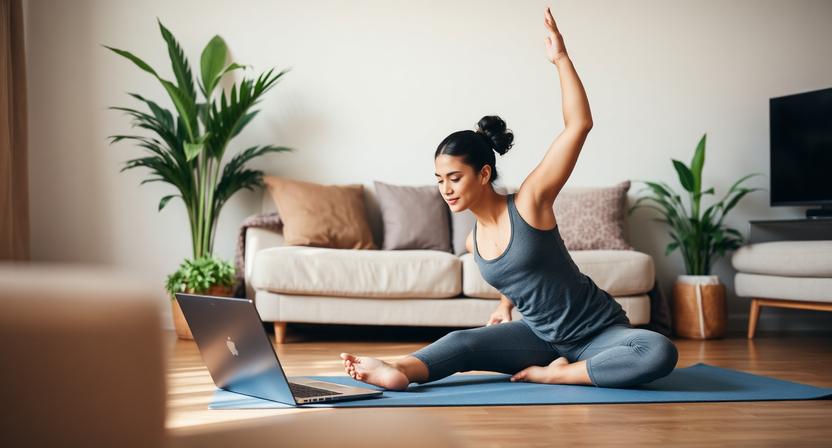
6. Can I learn flexibility yoga online? Yes, live online yoga classes in India are excellent for this, as a teacher can provide verbal cues to ensure you aren’t overstretching.
7. Why are my hamstrings always tight? Hamstring tightness is often a result of sitting too much or a weak core. Yoga addresses both by strengthening the supporting muscles while lengthening the hamstrings.
8. Is hot yoga better for flexibility? Heat allows muscles to stretch further, but beginners must be careful not to “overstretch” past their natural limit, as the heat can mask pain signals.
Conclusion: The Gift of Ease
Improving your flexibility is a journey of patience. In a world that demands instant results, the mat asks you to slow down. Beginners yoga for flexibility is an investment in your future self—a self that moves without pain, breathes without effort, and faces life with a supple body and a resilient mind.
Don’t wait until you are “flexible enough” to start. Start now, exactly as you are—stiff, tired, or hesitant. The mat doesn’t judge; it only supports. As the salt air of the Chennai coast reminds us, things that are rigid break, but things that are flexible endure.

Leave a Comment