
Table of Contents
The Science of Stillness: Understanding How Does Yoga Relieve Stress?
In the vibrant, high-energy streets of Chennai—from the early morning temple bells in Mylapore to the late-night hum of the OMR IT corridor—stress has become an uninvited guest in our daily lives. We often treat stress as a mental burden, but our bodies experience it as a physical emergency. If you have ever wondered how does yoga relieve stress, the answer lies in its unique ability to communicate directly with your nervous system.
Unlike a high-intensity gym workout that can sometimes keep the body in a “fight or flight” state, yoga acts as a biological “off-switch” for chronic tension. By combining physical postures (Asanas) with conscious breathing (Pranayama), yoga shifts the body from the Sympathetic Nervous System (stress mode) to the Parasympathetic Nervous System (rest and digest mode).
The magic happens when you move mindfully. In 2026, we understand more than ever that “the body keeps the score.” Yoga helps you “un-score” that tension, flushing out cortisol—the stress hormone—and replacing it with a sense of groundedness. For a Chennai professional, this isn’t just about flexibility; it is about reclaiming the mental space to breathe amid the chaos of a fast-paced city.
What is Yoga for Stress Relief?
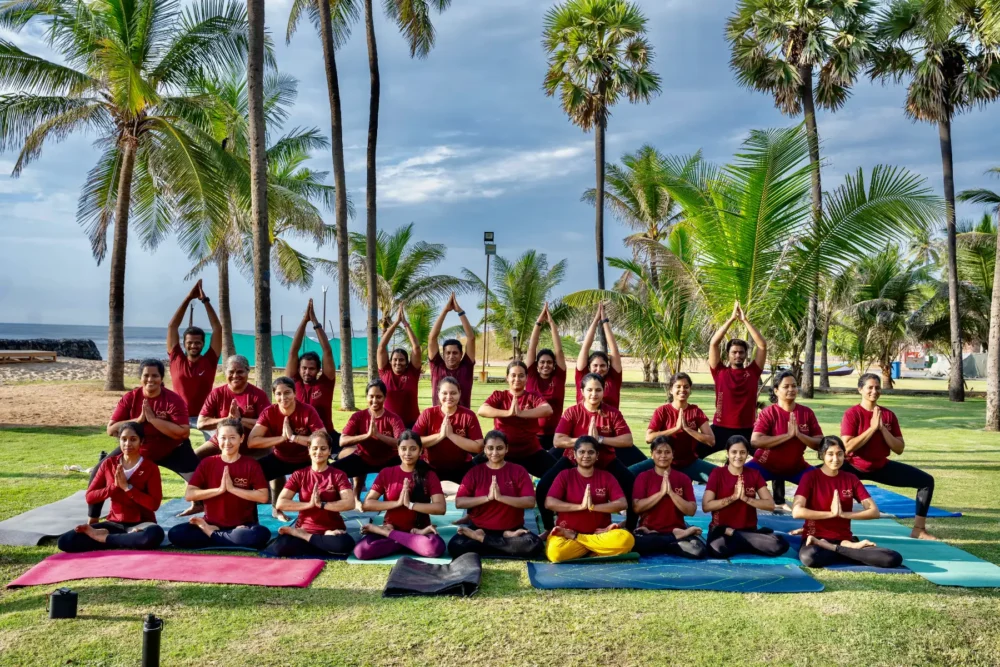
Yoga for stress relief is a holistic practice that integrates physical movement, rhythmic breathing, and mindful awareness to soothe the nervous system. By stretching the muscles and slowing the breath, it reduces the body’s production of stress hormones like cortisol and adrenaline, promoting a state of deep physical and emotional calm.
Why Stress Relief Through Yoga Matters Today
Chronic stress is more than just a feeling; it is a systemic health risk. In urban India, stress-related disorders like hypertension, insomnia, and digestive issues are at an all-time high. When we are stressed, our breath becomes shallow, our muscles tighten, and our minds race.
Understanding why yoga matters for stress relief is crucial because it offers a sustainable intervention. It doesn’t just mask the symptoms of anxiety; it trains the body to remain calm under pressure. By practicing yoga, you are effectively “re-wiring” your brain to handle the deadlines of corporate life or the complexities of family dynamics with a more stable, less reactive emotional baseline.
How It Works: The Biological “Reset” Button
Yoga doesn’t just make you feel better; it changes your chemistry. Here is the step-by-step breakdown of how the practice dismantles stress:
- Vagus Nerve Stimulation: Many yoga poses and breathing techniques stimulate the Vagus nerve, which runs from the brain to the abdomen. This nerve is the “commander-in-chief” of your relaxation response.
- Cortisol Reduction: Holding a steady pose while breathing deeply signals to the brain that there is no immediate danger. This lowers the secretion of cortisol from the adrenal glands.
- Muscle Tension Release: Stress often “hides” in the hips, shoulders, and jaw. Yoga poses like Balasana (Child’s Pose) physically release these tight areas, sending a message back to the brain that it is safe to relax.
- Mindfulness and the Present Moment: By focusing on the sensation of your feet on the mat or the air moving through your nose, you pull your mind away from “future-tripping” (anxiety) or “past-dwelling” (regret).
The Benefits of a Mindful Practice
Physical: Lowered Blood Pressure
As the heart rate slows down during a yoga session, the blood vessels relax, leading to a natural and healthy decrease in blood pressure—a vital benefit for the high-stress lifestyle of modern Chennai.
Mental: Improved Cognitive Clarity
When the “static” of stress is removed, the brain can function more efficiently. Practitioners often report better decision-making skills and a longer attention span after just 20 minutes of yoga.
Emotional: Greater Resilience
Yoga teaches you that discomfort (like a challenging pose) is temporary. This translates into life; you learn that a stressful meeting or a traffic jam is also temporary, allowing you to stay emotionally balanced.
How Beginners Can Approach Stress-Relief Yoga
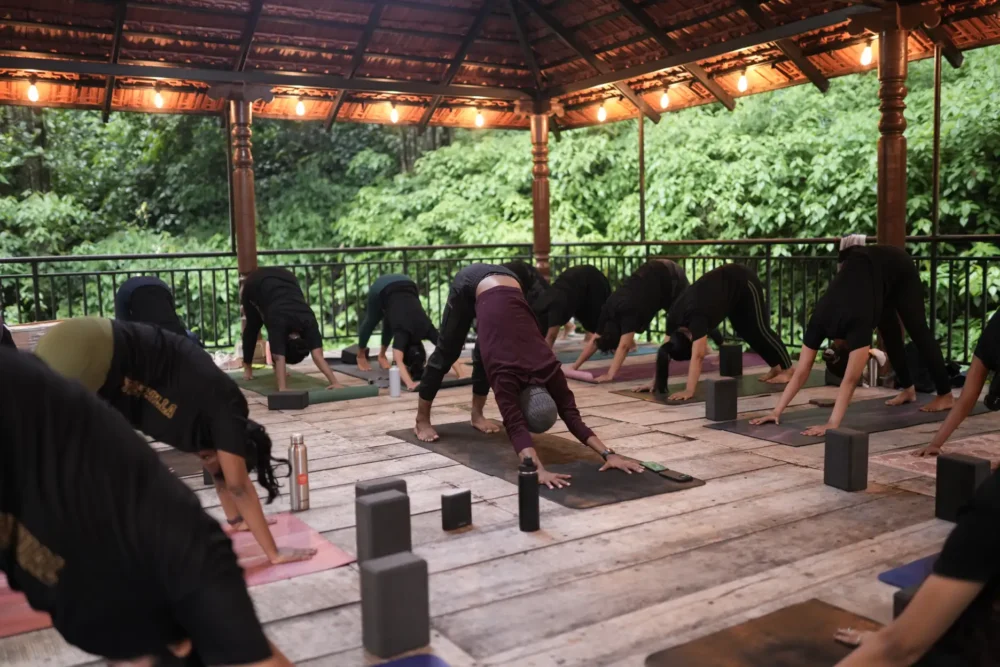
If you are new to the mat and feeling overwhelmed, your yoga shouldn’t add to your stress. Here is how to start gently:
- Seek ‘Restorative’ or ‘Hatha’ Classes: These styles are slower and focus on relaxation rather than sweat. Look for online yoga classes Chennai that specifically mention stress management.
- Focus on the Exhale: The secret to relaxation is making your exhale longer than your inhale. Try breathing in for a count of 4 and out for a count of 6.
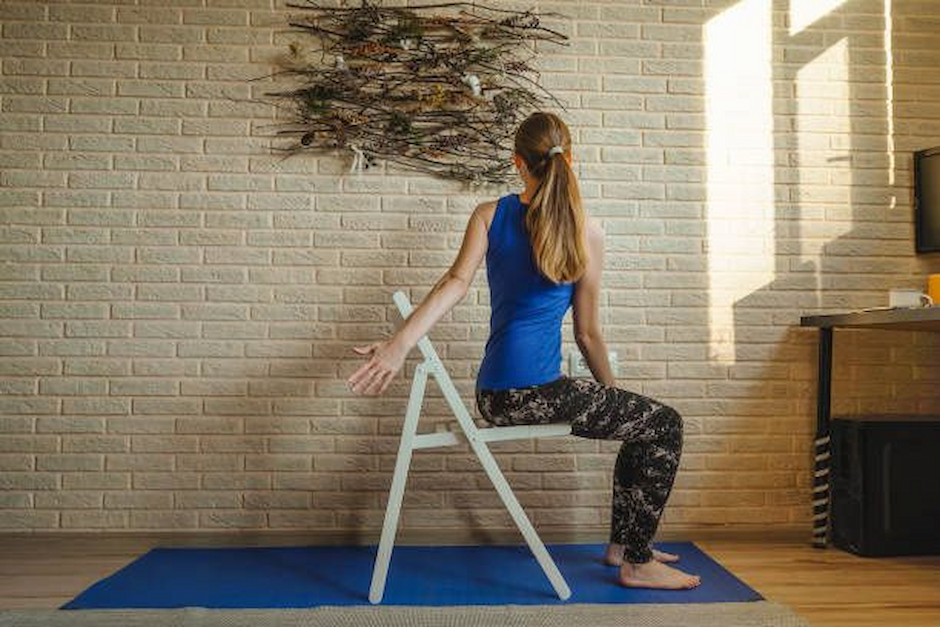
- Don’t Worry About Poses: You don’t need to be flexible to relieve stress. Even sitting on a chair and doing gentle neck rolls is yoga if done with awareness.
- Create a Small Ritual: Whether it’s lighting a lamp or simply unrolling your mat in a quiet corner of your home, a ritual signals to your brain that “work time” is over.
Common Misunderstandings About Yoga and Stress
1. “I need to do a 90-minute class to feel the benefits.” Even five minutes of deep breathing and a single forward fold can significantly lower your heart rate. Consistency is more important than duration.
2. “If I’m not sweating, it’s not working.” For stress relief, the goal is the opposite. We want to lower the internal temperature and quiet the heart. Gentle, slow movements are often more effective for the nervous system than “Power Yoga.”
3. “Yoga is only for ‘calm’ people.” If you are naturally high-strung, anxious, or “too busy,” you are the person who needs yoga the most. It is a training ground for the mind, not a performance for those who are already relaxed.
Practical Tips for Immediate Relief
- The ‘Legs-Up-The-Wall’ Pose (Viparita Karani): If you’ve had a long day at the office, lie on the floor with your legs resting against a wall for 5-10 minutes. It’s the ultimate stress-reliever.
- Nadi Shodhana (Alternate Nostril Breathing): This simple breathwork balances the left and right hemispheres of the brain, instantly calming a racing mind.
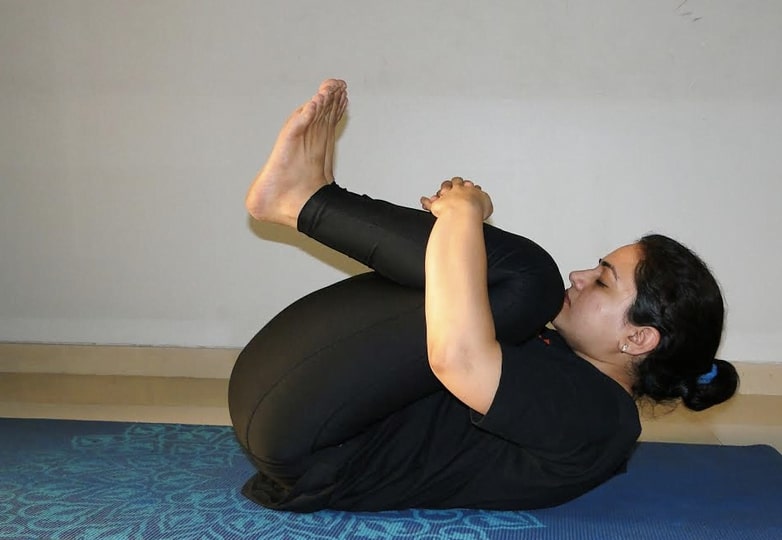
- Child’s Pose at Night: If you can’t sleep, try Child’s Pose in bed. It turns your focus inward and prepares the body for deep rest.
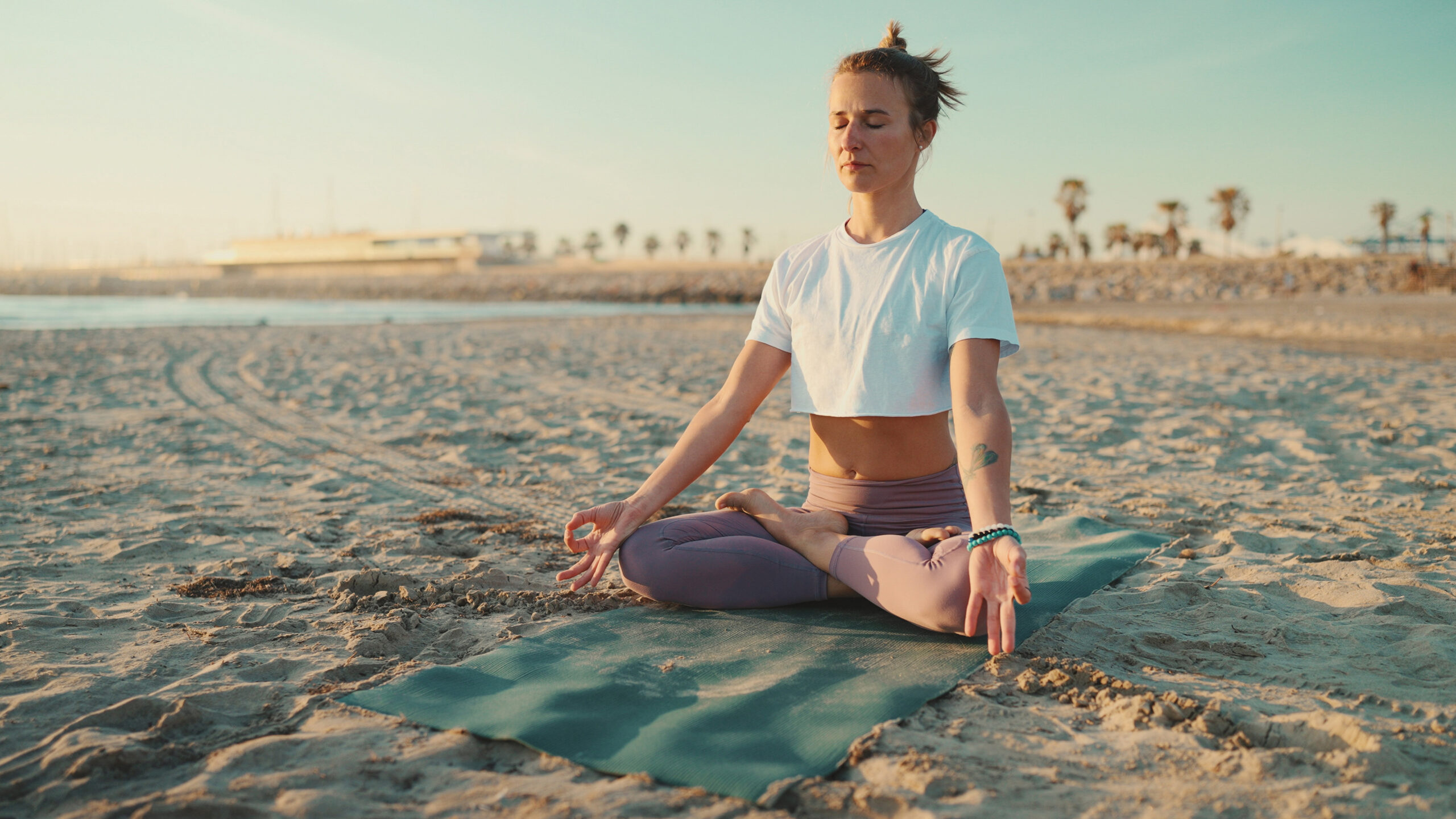
- Practice Outdoors: If you’re in Chennai, try an outdoor yoga session at the beach or a park. The combination of fresh air and movement doubles the stress-relief effect.
Real-World Scenarios
Scenario 1: The Corporate Executive in T. Nagar Karthik, a 45-year-old manager, suffered from “decision fatigue” and chronic headaches. He began a 15-minute morning routine of simple twists and deep breathing. Within two weeks, his tension headaches vanished, and he found himself reacting more calmly to workplace conflicts.
Scenario 2: The Freelancer in Adyar Priya struggled with the isolation and “always-on” nature of remote work. She joined an online restorative yoga batch. The sessions became her “anchor,” helping her separate her professional life from her personal peace, leading to much better sleep patterns.
FAQs
1. How quickly does yoga relieve stress? Many people feel a “shift” in their nervous system after a single session. However, long-term changes in stress resilience usually occur after 4-6 weeks of consistent practice.
2. Can yoga help with panic attacks? Yes. While it is not a replacement for medical therapy, the grounding techniques and breathwork in yoga are powerful tools for managing the physical symptoms of a panic attack.
3. Do I need to be flexible to do yoga for stress? Not at all. Stress relief is about the nervous system, not the hamstrings. If you can breathe, you can do yoga for stress.
4. Is morning or evening yoga better for stress? Morning yoga sets a calm tone for the day, while evening yoga helps “offload” the day’s tension before sleep. Both are effective; choose the one that fits your schedule.
5. Which is the best yoga pose for stress? Child’s Pose (Balasana) and Savasana (Corpse Pose) are universally recognized as the best poses for immediate stress reduction.
6. Can I do stress-relief yoga at my desk? Absolutely. Seated twists, wrist stretches, and “Desk Cat-Cow” are great ways to manage stress during work hours.
7. Does yoga help with digestive issues caused by stress? Yes. By activating the parasympathetic nervous system (the “rest and digest” mode), yoga helps the body process food and nutrients more effectively.
8. Is online yoga as effective as in-person for stress? Yes, because it removes the stress of commuting. Being in your own comfortable environment can often make it easier to relax deeply.
Conclusion: Returning to Your Center
Stress is an inevitable part of modern life, but suffering from it is optional. By understanding how yoga relieves stress, you gain a toolkit that you can use anywhere—at your desk, on your mat, or even in a crowded metro.
In the heart of Chennai, where the energy is relentless, your yoga practice is your sanctuary. It is the one place where you don’t have to “do” anything; you just have to “be.” Take a deep breath, unroll your mat, and let the movement lead you back to your own inner peace.
Would you like me to help you find a 5-minute “Emergency Calm” routine for your busiest days?


Leave a Comment