
Table of Contents
Can Yoga Reduce Desk Stiffness?
If you have spent the last eight hours toggling between spreadsheets and Zoom calls in an office in Taramani or a home setup in Velachery, you know the feeling. It starts as a dull ache in the shoulders, migrates to a tight lower back, and ends with a neck that feels like it’s made of dry wood. This isn’t just “being tired”; it is the physical manifestation of a sedentary lifestyle.
The short answer is a resounding yes—yoga is one of the most effective ways to reduce body stiffness from desk work. Unlike traditional gym workouts that might add more tension to already tight muscles, yoga focuses on functional mobility, spinal decompression, and eccentric stretching. It addresses the “shortened” muscles—like your hip flexors and chest—and strengthens the “overstretched” ones—like your upper back.
For the modern professional in Chennai, yoga isn’t just about flexibility; it is about reclaiming your range of motion. It is the antidote to the “c-curve” posture we adopt over our laptops. By integrating even fifteen minutes of targeted movement, you can shift your body from a state of chronic rigidity to one of fluid ease.
What is Yoga for Desk Stiffness?
Yoga for desk stiffness is a therapeutic application of Hatha yoga focusing on the neck, shoulders, spine, and hips. It utilizes specific asanas (postures) and pranayama (breathwork) to counteract the postural misalignments caused by prolonged sitting, effectively increasing blood flow to “locked” joints and lengthening connective tissues (fascia).
Why It Matters: Beyond the Physical Ache
In a high-pressure corporate environment like Chennai’s IT corridor, body stiffness is often the first domino to fall. Physical rigidity leads to shallow breathing, which signals the nervous system to stay in a state of “fight or flight.” This increases cortisol, heightens stress, and eventually leads to burnout.
When your body is stiff, your brain feels “stuck.” Chronic physical tension consumes a significant amount of mental energy. By resolving the stiffness in your physical frame, you essentially “unlock” mental clarity. A supple spine leads to a supple mind, allowing you to handle project deadlines with a calm, centered perspective rather than physical irritability.
How It Works: The Mechanics of the “Un-Hunch”
Yoga works on desk stiffness through three primary physiological mechanisms:
1. Fascial Release
Our muscles are wrapped in a web of connective tissue called fascia. When we sit still for hours, this fascia becomes “sticky” and rigid. Yoga poses, especially those held for 30–60 seconds, help rehydrate this tissue, making it elastic again.
2. Spinal Decompression
Gravity and poor posture compress the intervertebral discs. Poses that focus on axial extension (lengthening the spine) create space between these discs, relieving nerve pressure.
3. Reciprocal Inhibition
This is a biological principle where stretching one muscle (like the chest) forces the opposite muscle (the upper back) to relax. Yoga uses this to “re-train” your nervous system to let go of habitual holding patterns.
Benefits: A Holistic Reset
- Physical: Significant reduction in “Tech-Neck,” increased hip mobility, and improved circulation to the extremities, reducing that “heavy leg” feeling after work.
- Mental: Lowered sympathetic nervous system activity. The focus on breath during a stretch acts as a form of mindfulness, breaking the cycle of work-related anxiety.
- Emotional: A greater sense of “body ownership.” When you aren’t in pain, you are less likely to be reactive or frustrated with colleagues and family.
How Beginners Can Approach the Practice
If you can’t touch your toes, you are actually the perfect candidate for yoga. Here is how to start without feeling overwhelmed:
- Start Small: Don’t aim for a 90-minute class. Start with 10 minutes of “Desk Yoga” while your morning coffee brews.
- Focus on the “Big Three”: Prioritize the neck, the chest, and the hips. If you open these three areas, 80% of your stiffness will dissipate.
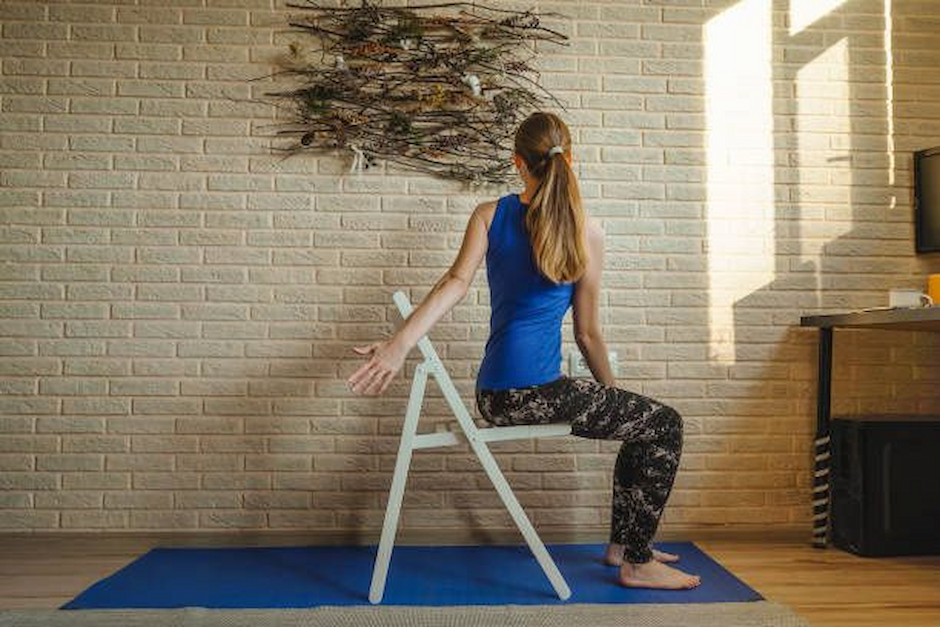
- Use Your Chair: You don’t even need a mat initially. Seated twists and seated “Figure-4” stretches are powerful tools that can be done right at your workstation in OMR.
Common Misunderstandings
- “I need to be flexible first.” Yoga makes you flexible; it doesn’t require it. It’s like saying you need to be clean to take a bath.
- “No pain, no gain.” In yoga, if it hurts, you are doing it wrong. We look for a “sweet discomfort”—a dull stretch—never a sharp or stabbing pain.
- “It’s just stretching.” Yoga involves isometric strength. You are building the muscles needed to hold yourself upright so you don’t slump back into stiffness.

Real-World Scenarios: Resilience in the IT Corridor
Scenario A: The Senior Developer Arjun, a 38-year-old developer in Siruseri, suffered from recurring tension headaches. He realized they peaked at 4:00 PM every day. By introducing a 5-minute “Neck and Shoulder” routine at his desk twice a day, he reduced his headache frequency by 70% within a month. He didn’t need a gym; he just needed to move his scapula.
Scenario B: The Remote Manager Deepa works from her home in Adyar. Without the walk to a conference room, her hips became incredibly tight, leading to lower back pain. She started an “Outdoor Yoga” weekend group at Besant Nagar. The combination of Vitamin D and deep hip openers (like Pigeon Pose) completely resolved her back issues by the sixth week.
Practical Tips for Daily Relief
- The 50/5 Rule: For every 50 minutes of sitting, do 5 minutes of yoga. A simple standing forward fold (Uttanasana) can reset your entire posterior chain.
- Hydrate for Suppleness: Stiffness is often exacerbated by dehydration. Drink water to keep your spinal discs and fascia hydrated.
- Nose Breathing Only: Always breathe through your nose during your stretches. This keeps your heart rate low and prevents the body from “tensing up” against the stretch.
Frequently Asked Questions
1. How long does it take to feel a difference?
You will often feel immediate relief in terms of mental tension. Physical stiffness usually begins to permanently “thaw” after about 2–3 weeks of consistent, daily 10-minute sessions.
2. Can I do yoga in my office clothes?
Absolutely. Most “Desk Yoga” poses like seated twists, neck rolls, and wrist stretches can be done in formal wear. Just avoid deep lunges if your clothing is restrictive.
3. Which is the single best pose for desk workers?
If you only have one minute, do Bhujangasana (Cobra Pose) or a Standing Chest Opener. Both counteract the forward-slumping posture that defines desk work.
4. Is it better to do yoga in the morning or evening for stiffness?
Morning yoga is great for “waking up” the joints. However, evening yoga is often better for desk workers to “wash away” the day’s accumulated tension before sleep.
5. Can yoga help with Carpal Tunnel symptoms?
Yes. Wrist extensions and “nerve gliding” exercises found in yoga are excellent for relieving the pressure on the median nerve caused by constant typing and mouse usage.
6. Do I need a teacher to start?
While you can follow videos, a teacher—especially in an “Online Yoga Chennai” class—can see your camera and ensure you aren’t putting pressure on your lower back.
Conclusion: Reclaiming Your Vitality
Body stiffness isn’t an inevitable part of a successful career. You don’t have to trade your physical comfort for professional growth. By viewing yoga as a “functional reset” rather than another chore on your to-do list, you transform your relationship with your desk.
Start today. Stand up, reach your arms toward the ceiling, take a deep breath, and feel the space return to your ribs. That small moment of mindfulness is where your wellness journey begins.
Would you like me to send you a 5-minute “Desk Yoga” PDF guide you can keep at your workstation?



Leave a Comment