
Table of Contents
What should beginners avoid when starting yoga?
Starting Your Yoga Journey with Intention
Stepping onto the mat for the first time is a courageous act of self-care. Whether you are seeking relief from the bustling pace of Chennai life or looking to build functional strength, yoga offers a path to profound well-being. However, the world of yoga can be filled with confusing terminology and “Instagram-perfect” poses that make the practice look more like a gymnastics routine than a healing art.
Many newcomers jump into the deep end, attempting advanced postures before their bodies are ready, or treating their practice like a competitive sport. This approach often leads to unnecessary strain and quick burnout.
The secret to a lifelong practice is not how deep you can stretch, but how safely and consistently you show up for yourself. In this guide, we will explore the essential traps to avoid when you are just getting started, ensuring your yoga journey is grounded, sustainable, and truly yours.
What is Beginner Yoga Safety?
Beginner yoga safety is the practice of prioritizing structural alignment and breath awareness over the depth of a pose. It involves recognizing personal physical limits, choosing appropriate intensity levels, and avoiding movements that prioritize aesthetics over long-term joint health and nervous system regulation.
Why Avoiding Mistakes Matters
When you are new, your muscles, tendons, and ligaments are adapting to new ranges of motion. If you push too hard, too fast, your body interprets that stress as an injury threat. This can lead to tears, inflammation, or chronic joint issues.
Beyond the physical, mistakes in your approach can impact your mental health. If you constantly feel “not good enough” because you cannot mimic a pose you saw online, you lose the primary benefit of yoga: the quiet, non-judgmental connection with your own body. Avoiding these pitfalls keeps your practice joyful rather than a chore.
How It Works: The “Listen, Don’t Force” Method
Your practice should be a dialogue, not a monologue. Here is how to navigate your first few months:
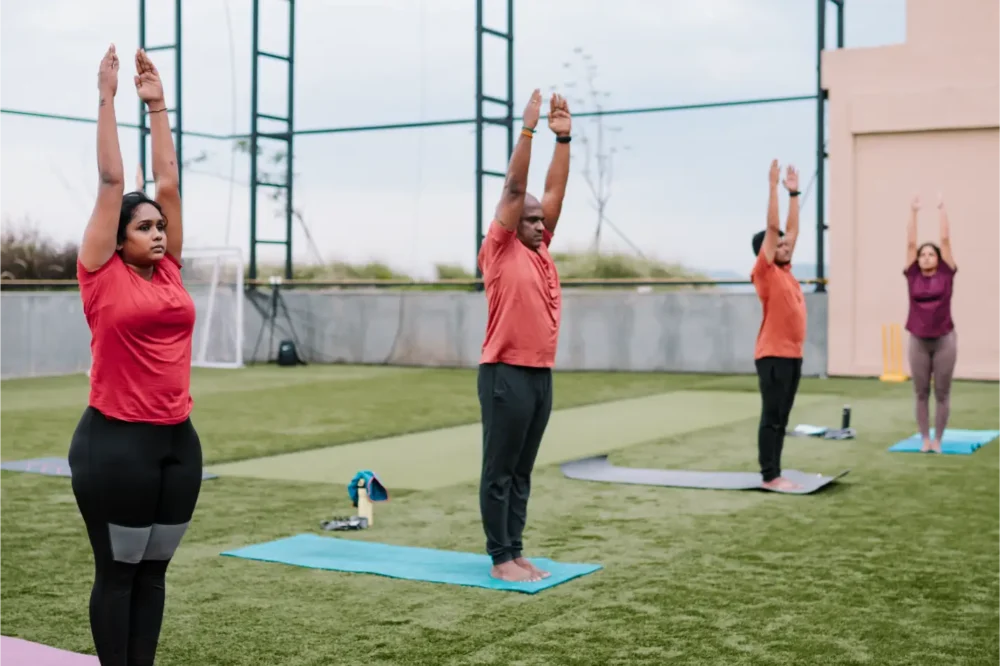
- Prioritize the Foundation: Before attempting a complex arm balance, master the stability of Mountain Pose (Tadasana).
- Respect the Breath: If your breath becomes jagged or you are holding it, you have gone too deep. The breath is your safety gauge.
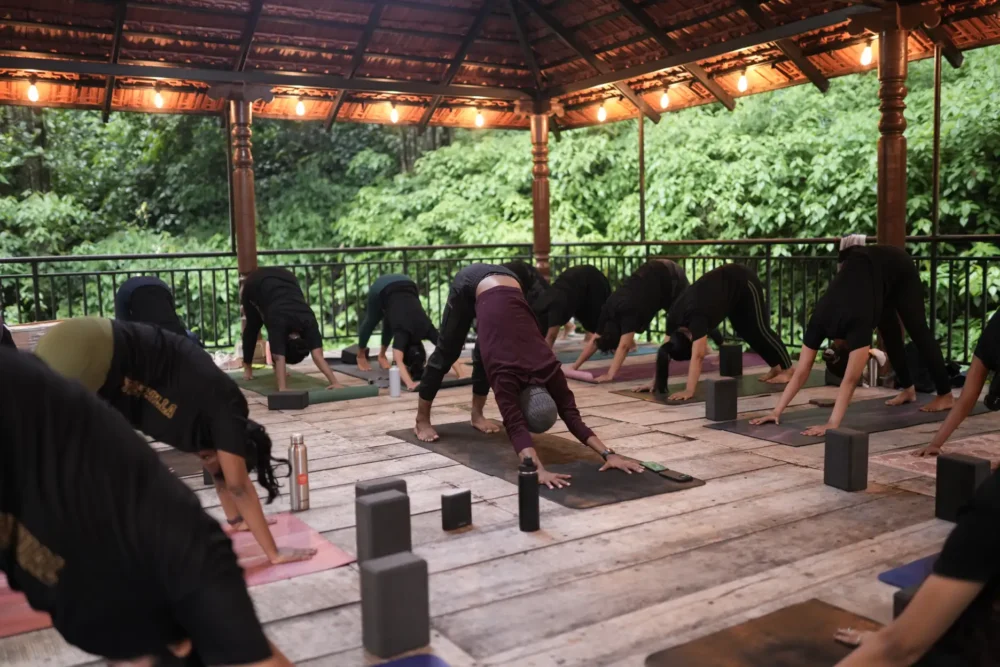
- Use the Props: Blocks and straps are not “crutches”—they are tools that allow you to find proper alignment.
- Listen to Your “Edges”: Move until you feel a gentle stretch, not a sharp pain.
Benefits of a Mindful Approach
Long-Term Mobility
By moving slowly and correctly, you lubricate the joints, ensuring that your mobility actually increases over the years rather than declining.
Stress Regulation
When you stop “fighting” the pose, your body enters a parasympathetic state (rest and digest). This is where the true healing—physical and emotional—occurs.
Consistent Habit Building
When you finish your practice feeling energized rather than exhausted or injured, you are much more likely to show up again tomorrow.
How Beginners Can Approach Yoga
If you live in Chennai, the best way to start is to find a teacher who values education over intensity. Look for classes labeled “Hatha,” “Fundamentals,” or “Restorative.”
Don’t be afraid to voice your needs. If the class is moving too fast, you are allowed to stop and rest in Child’s Pose (Balasana). Your mat is your private space; you are the ultimate authority on what feels right for your body.
Common Misunderstandings
- “Yoga must be painful to work”: Pain is the body’s alarm system. Never confuse “intensity” with “pain.”
- “I should compare myself to the teacher”: Your teacher has likely been practicing for years. Compare your progress today only to where you were yesterday.
- “More time on the mat equals more benefit”: Consistency beats intensity. 20 minutes of daily, mindful practice is far more beneficial than two hours of sporadic, forced practice.
Practical Tips for Your Practice
- Avoid “Warm-Up” Skipping: Even in the Chennai heat, your joints need movement before deep stretching. Always spend at least 5–10 minutes warming up.
- Stay Hydrated (But Not Too Much): Drink water throughout the day, but avoid large quantities of liquids right before a session to prevent discomfort during twists.
- Keep a Journal: Note how you feel after different styles of yoga. This helps you understand your body’s unique preferences.
- Find Your Community: Practicing in a supportive group in your local Chennai neighborhood provides a sense of belonging that keeps you motivated.
Real-World Scenarios
Scenario 1: The “Over-Achiever”
Vikram, a tech professional in OMR, tried to do a complex headstand in his first week after watching a YouTube video. He fell and strained his neck, missing three weeks of work and yoga. He learned the hard way that “progression” means honoring the slow, steady build-up of core and shoulder strength.
Scenario 2: The “Pain-Pusher”
Priya thought that the sharp sensation in her knee during a deep lunge was “yoga progress.” By ignoring the pain, she developed bursitis. Once she started again with a teacher who taught her to use blocks to modify the lunge, her knee pain vanished, and she realized that true progress is about alignment, not depth.
Frequently Asked Questions (FAQs)
1. Is it normal to feel sore after yoga? Mild muscle soreness is normal as your body adapts to new movements. However, sharp, stabbing, or radiating pain is a sign to stop and re-evaluate.
2. Should I practice yoga every single day? As a beginner, 3–4 days a week is plenty. Your body needs rest days to repair and build muscle tissue.
3. What if I feel dizzy during a class? Sit down immediately, lower your head, and breathe deeply. You may have moved too quickly or held your breath.
4. Is yoga a substitute for medical treatment? No. If you have chronic conditions or injuries, always consult with a doctor before starting a new exercise regimen.
5. How do I know if I’m in the right class? The right class leaves you feeling energized, clear-headed, and physically refreshed. If you consistently leave feeling exhausted or in pain, it’s not the right match.
6. Do I need to be vegetarian to practice? Not at all. Yoga is a practice of awareness, and your dietary choices are entirely independent of your physical practice.
A Calm Conclusion
Yoga is a lifelong journey, not a sprint to a finish line. The most advanced yogi is not the one who can do the most complex pose, but the one who best understands the unique rhythms of their own body.
By avoiding the common pitfalls of rushing, forcing, and comparing, you open the door to a practice that will support you through every season of your life. Be kind to yourself, breathe deeply, and enjoy the discovery of what your body is truly capable of.
Are you ready to start safely? Reach out to your local Chennai yoga community to find a class that honors your pace.


Leave a Comment